
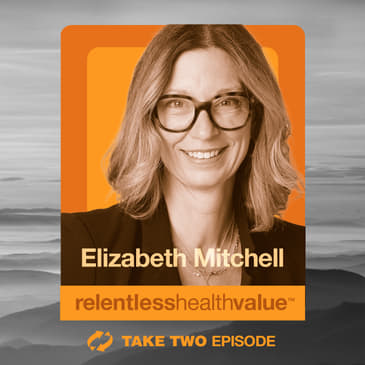
Right up front here, let me just state loudly that there are some amazing independent TPAs (third-party administrators) out there who have the expertise, the scrappy willfulness, and the deep desire to do right by their clients, their self-insured employer clients.
For a full transcript of this episode, click here.
If you enjoy this podcast, be sure to subscribe to the free weekly newsletter to be a member of the Relentless Tribe.
And look, they may be facing some of the same headwinds that plan sponsors themselves face, like anticompetitive contracts, brokers who are up to no good, etc. So, just keep that in mind as you listen. And the main point of all of this if you are a plan sponsor is, find a good TPA partner, which, as Bryce Platt has said about consultants but same rules apply about TPAs here, the difficulty is being informed enough to tell the difference.
So, the goal of this show is to help with that, the “be informed enough to tell the difference.” All of this being said, this is technically a Take Two; but we trimmed it down and welcome to a whole new intro. So, call this a refresher and an update about a really, really important topic from last year that is becoming extremely (maybe even more) relevant this year. Really relevant.
Consider, for example, the show with Claire Brockbank (EP453) about carrier/TPA RFPs (requests for proposal) and all of the landmines that are really expensive, that are buried in some of these contracts. Then there was the Cynthia Fisher show (EP457) from last year about the millions, maybe billions of dollars in aggregate going missing in medical (ie, TPA or ASO [administrative services only]) spread pricing.
We had “The Mystery of the Weekly Claims Wire” show with Justin Leader (EP433), again, revealing money that’s being disappeared when the TPA is withdrawing dollars from plan sponsor checking accounts. And then there’s the payment integrity episode with Kimberly Carleson (EP480) from a few weeks ago with just another wrinkle on this, namely TPAs or ASOs who insist on auditing themselves and how that turns out for members and plan sponsors.
Oh, and last, but certainly not least, is the whistleblower show with Ann Lewandowski (EP476) on how a TPA arm of an EBC (employee benefit consultant) allegedly pocketed $20 million—$20 million of their client’s pharma rebates—and used that $20 million to fund their executive bonus pool. What a time to be alive!
All of this just highlights the huge stakes for plan sponsors to really understand what their TPA is all about. And when I say high stakes, I mean from both a legal standpoint and also just vast dollars in play here.
But this episode with Elizabeth Mitchell is also, I’m gonna say, extremely relevant given just a few ripped from the headlines and news articles such as these.
I’m gonna start actually with a post from Kimberly Carleson, and I like the comment by Jeff Evans, who wrote, “How does $8,710 equal $104,266?” Spoiler alert, it doesn’t. Lots of missing dollars there. Someone’s hands are in the cookie jar. Oh, look, the TPA has entered the chat.
In a nutshell, and I’m quoting something Peter Hayes wrote, he wrote, “TPAs have received relatively little public attention. [There’s an article in Health Affairs] that describes how TPAs impose hidden fees, benefit from their own form of spread pricing, and otherwise prioritize their own financial interests over those of their plan clients.”
Also, here’s a totally other issue. Let me quote Luke Prettol highlighting something Jason Shafrin had written about a paper by Jeff Marr, Daniel Polsky, and Mark Meiselbach. Let me slightly rephrase what Luke said.
He wrote, “Employers pay, on average, a 4.7% [so almost 5%] price markup when hospitals are in their TPA’s [Medicare Advantage] network.” Right? Dr. Eric Bricker talked about this in that episode (EP472) just how TPAs with MA (Medicare Advantage) business negotiate their commercial clients to pay higher rates so that then they can pay lower rates for their own MA members. As Luke wrote, “On its face, this overpayment does not appear to be solely in the interest of participants.” No kidding.
Now, let’s spin the wheel here. There are barriers for TPAs themselves, even the ones who have a deep desire to do the right thing. As Patrick Moore wrote, “Most TPAs still can’t do [many of the things that employers might want because there are] PPO contracts.” So, is it a rock in a hard place situation? I mean, if the TPA has no other options than using a carrier’s PPO (preferred provider organization) network with all its attendant contractual issues, then yeah, that is one definite challenge.
Along these lines, let me read a post by Rina Tikia, because I think she sums up this really well. “When independent TPAs … push for transparency, they’re blocked under the banner of ‘fiduciary risk.’
“Meanwhile, the largest carriers and PBMs, with Cayman shell subsidiaries, DOJ kickback probes, [huge] hedge fund ties, [$10 million-plus] lobbying budgets, and antitrust violations continue unchecked. They are not only allowed to operate but celebrated as mainstream options.
“Why the double standard? Political donations? Foundation smokescreens? Nonprofit status as a PR shield?” These are excellent questions.
And here’s another challenge: brokers. Ramesh Kumar Budhani wrote about this one, just how hard it is sometimes to find—for TPA, an independent TPA, trying to do the right thing—to find brokers who prioritize doing the right thing for employers and helping their clients save money.
The summary of all of this: There are TPAs and there are ASOs who aren’t even trying. They are going to ride the flywheel, the gravy train, and catch all of the dollars flying off of it for as long as they can manage to cling to it with all 10 of their fingers.
Then there are TPAs, mostly indies, trying super hard to do the right thing. But how successful they are is going to depend on how boxed in they are by the PPO networks or the carriers that the brokers or even plan sponsors may insist on. Just how courageous they are and just how smart they are and experienced they are about the market and how it actually operates.
So, the show that follows is about all of this, including how we can inspire TPAs, which, in the show that follows, subsumes ASOs kind of into it. But in the show that follows, I hope it’s inspiring to create an environment so that the market demands TPAs that do all of the things, and we make inertia not a viable business strategy.
Elizabeth Mitchell, my guest today, currently serves as the president and CEO of the Purchaser Business Group on Health.
Also mentioned in this episode are Purchaser Business Group on Health; Bryce Platt; Claire Brockbank; Cynthia Fisher; Justin Leader; Kimberly Carleson; Ann Lewandowski; Jeff Evans; Peter Hayes; Luke Prettol; Jason Shafrin; Jeff Marr; Daniel Polsky; Mark Meiselbach; Eric Bricker, MD; Tom Nash; Patrick Moore; Rina Tikia; Ramesh Kumar Budhani; Mark Cuban; Harold Miller; Chris Deacon; Moby Parsons, MD; Benjamin Schwartz, MD, MBA; Mishe Health; Rik Renard; and Cora Opsahl.
You can learn more at PBGH and by connecting with Elizabeth on LinkedIn.
Elizabeth Mitchell, president and CEO of the Purchaser Business Group on Health (PBGH), advances its strategic focus areas of advanced primary care, functional markets, and purchasing value. She leads PBGH in mobilizing health care purchasers, elevating the role and impact of primary care, and creating functional healthcare markets to support high-quality affordable care, achieving measurable impacts on outcomes and affordability.
At PBGH, Elizabeth leverages her extensive experience in working with healthcare purchasers, providers, policymakers, and payers to improve healthcare quality and cost. She previously served as senior vice president for healthcare and community health transformation at Blue Shield of California, during which time she designed Blue Shield’s strategy for transforming practice, payment, and community health. Elizabeth served as the president and CEO of the Network for Regional Healthcare Improvement (NRHI), a network of regional quality improvement and measurement organizations. She also served as CEO of Maine’s business coalition on health (the Maine Health Management Coalition), worked within an integrated delivery system (MaineHealth), and was elected to the Maine State Legislature, serving as a State Representative.
Elizabeth served as vice chairperson of the U.S. Department of Health and Human Services Physician-Focused Payment Model Technical Advisory Committee, board and executive committee member of the National Quality Forum (NQF), member of the National Academy of Medicine’s “Vital Signs” Study Committee on core metrics, and a guiding committee member for the Health Care Payment Learning & Action Network.
Elizabeth holds a degree in religion from Reed College and studied social policy at the London School of Economics.
08:06 What is the overarching context for health plans in healthcare purchasing?
11:31 Why is it important to reestablish a connection between the people paying for care and people providing care?
13:47 What are the needs of a self-insured employer when managing employee benefits?
19:00 Is it doable for employers to set their own contracts?
21:24 Is transparency presumed?
22:39 Will the new transparency upon us actually expose wasted expense?
24:23 EP408 with Chris Deacon.
25:58 “This is not about individual bad actors. … The systems … that is not aligned.”
27:39 Are there providers who want to work directly with employers?
30:53 Why is it important that incentives need to be aligned?
33:51 What’s missing from the conversation on changing health plans?
Recent past interviews:
Click a guest’s name for their latest RHV episode!
Dave Chase, Jonathan Baran (Part 2), Jonathan Baran (Part 1), Jonathan Baran (Bonus Episode), Dr Stan Schwartz (Summer Shorts), Preston Alexander, Dr Tom X Lee (Take Two: EP445), Dr Tom X Lee (Bonus Episode), Dr Benjamin Schwartz, Dr John Lee (Take Two: EP438), Kimberly Carleson, Ann Lewandowski (Summer Shorts)
[00:00:00] Take Two, Lets Talk For A Seck About TPA and Health Plan Inertia Instead Of Jumbo Employer Inertia. Today, I speak with Elizabeth Mitchell. American Healthcare Entrepreneurs and Executives You Want To Know. Talking. Relentlessly Seeking Value.
[00:00:26] Right up front here, let me just state loudly that there are some amazing independent TPAs, third party administrators out there who have the expertise, the scrappy willfulness and the deep desire to do right by their clients. They're self insured employer clients. And look, they may be facing some of the same headwinds that plan sponsors themselves face like anti-competitive contracts, brokers who are up to no good, etc.
[00:00:51] So just keep that in mind as you listen. And the main point of all of this, if you are a plan sponsor is find a good TPA partner, which as Bryce Platt has said about consultants, but same rules apply about TPAs here. The difficulty is being informed enough to tell the difference. So the goal of this show is to help with that, the be informed enough to tell the difference. All of this being said, this is technically a take two, but we trimmed it down and welcome to a whole new intro.
[00:01:19] So call this a refresher and an update about a really, really important topic from last year that is becoming extremely, maybe even more relevant this year. Really relevant. Consider, for example, the show with Claire Brockbank about carrier slash TPA RFPs and all of the landmines that are really expensive that are buried in some of these contracts.
[00:01:39] Then there was this Cynthia Fisher show from last year about the millions, maybe billions of dollars in aggregate going missing in medical, i.e. TPA or ASO spread pricing. We had the mystery of the weekly Claims Wire show with Justin Leder, again, revealing money that's being disappeared when the TPA is withdrawing dollars from plan sponsor checking accounts.
[00:02:02] And then there's the payment integrity episode with Kimberly Carlson from a few weeks ago with just another wrinkle on this, namely TPAs or ASOs who insist on auditing themselves and how that turns out for members and plan sponsors.
[00:02:14] Oh, and last but certainly not least is the whistleblower show with Ann Lewandowski on how a TPA arm of an EBC allegedly pocketed $20 million, $20 million of their clients' pharma rebates and used that $20 million to fund their executive bonus pool. What a time to be alive. All of this just highlights the huge stakes for plan sponsors to really understand what their TPA is all about.
[00:02:41] And when I say high stakes, I mean from both a legal standpoint and also just vast dollars in play here. But this episode with Elizabeth Mitchell is also, I'm going to say, extremely relevant given just a few ripped from the headlines and news articles such as these. I'm going to start actually with a post from Kimberly Carlson.
[00:03:02] And I like the comment by Jeff Evans, who wrote, how does $8,710 equal $104,266? Spoiler alert. It doesn't. Lots of missing dollars there. Someone's hands are in the cookie jar. Oh, look, the TPA has entered the chat in a nutshell. And I'm quoting something Peter Hayes wrote. He wrote, TPAs have received relatively little public attention.
[00:03:28] There's an article in Health Affairs that describes how TPAs impose hidden fees, benefit from their own form of spread pricing and otherwise prioritize their own financial interests over those of their plan clients. Links in the show notes to both this post as well as that original Health Affairs article. Also, here's a totally other issue. Let me quote Luke Pretol highlighting something Jason Schaffrin had written about a paper by Jeff Maher, Daniel Polsky and Mark Meiselbeck.
[00:03:55] Let me slightly rephrase what Luke said. He wrote, employers pay on average a 4.7 percent, so almost 5 percent price markup when hospitals are in their TPAs Medicare Advantage network. Right. Dr. Eric Bricker talked about this in that episode, just how TPAs with MA, Medicare Advantage Business, negotiate their commercial clients to pay higher rates so that then they can pay lower rates for their own MA members.
[00:04:23] As Luke wrote, on its face, this overpayment does not appear to be solely in the interest of participants. No kidding. Hi, this is Tom Nash, editor and producer of the Relentless Health Value podcast. I bet you're wondering, how can I help Relentless Health Value? Well, that's pretty easy. Have you signed up for the newsletter? The newsletter is great. It tells you when each episode is coming out. It gives you an introduction to the episode with all the mentioned links and a way to click through and listen to the podcast.
[00:04:51] Have you ever left a review for us on Apple Podcasts or Spotify? That would help greatly. Another thing you could do, you could head over to our website and donate to the tip jar. Maybe become a sustaining member. In many ways, Relentless Health runs like an unofficial nonprofit. A very, very nonprofit. So anything that you give would help us pay the bills. Thanks so much for listening. Now, let's spin the wheel here.
[00:05:14] There are barriers for TPAs, third-party administrators themselves, even the ones who have a deep desire to do the right thing. As Patrick Moore wrote, most TPAs still can't do many of the things that employers might want because there are PPO contracts. So is it a rock-in-a-hard-play situation?
[00:05:34] I mean, if the TPA has no other options than using a carrier's PPO network with all its attendant contractual issues, then, yeah, that is one definite challenge. Along these lines, let me read a post by Rania Tikia because I think she sums up this really well. When independent TPAs push for transparency, they're blocked under the banner of, in air quotes, fiduciary risk.
[00:05:57] Meanwhile, the largest carriers in PBMs, with Cayman Shell subsidiaries, DOJ kickback probes, huge hedge fund ties, 10 million-plus lobbying budgets, and antitrust violations continue unchecked. They are not only allowed to operate but celebrated as mainstream options. Why the double standard question mark? Political donations, foundation smoke screens, nonprofit status as a PR shield. These are excellent questions. And here's another challenge, brokers.
[00:06:23] Ramesh Kumar Budani wrote about this one, just how hard it is sometimes to find for TPA, an independent TPA trying to do the right thing, to find brokers who prioritize doing the right thing for employers and helping their clients save money. The summary of all of this. There are TPAs and there are ASOs who aren't even trying.
[00:06:43] They are going to ride the flywheel, the gravy train, and catch all of the dollars flying off of it for as long as they can manage to cling to it with all 10 of their fingers. Then there are TPAs, mostly indies, trying super hard to do the right thing. But how successful they are is going to depend on how boxed in they are by the PPO networks or the carriers that the brokers or even plan sponsors may insist on.
[00:07:10] Just how courageous they are and just how smart they are and experienced they are about the market and how it actually operates. So the show that follows is about all of this, including how we can inspire TPAs, which in the show that follows subsumes ASOs kind of into it. But in the show that follows, I hope it's inspiring to create an environment so that the market demands TPAs that do all of the things and we make inertia not a viable business strategy.
[00:07:37] Elizabeth Mitchell, my guest today, currently serves as the president and CEO of the Purchaser Business Group on Health. My name is Stacey Richter. This podcast is sponsored by Aventria Health Group. Elizabeth Mitchell, welcome to Relentless Health Value. Thanks, Stacey. I'm really glad to be here. Well, it is a pleasure to have you here today. What I would love to drill into is a focus on TPAs and ASOs and what they are and what they're supposed to be doing or not supposed to be doing.
[00:08:05] But before we go there, is there any overarching context? There is because the entire environment for health care purchasing has changed and is changing, which is why we need to revisit the role of health plans in health care purchasing. Jumbo self-insured employers are spending their own money and their employees' money on health care services.
[00:08:31] Our members spend over $350 billion a year on health care services and people's health is not improving. All of those dollars seem to be getting lost in the system. And it is particularly ironic because that money is also not going to providers in the way that our members would like to see. They are very much aligned with providers, particularly primary care providers and mental health providers.
[00:08:59] And yet there is some disconnect between the amount they are paying and the amount the providers are getting. Members of PBGH that you serve are spending $350 billion a year. At least. At least to get members, employees better health. Absolutely. And they want it to be easily accessed.
[00:09:21] One of our members, C-suite representatives, concluded they lose as much on lost productivity of people bouncing around an unnavigable health care system and needing to take days off and try to find appointments for them and their family members as they actually spend on health care services. And people do that because they have to during the workday. Yeah. There is so much room for improvement.
[00:09:47] Again, this money is coming from U.S. businesses and U.S. families. Health plans are a pass through. It is not their money. The money belongs to the employers and the employees, and they should be expecting much better value for their spend. It's interesting that you use the term pass through. On one side, you have employer commercial entities paying $350 billion.
[00:10:13] And then on the other side, you have those that are actually providing the care. That's kind of where the value at a minimum is realized. And then you have this whole space in the middle where the dollars are ostensibly passing through. And that's what I want to talk about today because it kind of feels like there's some dollars that go missing in the middle there. 30%. 30% go missing in the middle.
[00:10:39] Well, if it were just a pass through, if health plans did what jumbo self-insured employers needed, they would simply pay the claims at a fair cost for agreed upon quality standards. Right. It is so simple. I've heard Mark Cuban say that about drugs. They want high quality, accessible care, and they want to pay a fair price. But then you get these middlemen. It's like the middle earth of health care. Money goes in and it doesn't come out.
[00:11:07] It doesn't reach the providers. We know because we measure this at PBGH annually, the amount of money going into primary care as a percentage of total spend is going down. This is despite our members and many, many others saying they want to increase investment in primary care. But then something gets lost in translation in the middle.
[00:11:31] We have got to reconnect and reestablish the direct connection between the people paying for care and the people providing the care without all of the waste in the middle. So I'm going to circle back on the exactly what you just said at the end there, the reestablish the direct connection between the ultimate purchasers, i.e. self-insured employers or other plan sponsors and the provider organizations themselves.
[00:11:56] But what I want to do right now is talk a little bit about that middle aspect or that middle entity. Self-insured employers retain all the financial risk. It's their money. It's their risk. They hire health plans to administer the benefits and to develop the contracts with the providers because they do not have the capacity to go and create a contract with every primary care practice or every hospital or specialist.
[00:12:24] So they need an administrative partner to establish those contracts and to pay claims. And frankly, that's kind of it. But what happens is even when you have a really flexible, effective TPA, they tend to want to be a health plan when they grow up. They add lots of services and care management or care coordination.
[00:12:51] Optimal care management is actually done in a primary care practice. But health plans like to take on larger and larger roles in the management of health care. So they retain more and more of the money when they do that. And many health plans will not unbundle it, even when the employer asks them to. Even when they say, I would prefer my primary care partner to do this, they say, no, all or nothing package of services.
[00:13:18] If they just paid the claims effectively in a timely way, provided transparent information on cost and quality and manage the contracts, that would be great. But that is not happening typically. And what also happens is when you get an effective TPA, they tend to be bought by a very large insurer. It's like catch and kill. They are acquired and then they go in a different direction.
[00:13:47] Summing up what you just said, the need of a self-insured employer, have somebody who can do three things. Number one, pay the claims. Number two, transparently provide data back relative to said claims. And then thirdly, do contract negotiations. Like it should be the day job of this middle person to do those three things. Because as you said, a self-insured employer, they're doing benefits.
[00:14:13] Your quote from you, which I love, you know, a lot of times human resources groups are doing health benefits off the sides of their desks. Like they simply do not have time to be doing primary care contracts across the country or negotiating bundles with every single orthopedic practice across the country. Right. So like you need an entity sitting in the middle wherein it is their day job to be doing those three things. What I'm understanding you saying is that should be the definition of a third party administrator.
[00:14:39] However, because a lot of times this third party administration is being offered as a service from a larger carrier, what they try to do is throw some of the other services that they may have available into these contracts. And that's when things start getting muddy because there isn't a lot of options in the marketplace right now. They wind up getting saddled, paying for stuff that they may not need.
[00:15:05] That's right. You would be amazed at how resistant many of the plans are to doing what employers ask them to do, even sharing data effectively or adding a doula benefit or things that employers know are the right thing for their employees and to effectively manage their plan. It is remarkably challenging. That said, they are increasingly stepping into that space.
[00:15:34] We have employers who are literally taking the time to design bundles for maternity care, for an example, negotiate those contracts directly with health systems because that is their best way of getting what they actually want and need for their employees. We have multiple members who are directly contracting for advanced primary care. They are saying this is what we want to buy. This is what we're prepared to pay for it.
[00:16:02] These are the metrics to which we will hold you accountable. And then they are having direct relationships with those providers. They're understanding their barriers, like they can't integrate behavioral health because it's all carved out by the health plan, as an example. So they are understanding the barriers that their provider partners face and they're working to address them.
[00:16:23] What is happening is in every case, they are seeing a 10 to 30 percent reduction in total cost of care, much better access, much better patient experience and better outcomes. So we know this is possible and it should be scalable. Yet many of the administrators have not achieved those same results.
[00:16:47] So what I predict, particularly under the Consolidated Appropriations Act, where self-insured employers are being held accountable for high value care, they are going to be moving more and more into these direct relationships where they understand exactly what's going on. It's all visible and transparent and they have more control because one of the key changes under the CAA is they are now being held to an expert standard.
[00:17:15] They can't say, well, my consultant told me to do it or my health plan said it was a good idea. They are being held to an expert standard. They have to take this in-house. They have to really dive into what is happening, where the money is going, what are the outcomes that they are getting and they've got to own it. This is going to be a very different dynamic going forward. They are accountable and that accountability will be passed on to all of their partners. So let me paraphrase in summary.
[00:17:45] You have some employers. They have asked their current third-party administrator, ASA, ASO, whatever acronym we want to use here, to help them improve maternal health benefits, including a doula or do something, right? And just banged their head against the wall for so long, just not being helped. So these employers said, you know, it might just be easier if I go to my local providers myself.
[00:18:12] So they go directly to the providers in the area or where their employees are and they negotiate these direct contracts. And when they do, you start to see exactly what we started talking about at the very beginning, that 10 to 30% of spend, which is getting sucked up by a vacuum in the middle and is not actually passing through.
[00:18:34] So plus, you start doing these direct contracts, the data becomes transparent because the providers and the employers themselves have a lot of incentive to be aligned there. My friend Harold Miller says, having a health plan in the middle between an employer and a provider is like being at the UN with a bad translator. We lose the plot of trying to simply pay for high-value care. It is doable.
[00:19:02] And it's remarkably simple. We are in the process right now of supporting a couple of our members negotiate direct contracts. I kept thinking there was going to be more complexity to it. We set the quality metrics, we set the payment level, and then they pay it. It is so amazing to me how much we have complexified this, if that's a word.
[00:19:26] Once you just determine what you want to buy, you set the standards like they do procurement for anything else. You find a partner who is willing to meet those standards. You write a check and then you monitor performance. This is doable. It is happening right now. I think part of the challenge is that self-insured employers don't talk about this very much, right? They're not like the breathless VCs on LinkedIn all day. Oh, we got a new customer. Oh, we have a new investor.
[00:19:55] They're just keeping their heads down and they are doing this work. First of all, you said you had a group of self-insured employers. They directly contracted. They were just like, this is really not that hard. Did they have the TPA in the middle, the third party administer actually paying because the employer still needed to figure out how to pay the provider? Or was the employer actually cutting a check? It depends on the arrangement and it depends on the scale. If it is multi-region or multi-practice, you tend to still need the TPA.
[00:20:24] They have got to just do the basic administration. But if it is a direct contract with one practice or one hospital or one system, sometimes it can be as easy as writing a check. Now, I'm not downplaying the regulatory burdens of some of this because there are states like California that make it very hard for providers to assume financial risk. But it is doable.
[00:20:49] And our members have done direct contracts that have been very successful with all types of organizations. All right. If I'm thinking this through the timeline here, it was kind of like employers went to provider organizations and they cooked up their own deal. They're just like, you know, handshake, we're going to pay you some amount. At that point, if the TPA wants to administer it, like their pricing kind of has to be transparent because everybody knows what the dollar amount they should be paying and what they should be receiving.
[00:21:19] So if there's dollars that go missing in that equation, it is obvious. So if the TPA chooses to accept the challenge, they have to be transparent. Do TPAs agree to terms like that? There is a reason that it took federal action to get transparency from health plans and hospitals. It's not like people weren't asking for it for decades. The resistance to the transparency was high.
[00:21:46] And as we start to get visibility into what was going on in all of those arrangements, it's starting to become clear why. So, yes, transparency is presumed. I really want to point out, though, that there are very few, if any, TPAs out there who are as flexible and responsive and transparent as employers want. There are some newcomers. I'm wishing them all the luck in the world.
[00:22:13] But I really think it's important to understand how challenging it is for a jumbo employer to negotiate contracts all over the country without a partner like that. Yeah, because I actually have heard stories of employers working with provider organizations and they spend a lot of time and they come up with a great contract and then they go to their ASO, TPA, ASA. And that entity is like, no.
[00:22:39] Remember, all the health plans have their own quality metrics or their own payment arrangements, their own networks that they have already established. I believe the new transparency that is upon us is going to expose all of the money that has been wasted in traditional healthcare procurement. It is going to be very awkward for those who have signed those contracts.
[00:23:06] We are seeing our members using newly available data like transparent hospital pricing. They are literally going to the websites of their regional hospitals and seeing what is the average charge. And they're looking at their own claims and say, wait a minute, I paid like five times that and actually getting refunds from the hospitals. In that same example, however, where that employer said, hold the phone, I am paying way too much. I want my money back.
[00:23:32] The health plan in that scenario actually tried to block that because they were going to get a lower rate than their network charge. Just think about this. The health plan, who was supposed to be representing the employer as the negotiator of the best rates, was trying to stop said employer from getting a better rate directly from the provider. And that was not the only example.
[00:23:58] We had another employer try to do this in another state and the health plan told them to stop. So we have thought about the health plans acting on behalf of the self-insured employer. But I think that relationship is really going to be called into question as information becomes more and more transparent. Yeah. And just another example of what you're talking about there is the Bricklayers case in Massachusetts. There's a show with Chris Deacon, who's suing who, but that's also the premise there.
[00:24:28] The Bricklayers looked at transparently available hospital pricing information and just realized how much their plan was charging them in the middle there. So yeah, it's a thing. I feel so bad for some of these employer purchasers who have trusted so many people in their supply chain of healthcare. Brokers, consultants, health plans, PBMs.
[00:24:53] Now with this newly transparent information, they are realizing they were not always working on their behalf. They have said, well, my consultant advised this. I really trust them. I like them. I've known them for years. I'm paying them $20 to $30 PM PM. So they should be giving me the best ideas and the best deals. And as this starts to come to light, it is really unnerving for the purchasers who thought they were doing the right thing.
[00:25:21] They trusted people who weren't aligned with their needs. It is so fraught on a number of levels. And it's almost like a crisis of trust that some of these employers are having because they've been working with their broker or EBC or practice lead for years. And sometimes it's like maybe that person is actually trustworthy. It's that that individual doesn't understand what their company is doing. But it is even possible that the individual is telling the truth when they say that there's no fees here or there or whatever,
[00:25:51] because they're not even cognizant of what their organization is doing on the back end. Stacey, I want to pause right there because that is so important. This is not about individual bad actors. I am not suggesting everyone was shady and trying to do the wrong thing. The systems, the incentives, the companies and who they're actually accountable to, that is not aligned with the needs of the people paying for health care.
[00:26:16] Are there any concrete examples of provider organizations and employers being aligned and accountable to each other? We just released an RFP in a market for high quality, whole person primary care on behalf of three of our jumbo self-insured employers. They want to take this on themselves. This is so new and different. A lot of the providers like didn't even understand the dynamic. What do you mean we're responding to you? What do you mean there's no health plan?
[00:26:46] And yet it was wildly successful. It is around quality and equity and access and all the things that these employers want on behalf of their employees. This is starting to happen because there are employer purchasers out there. And I really want to include public purchasers. They are ready to take this on and help their employees, help make sure that they are getting the care that they deserve.
[00:27:09] I am seeing more and more provider organizations and doctors themselves really aligned with what you're saying. Because, you know, the enemy of your enemy is your friend. Just that whole international relations statement that if you have a doctor really looking to do the right thing by patients, the employer, just based on, again, going back to the very beginning of this conversation, is another entity which is concerned about whole person health. So working together can have a lot of alignment.
[00:27:38] You're exactly right. I can't describe the number of times we are approached by providers who want to work directly with employers. Maybe not all of them, but there are a lot of them out there who are ready for that type of relationship. Moby Parsons, Ben Schwartz, those are two orthopedic surgeons who talk about this kind of thing a lot. Right now, there is no forum for that. There is no platform to talk directly to an employer other than literally calling them up on the phone.
[00:28:07] And that is happening. This is a really exciting opportunity, particularly in regions where you have high concentrations of headcount across multiple employers. We're going into our fourth market now. Providers who raise their hand and say, well, great, because that's what we want to provide. That is how we want to practice. It's clear that they want the same things. I guess there's like Mishy in New York.
[00:28:30] What you're saying is resonating maybe philosophically, because if you think about this from an employer standpoint, you know, another word for an employer is a customer. We all realize that as customers of almost every other thing, it's up to us to set the standard. It's hard. You know, can you blame a vendor for being self-interested and giving you a bid that is wildly high?
[00:28:56] I guess that's how capitalism works, that they sure feel free to give me a super high bid. But then it's kind of like my job to say, no, I'm not basically applying purchasing discipline. Right. That they probably apply elsewhere in the business. It's difficult, but it's almost the responsibility as a customer, as a fiduciary to the employees on the plan to apply the same purchasing discipline.
[00:29:21] And others have said this on the show that we do elsewhere to health care and to understand what we want and to figure out how to get it because otherwise the wolves are in the hen house. I completely agree with that. In a market, someone gives you a bad bid, you don't take it. You don't buy it. Here's the challenge is one, there's been no transparency. And they have not been able to get their data to actually even evaluate the performance.
[00:29:46] One of the changes within the CAA, it absolutely clarifies that employers are entitled to the data they need to evaluate cost and quality. But then the other problem, there are not any alternatives. If all of the plans are doing the same thing, where are they supposed to go? I think that there are some new market entrants. I also think there's a big opportunity.
[00:30:09] If you could just have a platform that does flexible payments, innovative payment models without all the other stuff that no one wants to buy, I think that would be pretty compelling. I do think those are starting to emerge. But right now, if you are looking for a big health plan administrator, there's not a lot of options for something really different.
[00:30:33] If you're an entrepreneur and you're looking for a need in the marketplace, set up a third party administrator where you, and I'm going back to what you said earlier, where you pay the claims. You do that well, you're transparent with the data and that you do contract negotiation really well. Like just do those three things really well. And there's a big market out there. This is really important. A lot of the new market entrants, they come with VC backing or whatever.
[00:31:00] Their investors want them to make money. Totally makes sense. No problem. However, their incentives must be aligned with the self-insured employer for this to work. They need to make money by doing the right thing, not just maximizing health care spending. That just has to be clear from the outset. And the fees have to be transparent. One other thing that is extremely important.
[00:31:27] We've talked a lot about setting a fair price and it should absolutely be transparent. What my members care even more about though is the quality of care. They need to know their employees are going to high quality, safe providers. And to date, most health plans have not been terribly innovative around quality measurement. It's not that we don't have the quality measures. I was on the board of the National Quality Forum a decade ago.
[00:31:57] We've got meaningful quality measures that have been vetted and are valid. They are not being used in contracts. And that is very important to employers because frankly, all the evidence shows that you save on the total cost of care. That is such a win because patients are healthier. They don't have unnecessary procedures and they save money.
[00:32:22] Better care costs less, but you have to be really clear about the quality standards you are using to measure better care. That is entirely doable. I mean, that's the actual literal definition of value quality at a fair price. And it's a real call to action, frankly, to provider organizations themselves. We had Rick Renard on the show and one of the things that he made very clear is that a small, single digits really, percentage of provider organizations themselves are measuring
[00:32:51] absolutely anything. Patient reported outcomes, clinical outcomes, the efficiency of the services that they're providing. So I am also hearing a real call to action for providers. If you want a commercial contract, it's going to become more and more important to figure out how you're measuring what you're doing. And that is not something that you can like figure out next Tuesday. I want to be really clear. There is going to be change required on all sides. Employers have not been terribly clear about what quality metrics matter to them or access
[00:33:20] standards. And so we took it upon ourselves over the last couple of years to really articulate that. We're trying to do our part being clear. Any provider group that wants to partner directly, though, there is an expectation that partners really step up and do that quality measurement and transparent reporting. They can continue to not be transparent. But if they want to work directly with employers, they're going to have to share their quality performance.
[00:33:50] Elizabeth Mitchell, is there anything I neglected to ask you that you want to mention here? We seem to have this strange Stockholm syndrome identifying the folks who have made the system as bad as it is. We blame employers for not having purchased more effectively. Sure, there is blame to go around. But why aren't we holding health system and health plan executives accountable?
[00:34:15] Why aren't there boards asking them to ensure affordability, equity, quality? I really believe we need to put that accountability where it belongs. Yes, it should be shared on all sides. But it's not enough to have the purchasers buying effectively. We have got to have accountable partners to work with. Do you feel like that's happening because everybody seems to inherently agree that those
[00:34:45] entities are accountable to their shareholders, whereas somehow or another, the employers are the only ones that are accountable to members and patients? Well, I guess they get a pass because everyone says, oh, well, we can't expect anymore. They have to do that for their shareholders. But they are not providing what we need as a health care system. We are seeing more and more evidence of this massive growth in these health plans and their profits
[00:35:14] not translating to affordable, equitable, accessible care. Maybe we find alternative partners who don't just have to answer to their stockholders. Elizabeth Mitchell, thank you so much for being on Relentless Health Value today. It's such a pleasure. Thank you. Hi, this is Cora Upsall with the 30GBJ Health Fund. If you love Relentless Health Value, just like I do, then I would encourage you, please sign up for the newsletter, follow on your podcast app and leave a review.
[00:35:42] Tell everyone else about how great this is and all that you're learning.