
Sarah Monroe: Hi. This is Sarah Monroe in Chicago, and I'm a benefits procurement leader. And I'm curious why you think so few executives take proactive bold action in health benefits strategy given the magnitude of opportunity.
Stacey: Isn't that a great question?
For a full transcript of this episode, click here.
If you enjoy this podcast, be sure to subscribe to the free weekly newsletter to be a member of the Relentless Tribe.
Okay … so, last week we did an Ask Me Anything episode with Lee Lewis (EP508) where we answered this exact same question Sarah just asked from the standpoint of a CEO (chief executive officer).
This week, we're taking the same question but from the standpoint of a CFO (chief finance officer) and/or the finance team writ large. And this week we're going through a very crisp roadmap for how to move forward toward proactive bold action in alignment with said CFO/finance team.
This roadmap, though, since we are talking about finance folks here, it does double duty setting up the hardcore why—as in, Why should finance wish to upgrade benefits? Why get away from being kind of complacent and maybe a passive price taker?
I mean, consider Step 1 of the roadmap that we're gonna cover here in a moment. Step 1 is to recommend that the finance team set their next-year and out-year forecasts at an accurate, greater than 7.7% trend. You might be able to see how that will get a finance team to find their why pretty quick.
Oh, was that a spoiler of what's to come? Why, yes, it was.
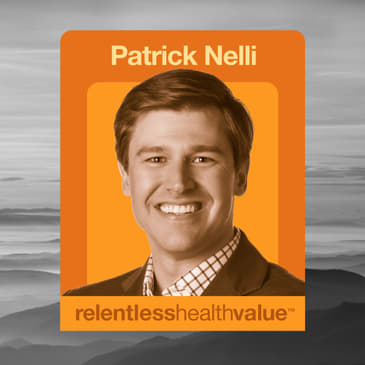
My guest today, Patrick Nelli, is currently the CEO of Aligned Marketplace, which has a really cool premise based on the power of advanced primary care. Check them out.
Patrick Nelli is also a former CFO. So, yeah … you can see why he'd be a really great guest to take us through this roadmap for how folks at a plan sponsor not in finance can align with finance to move forward toward a health plan that works better and costs less.

So, without further ado, here's Patrick's roadmap. But, for sure, listen to Patrick explain it. The points that he makes and the details that he brings up are both helpful and also really thought provoking.
Step 1: Stop the renewal surprise. Engage with CFO finance teams and take in the advice of John Quinn from episode 493 and Lee Lewis (EP508) from last week. This is an ongoing engagement-type engagement, not a "see ya right before renewal" thing.
Step 2: Confront an accurate trend. Set year-over-year trend accurately. As just stated a minute ago, this trend is not CPI (the consumer price index). Trend will be two to three points minimum above CPI, which is gonna be in the 7.7% range or higher for reasons that Patrick will lay out coming up here.
When you speak in finance talk like this and forecast these out-years accurately, the why for taking bold action becomes really crystal clear. The status quo is financially untenable. Here's a link, by the way, to a page that Patrick gave me that covers this #2 forecasting step.
Step 3: Offer a win-win alternative to the status quo. So, make it clear that this high estimated trend is only accurate if—and this is the important part here—if we stick with the status quo. It is possible to create an actually better plan that is more affordable and better for everybody. I will say this Step 3 is maybe a little bit more fraught than I had previously considered.
Go back and listen to the show last week with Lee Lewis (EP508) for more of a deep dive into this Step 3 in the roadmap.
Step 4: Lean into proven strategies that have been shown time after time to bend said cost curve and improve the health of employees, such as, again, advanced primary care. How many times does this need to come up?
Step 5: Align your incentives and also your safeguards. So, look, if you decide to implement a model like advanced primary care, you gotta ensure that the payment model actually incents the behavior you want to see. You gotta think that through. There is a pachinko machine in the healthcare industry and a pachinko effect of incentives. So, know what they are and then put up safeguards and backstops to prevent unintended consequences if you know that the incentives are, in fact, misaligned.
Step 6: Optimize via your contracting, which includes direct contracting. So, once you consider the incentives and figure out what you gotta watch out for, optimize contracts accordingly. And often that means finding ways to direct contract with independent practices such as primary care practices.
Listen to that episode from two or three weeks ago with Ryan Jacobs (EP504), which is one half-hour fully getting into what the perverse incentives that just batter the premise of primary care if you don't take them on board.
So, that's Step 6 of the roadmap. Optimize contracting, maybe direct contract.
Step 7: Steer and tier. Steer and tier, especially for rising risk and/or to make sure employees get the highest value. In other words, risk stratify and disproportionately engage those with rising risk. Steer and tier them to high-value provider organizations. And look, as I said in episode 507, define value and then demand it. Steer and tier away from wildly expensive organizations who may not perform at the level that you're looking for.
Is that easy? No. Can you start with, for example, advanced primary care organizations with a clear mandate who to refer to? Yes.
This podcast is sponsored by Aventria Health Group. Today we got an assist from Aligned Marketplace. They gave us some financial support to help cover our expenses around here, and for that I am very, very grateful to Aligned Marketplace.
And with that, here is my conversation with Patrick Nelli.
Also mentioned in this episode are Aligned Marketplace; Sarah Monroe; Lee Lewis; John Quinn; Ryan Jacobs; Aventria Health Group; Gary Campbell; Shane Cerone; Sam Flanders, MD; Scott Conard, MD; Stan Schwartz, MD; Vivian Ho, PhD; Al Lewis; Dave Chase; Ryan Wells; Adam Stavisky; Leo Spector, MD, MBA; Barbara Wachsman; and Tom Nash.
For a list of healthcare industry acronyms and terms that may be unfamiliar to you, click here.
You can learn more by visiting alignedmarketplace.com and by connecting with Patrick on LinkedIn.
Patrick Nelli is the CEO and founder of Aligned Marketplace, a national, value-based advanced primary care and specialty marketplace for employers. Prior to Aligned Marketplace, Patrick spent a decade at Health Catalyst, a data and analytics company focused on supporting some of the largest healthcare organizations in the country, where he was president and chief financial officer and helped take the company public. Previously at Health Catalyst, he helped build value-based care analytics for some of the largest ACOs in the country in pursuit of Health Catalyst's mission to deliver data-informed improvement. Prior to Health Catalyst, Patrick invested across the healthcare space and performed drug discovery research. Patrick's passion is to drive healthcare improvement through innovation.
00:00 Introduction to this episode.
02:48 Roadmap Step 1 highlights.
03:07 Roadmap Step 2 highlights.
03:49 Roadmap Step 3 highlights.
04:15 Roadmap Step 4 highlights.
04:27 Roadmap Step 5 highlights.
04:58 Roadmap Step 6 highlights.
05:37 Roadmap Step 7 highlights.
06:28 Introduction to the conversation with Patrick Nelli.
06:36 Step 1 to Patrick's roadmap: Open the conversation.
07:57 What Patrick thinks is sometimes missing in health benefits.
09:07 What finance teams need in order to change their behaviors.
09:53 What Baumol's cost disease is.
10:58 EP341 with Gary Campbell.
11:14 EP492 with Sam Flanders, MD, and Shane Cerone.
12:18 The second item stacked against employers: Being price "takers."
13:49 The percent inflation employers should expect if they follow the status quo.
16:54 Proven strategies to bend the health benefits finance curve.
18:42 EP391 with Scott Conard, MD.
19:37 SUMS11 with Stan Schwartz, MD.
20:18 How employers and plan sponsors can bend the cost curve.
21:47 The two distinct business models that finance teams need to consider when setting up their health benefits model.
24:11 Milbank study on the role of primary care.
24:53 A quick reminder of high-cost spending within health plans.
25:00 EP466 with Vivian Ho, PhD.
25:59 What finance teams need to hear right now to understand why disrupting their health benefits plan is worth it.
27:45 The next step when an employer recognizes that they should seek out an advanced primary care option for their members.
28:41 EP503 with Ryan Wells; Leo Spector, MD, MBA; and Adam Stavisky.
30:27 Next steps after an employer enlists an advanced primary care system and aligns values and incentives in their benefits plan.
34:26 A last word to benefit teams working with finance teams.
34:55 EP430 with Barbara Wachsman.
35:08 How Aligned Marketplace fits into this entire conversation.
Recent past interviews:
Click a guest's name for their latest RHV episode!
Lee Lewis; Stacey Richter with 15 experts (EP507); Jerry DiMaso; Dr Ahilan Sivaganesan; Ryan Jacobs; Stacey Richter (INBW46); Ryan Wells, Dr Leo Spector, and Adam Stavisky; Brian Machut
[00:00:00] Episode 509, The 7.7 Wake-Up Call. Today we're talking about our roadmap to align finance teams with non-complacent benefit design. I am speaking with Patrick Nelli.
[00:00:23] American healthcare entrepreneurs and executives you want to know. Talking. Relentlessly seeking value. Sarah Munro in Chicago and I'm a benefits procurement leader and I'm curious why you think so few executives take proactive, bold action in health benefits strategy given the magnitude of opportunity.
[00:00:44] Isn't that a great question? Okay, so last week we did an Ask Me Anything episode with Lee Lewis where we answered this exact same question Sarah just asked from the standpoint of a CEO, Chief Executive Officer. This week we're taking the same question, but from the standpoint of a CFO, Chief Finance Officer and or the finance team writ large.
[00:01:11] And this week we're going through a very crisp roadmap for how to move forward toward proactive, bold action in alignment with said CFO slash finance team. This roadmap though, since we are talking about finance folks here, it does double duty setting up the hardcore why. As in why should finance wish to upgrade benefits?
[00:01:35] Why get away from being kind of complacent and maybe a passive price taker? I mean, consider step one of the roadmap that we're going to cover here in a moment. Step one is to recommend that the finance team set their next year and out year forecasts at an accurate greater than 7.7% trend. You might be able to see how that will get a finance team to find their why pretty quick. Oh, was that a spoiler of what's to come? Why? Yes, it was.
[00:02:05] My guest today, Patrick Nellie, is currently the CEO of Aligned Marketplace, which has a really cool premise based on the power of advanced primary care. Check them out. Patrick Nelly is also a former CFO.
[00:02:19] So, yeah, you can see why he'd be a really great guest to take us through this roadmap for how folks at a plan sponsor, not in finance, can align with finance to move forward toward a health plan that works better and costs less. So without further ado, here's Patrick's roadmap. But for sure, listen to Patrick explain it. The points that he makes and the details that he brings up are both helpful and also really thought-provoking.
[00:02:48] Step one of the roadmap is stop the renewal surprise. Engage with CFO finance teams and take in the advice of John Quinn from episode 493 and Lee Lewis from last week. This is an ongoing engagement type engagement, not a see a right before renewal thing. Step two of the roadmap is confront an accurate trend. Set year over year trend accurately.
[00:03:14] As just stated a minute ago, this trend is not CPI, the consumer price index. Trend will be two to three points minimum above CPI, which is going to be in the 7.7% range or higher for reasons that Patrick will lay out coming up here. When you speak in finance talk like this and forecast these out years accurately, the why for taking bold action becomes really crystal clear. The status quo is financially untenable.
[00:03:42] There will be a link in the show notes, by the way, to a page that Patrick gave me that covers this number two forecasting step. Step three in our roadmap, offer a win-win alternative to the status quo. So make it clear that this high estimated trend is only accurate if, and this is the important part here, if we stick with the status quo. I will say the step three is maybe a little bit more fraught than I had previously considered.
[00:04:08] Go back and listen to the show last week with Lee Lewis for more of a deep dive into this step three in the roadmap. Step four, lean into proven strategies that have been shown time after time to bend said cost curve and improve the health of employees, such as, again, advanced primary care. How many times does this need to come up? Step five in the roadmap, align your incentives and also your safeguards.
[00:04:32] So look, if you decide to implement a model like advanced primary care, you got to ensure that the payment model actually incents the behavior you want to see. You got to think that through. There is a pachinko machine in the healthcare industry and a pachinko effect of incentives. So know what they are and then put up safeguards and backstops to prevent unintended consequences if you know that the incentives are in fact misaligned.
[00:04:57] Roadmap step six, optimize via your contracting, which includes direct contracting. So once you consider the incentives and figure out what you got to watch out for, optimize contracts accordingly. And often that means finding ways to direct contract with independent practices, such as primary care practices.
[00:05:18] Listen to that episode from two or three weeks ago with Ryan Jacobs, link in the show notes, which is one half hour fully getting into what the perverse incentives that just batter the premise of primary care if you don't take them on board. So that's step six of the roadmap, optimize contracting, maybe direct contract. Step seven of our roadmap is steer and tier. Steer and tier, especially for rising risk and or to make sure employees get the highest value.
[00:05:46] In other words, risk stratify and disproportionately engage those with rising risk. Steer and tier them to high value provider organizations. And look, as I said in episode 507, define value and then demand it. Steer and tier away from wildly expensive organizations who may not perform at the level that you're looking for. Is that easy? No. Can you start with, for example, advanced primary care organizations with a clear mandate who to refer to? Yes.
[00:06:11] My name is Stacey Richter, and this podcast is sponsored by Aventria Health Group. Today, we got an assist from Aligned Marketplace. They gave us some financial support to help cover our expenses around here. And for that, I am very, very grateful to Aligned Marketplace. And with that, here is my conversation with Patrick Nellie. Patrick Nellie, welcome to Relentless Health Value. Thank you, Stacey. Thanks for having me. All right.
[00:06:36] Finance teams, CFOs are often a little off to the left when we're talking about benefits, when we're talking about design of a health plan. If I'm thinking about, I want to get in the mix here a little bit more than I potentially am. As a former CFO yourself, if you are thinking about the roadmap that you might lay out here, what would be your first step? Yeah, of course.
[00:07:05] It's been fun to sit on both sides of the table. When I was in the CFO role, benefits reported to me. We're a public company with several thousand members spread all across the U.S. And now I'm on the vendor side of employer health benefits. So one of the first pieces of advice would actually be open the conversation with your benefit leaders. It's tough for employers out there because most employers are not in the business of health care. And it's a complicated field.
[00:07:34] So starting the conversation with benefit leaders is important. Benefit leaders focus on this every day. And I do think that's an important first step. Recognizing that those who have been doing benefits on the likely HR team, for example, they've been doing this for a long time. And it's just really important just to walk in and engage maybe. Exactly.
[00:07:57] And I think what is sometimes missing in the industry is being able to enable that conversation between a benefit leader and a finance team so that they're speaking more of the same language. Say more.
[00:08:11] I think one of the biggest missing pieces is enabling benefit teams to be able to speak economics to finance teams so that they can explain how many items, unfortunately, are stacked against employers.
[00:08:27] So as an example, one that I think is most important to recognize is that health care inflation for employers is structurally set up to outpace overall economic inflation due to a couple specific reasons.
[00:08:47] What you're saying is one of the love letters that finance is apt to receive is talking about health care inflation because you have finance teams who are doing calculations based on the consumer price index, CPI. But what you just said, I have questions. What you're saying is that the health care inflation index is actually higher than that. And I could see how that would be an issue.
[00:09:15] Like if you've got finance forecasting based on the CPI, but health care is going up faster, which it has been, you know, we see trends of 9-10%. So first of all, I think you said it well. What finance teams love is using Microsoft Excel, using forecasting software. So it needs to be numbers to persuade them and change their behaviors. We say this with all the love. By the way, spoken as a recovering CFO.
[00:09:44] So there's a couple reasons why employer medical inflation will be higher than CPI. The first is a concept called Bommel's cost disease. And the way this works is health care has lower productivity gains than other parts of the economy. A simple example is an hour-long doctor visit took an hour 100 years ago, and it takes an hour today.
[00:10:10] But health care organizations also have to compete with higher productivity sectors of the economy, like in software, for talent. So they have to raise salaries to compete for talent. But because there's lower productivity gains in health care, the only way for health care organizations to maintain the same margin is to raise pricing at higher than inflationary rates.
[00:10:34] So what this means is that you have higher than average inflation in lower productivity areas of the economy, like health care, versus overall inflation. Okay. When Patrick mentioned this Bommel's cost disease, I am going to surprise exactly none of our listeners when I say I spent more hours than I'd like to admit on like Reddit and elsewhere digging in hard on this.
[00:10:58] But I also, just for the sake of context, want to point out that in the episode with Gary Campbell, he said that it's always health care's first instinct when they spot a gap is, in his words, to throw a body at it, not fix the workflow. And also, the episode with Shane Cerrone and Dr. Sam Flanders doubles down on the potential for health care organizations to be far more efficient than they currently are.
[00:11:27] But the problem is, many times, all the financial incentives that health system C-suites tend to be given incentivize revenue growth. But then there's no functioning market to constrain prices. We talk about this in the conversation coming up in T-minus-five minutes, Patrick, Nellie, and I. So yeah, this is just a much bigger conversation relative to whether the current impact of Bommel's cost disease needs to be as pronounced as it is.
[00:11:56] But to Patrick's point, Bommel's is certainly an underlying factor here, and it is inarguable that health care trend has not been equivalent to the CPI, the Consumer Price Index, for quite some time. So typically, health care inflation will be two to three percentage points higher than overall inflation.
[00:12:17] Unfortunately, it gets even worse for employers, which is the second item that's stacked against them, is that employers are price takers in the system. The federal government actually sets prices generally, specifically on the Medicare side.
[00:12:37] And hospitals, in order to maintain their margin, if they're getting little to no increases on Medicare, subsequently increase their pricing for the commercial or employer population even more. So that means those two factors lead to significantly higher inflation for employers.
[00:12:55] This is what I'm piecing together here and putting together, that if we're thinking about this roadmap for how to speak the language of a finance team, of a CFO, one of the things that's going to be really important as a very initial step here, after you engage to begin with, is to be able to accurately calculate what the inflation is going to be. Let's just say that the finance team just is like, well, it's just going to be CPI, so it's 2-3%. And that's now set as the... Now, all of a sudden, this has a lot less urgency.
[00:13:25] And if last year, the trend comes in at 9-10%, and everybody's pointing fingers at all... If this year, they still forecast it at 2% or 3%, or whatever the CPI happens to be, then, you know, A, we're just fighting retrospectively over what went horribly wrong last year, as opposed to trying to figure out how to do things to proactively anticipate the future, which is going to be 9-10% again. Exactly.
[00:13:49] So just to put a few numbers to this, employers should likely expect 6-10% annual healthcare inflation in perpetuity if they follow the status quo. It's averaged 7.7% over the last 20 years. And that was in a historically low inflation environment. So it will likely be north of that 7.7% in the near term, closer to 8.5%.
[00:14:16] So if there was one recommendation I would make, it would be having benefits team work with finance teams to put in their out-year models, their 3, their 5, their 10-year forecast, healthcare benefit inflation of 7.7% plus year over year in perpetuity. Okay, so we've engaged, we've set the year over year at 7.7% trend.
[00:14:45] What's next in our roadmap? Well, what is great is I believe when finance teams and benefit teams work together and see those out-year numbers at 7.7%, they are not going to accept it. And here's the wonderful part. It is not an absolute forecast. That is what will happen if employers follow the status quo on healthcare benefits, if they don't do anything different.
[00:15:11] So I deeply believe that it will get employers working with all of their partners, consultants, and other vendor partners to figure out what they can do proactively to help bend that curve. And it will get a lot more organizations to be investing in their members' health. And it's really interesting what you just said there, that without intervention, there's going to be a 7.7% year over year rise.
[00:15:38] Anyone who listened to the Inbetweenisode a couple of weeks ago probably knows what I'm about to say. I'm on this kind of like, what is disruption kick right now? Because a lot of times when someone talks about doing something that is not the status quo, there are those who will stop that momentum in its tracks and just bring up the disruption word, oh, we don't want to have disruption. Like there's this presumption that the status quo is not disruptive.
[00:16:03] And when you start hearing stuff like 7.7% every single year, there's just a study that came out that said like, for every, I'm going to misquote it, but it's something along the lines of, for every percentage point of our healthcare becomes more expensive, you wind up with like more people in the ER. It's clear what is happening here, that financial toxicity is increasingly clinical toxicity. And if every time someone gets sick on the plan, they wind up with a financial devastation, or they can't afford their meds, that is incredibly disruptive.
[00:16:32] So it's just like, do you want to have some upfront disruption? Or do you want to experience it on the back end, but you got to pick one? Okay, so step three here is align on the fact that with this updated financial model, what are we going to do together to bend the curve? Agree that's what we're going to be doing here. Like shake hands and figure this out. Of course. So there are a handful of proven strategies out there to bend the cost curve.
[00:16:59] But actually to enable benefit teams to speak with their finance teams and vice versa, I think it's also important to understand an overall industry dynamic that's occurred in the last 20 years. Which is 20 years ago, 80% of physicians were independently employed by independent physician-owned organizations. Oftentimes smaller organizations spread all across the country.
[00:17:26] In the last 20 years, that is inversed. Now 80% of physicians are employed by hospitals or other large corporate entities. And hospitals play an important role in the system. Don't get me wrong. But from an economic perspective, it's important to understand a hospital's business model.
[00:17:48] Hospitals primarily make money on inpatient surgeries for employers' plan members, the commercial population. So it becomes very difficult for a hospital to primarily make all of its gross profit from commercial member surgeries and also create a thriving business model to keep people healthy and out of the hospital.
[00:18:14] When those two business models conflict, you can imagine that on the margin, decisions are going to be made to support most of the gross profit dollars today. Clayton Christensen talks about this a lot in Innovators Prescription. What this means is we need to get individuals to independent, non-hospital-owned, proactive care models that are more sustainable in the long run from a business model perspective. Obviously, I could say a lot about this.
[00:18:44] If anyone has not listened to the episode with Dr. Scott Conard, he talks about his Pelican Brief moment when his very successful independent primary care practice was sold to the local hospital and how they immediately turned around and dismantled it. The rationale that was given at the time was by a hospital executive.
[00:19:06] It is my fiduciary responsibility as a hospital to make sure that we have heads in beds for exactly the point that you just made, Patrick, because that's how we make money. And you are preventing so many heads from being in my beds. You are preventing so many acute heart failure. You're preventing so many people from needing inpatient care that it's my fiduciary responsibility to put you out of business.
[00:19:31] So, this is not something that's some like, oh, this is an outlier. There's also a summer short with Dr. Stan Schwartz who had a similar experience. Agreed. And while hospitals play an important role in the system, it's important to understand from a business model perspective which business model is optimized for what outcomes. And to your exact point, if you need some kind of complex surgery, like you want to obviously make sure that there's a hospital,
[00:19:58] that there are subspecialists, that there are those individuals who are going to take care of you. For sure. If I'm thinking about this from the standpoint of a finance person working at a plan sponsor, recognizing that this perverse incentive exists, what am I thinking here? We're talking about bending the cost curve. Like, what should be crossing my mind? One of the best ways to bend the cost curve and drive savings for an employer is to keep your employees healthy
[00:20:25] and out of the hospital system or only going into a hospital when it's necessary. So, we can talk about a few different strategies there. But one of the great things that has occurred in the last decade is there has been a growth in independent, advanced primary care organizations that are set up to more comprehensively provide
[00:20:49] primary care and integrated mental health and other services and are paid under a model to keep people healthy. When you say independent, you mean not owned by the local health system? Correct. And the point being that if they're owned by the local health system, they might not actually physically be in a hospital. But if they're owned by the local health system, then, you know, again, you wind up with this weird incentive to increase throughput
[00:21:14] because the more patients that person sees, you got to reduce the visit lengths because you kind of want the referrals. Right? Like, there's just a lot of stuff that winds up getting baked into that business model that might not be what a plan sponsor is looking for if they're trying to keep people out of the hospital. And you talked about how there is this growing group of independent, advanced primary care that do,
[00:21:39] if they're getting paid by the employers, they actually now have an incentive to try to keep people healthy. Did I get that right? That's exactly right. If you're an employer, when you have acute cases, when your members have acute cases, you want them going to the highest quality, highest value hospital. But you also want your members to engage with the highest quality, independent clinical groups
[00:22:05] that are paid to keep members out of the hospital. So those are two distinct business models to think through when setting up an employer health benefit strategy. This is really interesting. And I should have highlighted this more in this conversation, that finance pros at self-insured employers really consider that there are two distinct business models of provider organizations
[00:22:33] and to consider that as they contemplate their benefit strategy. One business model being, of course, growing revenue from heads in beds and etc. And then the other business model is keeping folks healthy and out of the hospital. Why is this the case? What are the different ways that an independent advanced primary care practice will actually start to bend this cost curve if I am thinking like a finance person?
[00:23:00] First, it's important to understand how these independent advanced and direct primary care groups do drive savings. Because it is important to kind of comprehend it at a relatively straightforward level. So first, by getting someone out of the hospital and steering individuals towards lower cost downstream services like labs, images, colonoscopies, there are unit price savings.
[00:23:30] Hospitals have more negotiating power than independent groups. So you can just save on the prices you pay by steering people to independent labs, images, colonoscopies, and the like. Second, by giving someone more proactive, comprehensive care, it can reduce downstream utilization. So reduce emergency department visits, hospitalizations, specialist visits.
[00:23:56] And lastly, by giving someone a longitudinal relationship with an individual advanced primary care provider who can get to know them, it can improve that member's health to prevent future high-cost claimants. There's a recent Millibank study where access to primary care increases the likelihood of timely screening for breast, colon, and cervical cancers by 20 to 50%. So it helps catch cancers earlier.
[00:24:25] Less than 10% of an employer's members this year that are low cost but have identifiable risk will actually drive over 40% of an employer's total spend next year. So a key piece of prevention and more proactive care is actually improve individuals' health to prevent next year's high-cost claimants. So that's first is understanding the ways in which these care models can drive savings.
[00:24:53] Let me just remind everyone that currently almost half of most plan sponsors' spend goes to hospitals. Listen to the show with Vivian Ho. And 6%, which is a crazy number, 6% of spend right now on average goes to ER, emergency room usage. Listen to the show with Al Lewis. So finding those with rising risk and treating that risk so that it stops rising is a really big deal here. Let me ask you this though.
[00:25:22] If I'm a finance person who is overhearing and listening to this conversation, Am I actually going to write this on my spreadsheet? Like what do I need to hear right now so that I'm actually thinking to myself, This is worth the disruption. Like I have tried to do stuff in the past and it never worked. Anyone who's kind of like, Great, I've heard these promises in the past and it's never worked out. What would your response be? Healthcare is a complicated system, right? And there are no easy answers.
[00:25:51] Humility is one of my personal cultural attributes, a cultural attribute at the company I work for. So I think it would be important to acknowledge how difficult it is. But to your point on what is truly disruptive, If an employer does nothing, An employer needs to put into their out year forecast of 7.7 plus percent medical cost inflation. So we need to keep trying.
[00:26:16] And what is wonderful about certain care models is by trying to bend the cost curve, We're getting individuals access to higher quality, more proactive care, And ideally helping to improve individuals' health so it can be set up as a win-win-win. Yeah, I think Dave Chase puts it really well. He says, Put together a really high quality, high performance health plan and the cost savings are a bonus. Can you prove that though? Like if I'm like just really a quant person,
[00:26:44] If I'm really skeptical, I'm a real skeptical CFO. And again, I've had a lot of things that were shown to me in the past and they haven't worked. So first, independent primary care has been, And primary care in general, Has been one of the most well-studied parts of the ecosystem. We, anyone can reach out to me, We're happy to share the dozens of articles that have been written With the commercial patient member base in mind showing savings.
[00:27:12] But from a finance perspective, I still wouldn't believe all of that. I think it's important to have your counterparty put their money where their mouth is And get paid in an aligned model where they are paid to keep your members healthy, To provide great access, high quality care, high experience care. I think it's as simple as looking no further than how will they put their fees at risk?
[00:27:41] And is it in a way that's aligned with my goals? So then the next step becomes, All right, I believe that one of the things that I want to put in my plan going forward Is to make available advanced primary care to my members. And I get that I can get an aligned payment model here, Because incentives really should be aligned. What do I do now? They could set up a direct contract with a local independent advanced primary care provider.
[00:28:10] They could set up an on-site clinic. They could think about virtual care. Or they could partner with an organization, Like the organization I work at, Align Marketplace, Where we can help employers access independent advanced primary care, Value-based specialty care, all across the country. But there are multiple ways in which an employer can now easily layer on top Incremental independent advanced primary care providers to any of their plan options.
[00:28:40] The next step here, we just had a whole conversation about this with Ryan Wells, Adam Stavisky, and Dr. Leo Spector, About actually contracting for musculoskeletal direct contracting. But same rules apply. There is infrastructure here if I am a larger employer. I mean, if I'm a smaller employer and I have a one factory in one town, I can contract with a local doctor and the end. But if I'm more of a national player or I have multiple regions,
[00:29:09] it might be, let's just say, unrealistic to figure out how to do direct contracts in every single geography where there might be a need. So what you're saying vis-a-vis aligns Marketplace, which is your company, or there's other entities that are out there to have rolled up independent practices across the country and may be able to help any entity that needs scale. That's exactly right. Previously, if you were a large entity or geographically dispersed,
[00:29:39] it was very difficult, not impossible, but administratively very difficult to add independent advanced primary care or value-based specialty care for your members dispersed across the country. So fortunately, and once again, we always want to be humble and intellectually honest, there are now companies like Aligned or other options to make it easier for employers to have their members access these better care models.
[00:30:04] By the way, I just was out to dinner the other day with an employer who recently put together advanced primary care for their members. And just like the level of feedback from those members who were choosing to take advantage of it was so incredibly positive. You know, if we're talking about disruption, this might be like the opposite. Okay. So now what though? Let's just say that I am on board for this. I have figured out how to align incentives.
[00:30:31] So I'm paying to keep my members healthy. Anything else? Yeah, there's a few other items that are important. Employers are in a very unique position versus other parts of the healthcare system. And I think it's important for employers to realize that this, both finance teams and benefit teams. One is employers have the largest dispersion of risk amongst their members of any part of the healthcare ecosystem.
[00:30:59] Employers serve healthy 25-year-olds as well as have individuals on their plan with chronic conditions, care gaps, and missed screenings. So a general peanut butter approach to engagement generally is not a good approach. So it is important to have a vendor risk stratify members, identify those that are high and rising risk, kind of the emerging risk members,
[00:31:27] and work to disproportionately engage those members. As far as ways to engage those members, employers also have a big advantage in that they are in charge of plan design. The One Big Beautiful Bill Act has in it a couple regulations that now give employers even more flexibility to make various types of advanced direct primary care, virtual care options completely free for members.
[00:31:54] So there can be a positive feedback loop where, as employers steer more members to these independent value-based clinicians, and there are more savings, employers can provide more incentives to steer members to these more proactive independent care models. It drives affordability, drives higher quality quick care, and drives savings. And that is the positive feedback loop that we hope the industry gets in, regardless of how they do it,
[00:32:23] to help us get away from the 7.7% future that will come under the status quo. You said a couple of things. One, relative to the engagement, anybody who's been a plan sponsor for more than 10 minutes knows that pretty much any time or any money that's spent with a healthy 25-year-old is not necessarily going to have ROI. Let's just put it that way. But if you are dealing with someone with high or rising risk, the ROI can be substantial. So if we're thinking about an engagement strategy,
[00:32:53] doubling down on those who and making absolutely sure that we're communicating early and often with those individuals who can very much benefit, like that's where we should be spending our time and energy. So I think that's the first thing that you said. Then the second thing is structure benefit design also accordingly. Like what you don't want to have happen is you get this whole amazing benefit set up and then it's crickets. No one goes there.
[00:33:19] So once it's set up, figure out how to engage and steer and tier so that the members can find their way over to these amazing clinicians and clinical organizations. Right now, there is the opportunity to offer free or really, really low cost primary care to members that hasn't been available in the past. So it's almost like stars are aligning here. Agreed. To your point, it feels like we're at a point in time
[00:33:49] where there are now thousands and thousands of clinicians that are excited to take proactive care of employers' plan members. And there's more regulatory and plan design flexibility to enable employers to steer their members to these high value options at no or low cost to members. I love this roadmap. So link in the show notes, we definitely will make a list of the steps in this roadmap for absolutely sure.
[00:34:19] Patrick Nelly, is there anything I neglected to ask you that you want to share? Finance teams speak in numbers. So I would just summarize that benefit teams working with finance teams to put in a forecast 7.7 or more annual medical inflation will help drive the urgency and help employers become more proactive
[00:34:46] in supporting their members not just receive high quality, higher access care, but also care that can bend the cost curve for the employer. Sage advice. There's also a show with Barbara Watchman, if anyone wants even more context here, that I would certainly recommend to go back and listen to. Patrick Nellie, can you explain how Aligned Marketplace fits in this mix? Happy to. We have built the only national and value-based advanced primary care and specialty marketplace for employers.
[00:35:14] An employer can give their members access to thousands of advanced primary care clinics all across the country. Most of these groups on our marketplace are not available to employers today through traditional insurance networks. So we're bringing incremental access to employers and their plan members. Plan members keep their current insurance and are simply provided with more high quality, free or low cost doctor options. While the benefits available to all plan members,
[00:35:42] we work to risk stratify an employer's plan members, identify the high and rising risk members, and make it easy for those members to get in with the best clinic for that individual, helping them only see those groups that have near-term access, helping them schedule their first appointment, and helping them with follow-ups. We pay these advanced primary care groups under a value-based model, so they are incentivized to keep members healthy. We've really tried to create a win-win-win for all parties.
[00:36:11] And if someone is interested in learning more, where would you direct them? AlignMarketplace.com or my LinkedIn, Patrick Nelly. I would be happy to chat with any individuals out there that are trying to move the industry forward. We have a lot to learn. So I'm also, I love having these conversations so that we can be learning as an organization. Patrick Nelly, thank you so much for being on Relentless Health Value today. Thank you, Stacey. And I appreciate you and all your listeners
[00:36:41] who are so motivated to help push the industry forward. Hi, this is Tom Nash, editor and producer of the Relentless Health Value podcast. I bet you're wondering, how can I help Relentless Health Value? Well, that's pretty easy. Have you signed up for the newsletter? The newsletter is great. It tells you when each episode's coming out. It gives you an introduction to the episode with all the mentioned links and a way to click through and listen to the podcast. But there's more ways to help. You can always go over to LinkedIn. Are you following the page? You should be.
[00:37:10] There's great conversations each week on all the episodes. So go to LinkedIn, find the Relentless Health Value page and follow us. Have you ever left a review for us on Apple Podcasts or Spotify? That would help greatly. While you're doing that, be sure you're following the podcast so you get notified each week inside of Apple Podcasts or Spotify. Okay, so you've done all those things already? That's great. Another thing you could do, you could head over to our website and donate to the tip jar. Maybe become a sustaining member. In many ways,
[00:37:38] Relentless Health runs like an unofficial nonprofit. A very, very nonprofit. So anything that you give would help us pay the bills. Thanks so much for listening.