
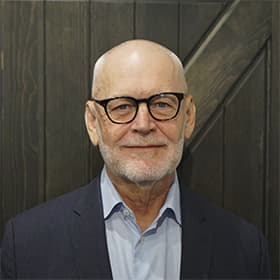
Here’s a Milton Friedman quote: “There is one and only one social responsibility of business—to use its resources and engage in activities designed to increase its profits so long as it [that entity] stays within the rules of the game, which is to say, engages in open and free competition without deception or fraud.”
Okay, so this is Friedman, Milton Friedman, pretty much the most influential advocate of free market capitalism, stating quite clearly that an entity’s greatest responsibility lies in the satisfaction of its shareholders. His nod to social responsibility or ethics of any kind comes at the end there, where he says that for free market capitalism to function, there must be open and free competition and no fraud.
So, let’s compare this to what’s going on in the payer space in the healthcare industry. First off, there was just a chart in the New York Times the other day where pretty much every major payer except one got a check in a box for being accused of fraud. Interestingly, if you look in the comments section of that article, people posted links where that one outlier was being accused of fraud. So, I’m not sure what’s up with that, but yeah, let’s just conclude that there’s fraud in the payer space.
On to Friedman’s requirement for open and free competition. As we all know, there are a few very powerful, very big, consolidated entities who control the vast majority of the market with both regulatory capture as well as the capital to continue to buy more and more adjacent businesses, as well as any threatening upstarts and just close them down.
As I often hear said, we’re gonna wind up with single-payer healthcare but maybe not the single payer most people are thinking of. If anyone thinks that in the highly consolidated payer space there is open and free competition, send me a note. I’d love to hear from you. I mean, even if what I’ve just said is 50% or 75% true, we’re still outside of Friedman’s definition of functional free market capitalism in the payer space.
I wanna shift gears now to discuss the rules of the game, and this is really the topic of today’s podcast. Friedman said in that quote above that there are rules of the game that entities abide by. Therefore, these rules of the game are inarguably consequential. And in this healthcare podcast we’re talking about how these rules of the game echo when it comes to payers—companies that are publicly traded on Wall Street with shareholders.
So, that’s your spoiler for where this episode is headed. But before we go there, let me just say one or two things to the many listeners who I would consider certainly part of our Relentless Tribe who also work for payers. If you work for a payer, you have a few options. One of them is to do as much social good as you can to offset even a little piece of the not so good going on.
The other is to help those working elsewhere in the organization to understand the full impact of their actions and the hope that they figure out a way to be less financially toxic to members. You have already taken the first step, because simply by listening to the show, you see the problems with clear eyes.
The larger question, though, is this: Is it possible to do well by doing good vis-à-vis leveraging the power of market forces to efficiently help patients, even if shareholders are demanding otherwise? Well, it ain’t working out so great so far, just comparing us to the rest of the world. But the more white hats we have, the better.
So, keep advocating for patients in the belly of the beast, and there’s always a whistle around to blow should it come to that. Meanwhile, let’s focus our clear eyes on where we are from a patient’s eye view—just briefly here, because we’ve discussed this all before in great depth.
Here’s some stats to a Commonwealth Fund issue brief. In the first half of 2020, first quarter, one out of four adults in employer plans were functionally uninsured due to high out-of-pocket costs or high deductibles. Listen to the show with Wayne Jenkins, MD (EP358), for a deep dive on the human consequences of having insurance but not being able to afford to use it.
We’re in a place in this country where the majority (67%) of adults who reported medical bill or debt problems was insured when that care was provided. That’s from Kaiser Family Foundation. There’s 100 million Americans with medical debt. These numbers are staggering.
What’s the why with all of this? It’s our dysfunctional healthcare benefits market. Listen to the show with Kevin Schulman, MD (EP366), for more on this at the systemic level. But today we’re talking about one entity in this dysfunction, which are payers, insurance carriers. I invited Wendell Potter on the show to ask him to explain how for-profit payers contribute to our dysfunction, creating inequality and wage stagnation.
You see this happening as well as I do, right? On one hand, we have entities claiming all kinds of worthy and beautiful things in press releases and maybe even doing pilot programs—pilots, which are great, and I wish they did more of them and scaled them more broadly, but then premiums go up the following year … again.
Being blunt here, it’s hard to attain broad success in improving health outcomes or improving disparities in care when getting and/or using their healthcare benefits is toxic financially and disproportionately impacts lower-income communities. The reality is, private payers have not been able to bring costs of care down. What they have done instead is settle more and more out of pockets with patients or with taxpayers or with employers.
Speaking of more and more out-of-pocket costs, although this is not the focus of the show, I am not giving consolidated health systems a pass here, obviously. But in this episode, we’re focusing on why payers behave as they do contributing to the dysfunctional healthcare benefit system in this country.
I could not have been more thrilled to have an opportunity to speak with Wendell Potter. His name most likely precedes him. But in brief, for much of his early career, Wendell Potter was a health insurance executive. After 20 years, he left his job after a crisis of conscience. Wendell testified before then-Senator Rockefeller’s Commerce Committee at a hearing about how healthcare companies actually operate. From there, he went on to write books and ultimately to start the Center for Health & Democracy.
You can learn more by following Wendell and signing up for his newsletter at wendellpotter.substack.com.
Wendell Potter has more than four decades of experience as a communications professional, including a career as a reporter and a communication executive at the country’s largest health insurers. After seeing firsthand how strategic PR and lobbying are used unfairly to tilt the scales toward corporate interests against the people’s interests, Wendell left his corporate career to advocate for meaningful healthcare reform. He made headlines in 2009 when he disclosed in Congressional testimony how insurance companies, as part of their efforts to boost profits, have contributed to spiraling healthcare costs and the growing number of Americans without health insurance. Since then, he has spoken at more than 200 public forums and authored the award-winning New York Times bestseller Deadly Spin: An Insurance Company Insider Speaks Out on How Corporate PR Is Killing Health Care and Deceiving Americans. He is also the author of Obamacare: What’s in It for Me? What Everyone Needs to Know About the Affordable Care Act. His latest book, which he wrote with Nick Penniman, is Nation on the Take: How Big Money Corrupts Our Democracy and What We Can Do About It.
Wendell leads two nonprofit advocacy organizations, Business Leaders for Health Care Transformation and the Center for Health & Democracy that convenes the Lower Out-of-Pocket NOW Coalition that pushes for reforms that lower and cap out-of-pocket costs in the United States.
07:01 What is the medical loss metric?
10:04 “The reality is, insurers have been jacking up premiums … for a long time.”
11:19 “It’s a short-term game.”
14:10 “You’re seeing that these companies are not doing a very good job … of controlling costs because they don’t have the incentive.”
16:37 Why are payers hammering the individual PCPs?
17:40 Why does a Wall Street publicly traded payer care what their medical cost is as long as their premiums are higher?
20:07 EP366 with Kevin Schulman, MD.
22:32 How do payers ensure that they’re controlling utilization?
25:40 “It’s death by a thousand cuts.”
31:42 “Just like independent practice physicians are endangered, so are community pharmacists.”
33:11 Who runs our healthcare system?
You can learn more by following Wendell and signing up for his newsletter at wendellpotter.substack.com.
Recent past interviews:
Click a guest’s name for their latest RHV episode!
Nick Stefanizzi, Brian Klepper (Encore! EP335), Dr Aaron Mitchell (EP382), Karen Root, Mark Miller, AJ Loiacono, Josh LaRosa, Stacey Richter (INBW35), Rebecca Etz (Encore! EP295), Olivia Webb (Encore! EP337), Mike Baldzicki, Lisa Bari, Betsy Seals (EP375), Dave Chase, Cora Opsahl (EP373), Cora Opsahl (EP372), Dr Mark Fendrick (Encore! EP308), Erik Davis and Autumn Yongchu (EP371), Erik Davis and Autumn Yongchu (EP370), Keith Hartman, Dr Aaron Mitchell (Encore! EP282), Stacey Richter (INBW34), Ashleigh Gunter, Doug Hetherington, Dr Kevin Schulman, Scott Haas, David Muhlestein, David Scheinker