
Members taking specialty drugs represent about 2% of any given employer’s population but often consume as much as 30% of an employer’s total cost of care. As Pramod John, PhD, in EP353 has said, this isn’t just small companies we’re talking about here. Some of the largest employers in the US are dropping big bucks on specialty drugs, and they are obviously overpaying and don’t need to.
No employer or plan really need pay any more than the pharmacy’s acquisition price plus a reasonable professional fee. But so many employers pay way more than that.
Let’s just keep in mind that specialty pharmacy spend extends beyond just pharmacy spend. Medical claims for pharma drugs that are infused, for example, can be more than 50% of an employer or plan’s specialty pharmacy spend. What I’m talking about now is buy and bill–type stuff where a hospital or physician practice bills for an infused pharmaceutical product under a patient’s medical benefit. Listen to EP370 with Autumn Yongchu and Erik Davis about how some hospitals, for example, are managing to charge employers 6x the cost of specialty meds to infuse them and also EP365 with Scott Haas about PBM shenanigans.
So, currently, specialty pharmacy spend is big; but it’s grown bigger every single year. Every year, employers and the government/taxpayers alike spend more and more on these really expensive drugs.
As you can see, there are billions and billions of dollars on the specialty pharmacy table here. Also, as you certainly know if you’ve listened to the recent series of specialty pharmacy shows that we’ve done lately, it’s kind of a war out there.
There are multiple healthcare industry stakeholders trying to capture all of the money. If you can get your hands on a specialty pharmacy patient and manage their care—or, probably more pointedly, manage to bill for their care—it can be incredibly profitable.
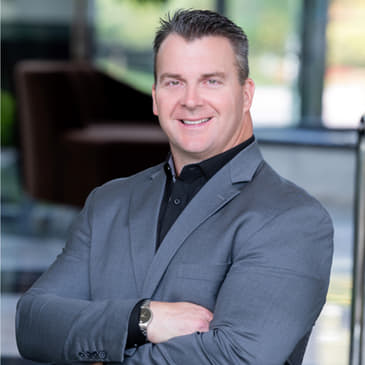
This show kind of wraps up some loose ends for me. In this healthcare podcast, I’m speaking with Mike Baldzicki, who is chief brand officer over at AscellaHealth. A majority of Mike’s background is in specialty pharmacy infusion, capabilities with an array of different healthcare companies. So, he is a great guy to wrap up some of these loose ends with.
On the show today, we discuss how many/the percentage of self-funded employers who have taken their specialty pharmacy business from the “Big Three” or “Big Five” PBMs, how many of them have actively started steering their members and managing their benefit carefully. I talk with Mike about what these employers are doing and how they are doing it.
From there, the conversation, of course, naturally flows into preventing hospitals from rapaciously buying and billing, which then segues into a discussion about hospital strategy … because if you can’t do your buy-and-bill thing for a whole bunch of your patients, then it makes sense for you to do two things strategically: (1) stand up your own specialty pharmacy and/or (2) set up your own network of infusion centers. Mike and I talk about this.
We also discuss how much trying to get a specialty pharmacy drug sucks for most patients, which I deeply investigated in EP337 with Olivia Webb.
Also in this episode, you can hear me contend that maybe if Pharma and payers enter into outcomes-based contracts, maybe patients would be better served. It’s kind of the pharmacy version of the whole “let’s pay for value, not volume” thing. I ask Mike how many pharma outcomes-based contracts are out there in the wild, for reals.
All of this and more … but you gotta listen to the podcast.
Oh, by the way, acronym alert: SPP stands for specialty pharmacy provider.
You can learn more at ascellahealth.com.
Michael J. Baldzicki, CRCM, is chief brand officer (CBO) at AscellaHealth. As CBO, Mike supports the AscellaHealth Family of Companies comprehensive business strategy to increase brand awareness, boost perceived value, and improve lines of services in the marketplace. He is responsible for oversight of their Family of Companies based on sales and marketing to finance, client services, and specialty pharmacy strategies throughout the organization that drive strategic business initiatives. Within his roles, he enhances the success of the strategic projects and applies business development, contract negotiations, network advancement, and marketing and outreach strategies that cultivate opportunities for AscellaHealth and their Family of Companies.
With more than 24 years of experience, Mike held roles in senior executive management within the specialty pharmacy supply group, pharmaceutical and biotech industry of managed markets, group purchasing organizations, specialty wholesale, and integrated delivery networks. He assumed roles within the pharmaceutical organization such as Bristol Myers Squibb, Enzon BioTech, Novo Nordisk, Baxter BioScience, as well as roles within the distribution channel of AmerisourceBergen specialty groups, BioMatrix Specialty and Infusion Rx, Diplomat/BioRx Specialty Pharmacy, CareCentrix Medical Infusion, Asembia GPO, Axelacare Infusion, to other manufacturer and specialty pharmacy home infusion companies.
Mike is active in the biotech community and is council advisor of the Council of Strategic Healthcare Advisors (CSHA), an advisor/faculty member of the Academy of Managed Care Pharmacy (AMCP) for Specialty Pharmacy Advisory Group & Biosimilars Partnership Forum, NCPDP Specialty Pharmacy Stakeholder Action Group, Self-insured Institute of America (SIIA) advisor, National Alliance of Healthcare Purchaser Coalitions, and was 2014 Editorial Board Member for Specialty Pharmacy Times.
Mike holds a bachelor’s degree in business management and a Certificate in Clinical Research Compliance and Management (CRCM). He has completed programs in leadership development at Harvard University, Brooks Group, Miller Heiman Account Management, and MD Anderson Center Cancer Courses.
04:27 Is it a conflict of incentives to worry about the cost of million-dollar pharmaceuticals?
06:24 “Really, does it make sense to carve up my specialty pharmacy benefit … away from my typical PBM model?”
06:48 What’s the trend line with moving away from the big PBMs?
07:20 Specialty pharmacy episodes.
07:53 How does a small PBM contract with Pharma?
08:34 EP365 with Scott Haas.
10:15 EP337 with Olivia Webb.
11:32 “We’re still lacking the overall insight to data.”
12:15 “When you have insight and good data, then you can start really driving the plan language and cover requirements.”
13:07 “It is a frustrating game because … the large PBMs that have traditionally managed an employer’s spend … doesn’t give them the data that’s needed.”
13:48 What’s going on with outcomes-based contracts?
14:16 What’s the importance of aligning reimbursement around value instead of volume?
14:57 “The issue is, how real is the data?”
19:24 EP370 with Erik Davis and Autumn Yongchu.
20:36 Are hospital-based specialty pharmacies teaming up with big PBMs?
22:01 “It’s market ownership.”
29:17 EP369 with Keith Hartman, RPh.
30:43 “These are real scenarios that are happening in the self-insured planned sponsor market.”
30:59 “Employers really should start recognizing organizations that take more of an integrated and thoughtful approach.”