
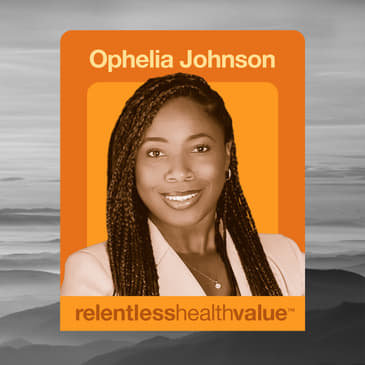
Hello, all you Relentless Tribe members. Welcome to it. Today we have a show that will bend your mind in new directions. And yes, I have a head cold at a very weird time of year. I have trouble apparently doing things like normal people.
Anyway, we talk a lot on this podcast about following the dollar from the perspective of the ultimate purchaser (ie, plan sponsors, employers, and patients/members themselves). But if we truly believe that collaboration is the next innovation, which I truly believe, then we have to understand the incentives that are driving every single player in the healthcare ecosystem.
For a full transcript of this episode, click here.
If you enjoy this podcast, be sure to subscribe to the free weekly newsletter to be a member of the Relentless Tribe.
So, today we are flipping the script and looking at the cash-pay and, therefore, by default, the GLP-1 market strictly from the perspective of a pharma manufacturer, a pharmaceutical manufacturer.
Or vice versa, if you work for a pharmaceutical manufacturer today, you'll hear a little bit about what the other side of the house might be thinking, where plan sponsors contemplate pharmacy trend increases: 9%, 12%, I've heard 20% increases in spend year over year.
First, though, we're gonna start out with the cash-pay programs' why here, one of which I just mentioned, which is that pharmacy trend increase. But I'm gonna read a post by David Alderman from LinkedIn the other day that I think very eloquently sums up the perception of the sequence of events from the standpoint of many people.
David Alderman wrote, "The system did not break. It worked. That is what nobody wants to say at the [pharmacy] counter. For 30 years, Americans were handed a plastic card and told it meant protection. Often it meant admission to a maze. The lie was not that healthcare is complicated. It is. The lie was that complication deserved obedience.
"Then GLP-1s happened. Not just as drugs. As a behavioral hack. People who had never read a benefit design document suddenly knew the difference between a coupon, a cash price, a telehealth intake, a pharmacy partner, a prior auth, a vial, a pen, and a refill queue. [And] they were doing it at 11:42 p.m. on [the] couch."
Read that whole post. It's all very interesting.
But right now, Ophelia Johnson, my guest today, is gonna add and subtract and tote up the difference from the standpoint of a pharmaceutical manufacturer. Because for them, the why and the math is somewhat different. It's the equal and opposite side.

What did pharma manufacturers see that caused them to create the coupon, a cash price, a telehealth intake, a pharmacy partner in the first place? We talk about this, Ophelia and I; and then we dig into the back end. When a patient uses a savings card like GoodRx or goes through a direct telehealth channel, how does the money actually flow?
But here's the catch for any money flow to actually work from, again, the standpoint of a manufacturer doing any model that isn't the traditional "sell it to a wholesaler and get paid by a PBM" model. Doing anything off the reservation like this successfully requires a level of operational discipline that many pharma companies are, at this point anyway, not structurally set up for.
When you cut out the PBM and start managing new channel partners, supply chains, dispensing fees yourself, yeah, it's kind of a whole new thing. If a pharma company isn't buttoned up on its gross-to-net calculations in unit economics, they are staring down the barrel of the old so-called revenue leakage, right?
We also get into the Whack-a-Mole game of perverse incentives a little bit later in the conversation.
But also, excitingly, some big PBMs are creating new administrative fees to manage the exact prior auth complexities that they created in the first place.
My guest today, as mentioned at least three times, is Ophelia Johnson. Most recently, Ophelia built the new business channels for the manufacturer that created the GLP-1 boom. She has said in doing that, she learned the power of partnership and collaborating across the health ecosystem to drive change the right way.
And yeah … exactly. Ophelia recently started a consulting practice, and you can find out more information here.
This conversation with Ophelia today I would consider some fairly essential listening, whether you are a pharmaceutical executive trying to build out maybe a new distribution channel without getting yourself in hot water or a plan sponsor trying to get insight into how to shift focus from "rebate yields" to actual medication abandonment rates and outcomes, which, by the way, might mean picking out your formulary in advance of selecting the vendors to deliver on said formulary of high-value drugs through whatever channel makes the most sense.
Ann Lewandowski, along with Lena Chaihorsky, was talking about this recently on LinkedIn. But right? Pick the formulary you want your members to be able to get and then find the right combination of the right vendors in the right channels to do that the most effectively.
All right … one more thing before I introduce Ophelia Johnson and we talk cash pay from the standpoint of a pharma manufacturer. I was faced with a conundrum. My second thought—not my first, my second thought—was to put right here in this introduction a sort of explainer of the behind-the-scenes contracting goings-on that sit behind, for example, why the lowest-price branded med or lowest-price biosim as another example are not on formulary and then maybe those brands start thinking about going cash pay.
Here's a sort of backgrounder post on this topic by Madelaine Feldman, MD, on LinkedIn the other day.
But why? So, I said my second thought was to stick the explainer here to go off on a tangent about this right now, but yet it is just way too long and slightly off topic.
My first thought was to do a whole episode with a guest on this topic. But I was having trouble finding somebody willing to discuss this stuff on record. So … right.
I say all this to say come back next week. I'm gonna do probably a very short airing of some laundry on this topic. Do come back for that. See you next week.
Thank you so much to our founding sponsor, Aventria Health Group, and also the financial assist from Payerset. Please visit Payerset's Web site. They're doing some very interesting things in the price transparency space.
So, let's get to it. Here is my conversation with Ophelia Johnson.
Also mentioned in this episode are E.fi; David Alderman; Ann Lewandowski; Lena Chaihorsky; Madelaine Feldman, MD; Aventria Health Group; Payerset; Bryce Platt, PharmD; Ge Bai, PhD, CPA; Luke Slindee, PharmD; and Nina Lathia, RPh, MSc, PhD.
For a list of healthcare industry acronyms and terms that may be unfamiliar to you, click here.
You can learn more at e-fi.works and by following Ophelia on LinkedIn.
Ophelia Johnson is the founder of E.fi (E-fi), a strategy and execution firm for healthcare, tech, and public sector leaders who know exactly what they want to build and need a partner who can make it reality.
After nearly a decade inside Pharma's most complex organizations, including Merck & Co., Bristol Myers Squibb, and Novo Nordisk, Ophelia has worked across every division: manufacturing, R&D, commercial/market access, and business operations. She has navigated drug shortages, developed vaccines, resolved manufacturing failures, and built enterprise systems from the ground up. Most recently, she architected Novo Nordisk's direct-to-consumer and direct-to-employer channels, both built from zero. Across her career, her work has contributed to the launch of more than 25 products and programs, including 10 partnership deals launched in the last 12 months.
What she kept seeing, across every organization, was the same breakdown: a strong idea, aligned leadership, and then no execution. E.fi exists to close that gap. The firm structures strategic partnerships, builds systems that scale, and drives the cross-functional alignment that turns strategy into successful launches. Ophelia works with organizations where the stakes are high, the problem is complex, and getting it right means more patients can access the care they need at a price they can afford.
00:00 Introduction to this episode.
02:02 LinkedIn post by David Alderman.
06:13 LinkedIn post by Ann Lewandowski.
07:05 Backgrounder LinkedIn post by Madelaine Feldman, MD.
08:07 The conversation with Ophelia Johnson.
08:14 What is cash pay?
08:59 Why is this a thing, and how did we get here?
10:47 LinkedIn post by Bryce Platt, PharmD, on prior authorization reform.
12:28 The different ways that a patient could go about receiving and paying for their drug.
13:22 What's going on behind the scenes between GoodRx and the pharma manufacturer.
17:02 What dispense fees are and how they work.
17:41 A sidenote about next week's episode.
18:00 AEE13 with Ge Bai, PhD, CPA.
19:03 EP439 with Luke Slindee, PharmD.
20:03 A sidenote about the pharma manufacturer POV.
21:44 The pharma supply chain in telehealth.
25:27 Why claims validation has never been more important.
28:19 Where do employers fit in all of this?
32:45 Where does it make sense to consider these alternative business models in lieu of the risks?
35:04 Why mapping the incentives is important.
38:42 Ophelia's advice to pharma manufacturers.
40:41 Ophelia's advice to plan sponsors.
41:32 EP426 with Nina Lathia, RPh, MSc, PhD.
42:46 More of Ophelia's advice to payers.
Recent past interviews:
Click a guest's name for their latest RHV episode!
Michelle Cera, Matt Cantor, Brennan Bilberry, Doug Aldeen, Dr Siva and Dr Monica Lypson, Betsy Seals, Patrick Nelli, Lee Lewis
[00:00:00] Episode 516, GLP-1s and Cash Pay From the Pharma Manufacturer Point of View. Today, I am speaking with Ophelia Johnson. American healthcare entrepreneurs and executives you want to know, talking, relentlessly seeking value.
[00:00:29] Hello, all you Relentless Tribe members. Welcome to it. Today, we have a show that will bend your mind in new directions. And yes, I have a head cold at a very weird time of year. I have trouble apparently doing things like normal people.
[00:00:47] Anyway, we talk a lot on this podcast about following the dollar from the perspective of the ultimate purchaser, i.e. plan sponsors, employers, and patients slash members themselves. But if we truly believe that collaboration is the next innovation, which I truly believe, then we have to understand the incentives that are driving every single player in the healthcare ecosystem.
[00:01:16] So today, we're flipping the script and looking at the cash pay, and therefore, by default, the GLP-1 market, strictly from the perspective of a pharma manufacturer, a pharmaceutical manufacturer. Or vice versa, if you work for a pharmaceutical manufacturer. Today, you'll hear a little bit about what the other side of the house might be thinking, where plan sponsors contemplate pharmacy trend increases.
[00:01:47] 9%, 12%. I've heard 20% increases in spend year over year. First, though, we're going to start out with the cash pay programs. Why here? One of which I just mentioned, which is that pharmacy trend increase. But I'm going to read a post by David Alderman from LinkedIn the other day that I think very eloquently sums up the perception of the sequence of events from the standpoint of many people. David Alderman wrote, The system did not break. It worked.
[00:02:15] That is what nobody wants to say at the pharmacy counter. For 30 years, Americans were handed a plastic card and told it meant protection. Often, it meant admission to a maze. The lie was not that healthcare is complicated. It is. The lie was that complication deserved obedience. Then GLP-1s happened, not just as drugs, as a behavioral hack.
[00:02:42] People who had never read a benefit design document suddenly knew the difference between a coupon, a cash price, a telehealth intake, a pharmacy partner, a prior auth, a vial, a pen, and a refill queue. And they were doing it at 11.42 p.m. on the couch. Read that whole post. I'll link to it in the show notes and also the comments. It's all very interesting.
[00:03:02] But right now, Ophelia Johnson, my guest today, is going to add and subtract and tote up the difference from the standpoint of a pharmaceutical manufacturer. Because for them, the why and the math is somewhat different. It's the equal and opposite side. What did pharma manufacturers see that caused them to create the coupon, a cash price, a telehealth intake, a pharmacy partner in the first place?
[00:03:30] We talk about this, Ophelia and I. And then we dig into the back end. When a patient uses a savings card like GoToRx or goes through a direct telehealth channel, how does the money actually flow? But here's the catch for any money flow to actually work from, again, the standpoint of a manufacturer.
[00:03:53] Doing any model that isn't the traditional sell it to a wholesaler and get paid by a PBM model, doing anything off the reservation like this successfully requires a level of operational discipline that many pharma companies are, at this point anyway, not structurally set up for. When you cut out the PBM and start managing new channel partners, supply chains, dispensing fees yourself.
[00:04:23] Yeah, it's kind of a whole new thing. If a pharma company isn't buttoned up on its gross to net calculations in unit economics, they are staring down the barrel of the old so-called revenue leakage, right? We also get into the whack-a-mole game of perverse incentives a little bit later in the conversation.
[00:04:44] But also, excitingly, some big PBMs are creating new administrative fees to manage the exact prior auth complexities that they created in the first place. My guest today, as mentioned at least three times, is Ophelia Johnson. Most recently, Ophelia built the new business channels for the manufacturer that created the GLP-1 boom.
[00:05:09] She has said in doing that, she learned the power of partnership and collaborating across the health ecosystem to drive change the right way. And yeah, exactly. Ophelia recently started a consulting practice and you can find out more information in the show notes.
[00:05:27] This conversation with Ophelia today, I would consider some fairly essential listening, whether you are a pharmaceutical executive trying to build out maybe a new distribution channel without getting yourself in hot water, or a plan sponsor trying to get insight into how to shift focus from rebate yields in air quotes to actual medication abandonment rates and outcomes,
[00:05:54] which by the way, might mean picking out your formulary in advance of selecting the vendors to deliver on said formulary of high value drugs through whatever channel makes the most sense. Anne Lewandowski, along with Lena Chihorsky, was talking about this recently on LinkedIn, link in the show notes.
[00:06:18] But right, pick the formulary you want your members to be able to get and then find the right combination of the right vendors and the right channels to do that the most effectively. All right. One more thing before I introduce Ophelia Johnson and we talk cash pay from the standpoint of a pharma manufacturer. I was faced with a conundrum.
[00:06:39] My second thought, not my first, my second thought was to put right here in this introduction, a sort of explainer of the behind the scenes contracting goings on that sit behind, for example, why the lowest price branded med or lowest price biosim, as another example, are not on formulary. And then maybe those brands start thinking about going cash pay.
[00:07:05] I will link to a sort of backgrounder post on this topic by Dr. Madeline Feldman on LinkedIn the other day. But why? So I said my second thought was to stick the explainer here to go off on a tangent about this right now. But yeah, it is just way too long and slightly off topic. My first thought was to do a whole episode with a guest on this topic. But I was having trouble finding somebody willing to discuss this stuff on record. So, right.
[00:07:35] I say all this to say, come back next week. I'm going to do probably a very short airing of some laundry on this topic. Do come back for that. I'm Stacey Richter. This is Relentless Health Value. See you next week. Thank you so much to our founding sponsor of Ventria Health Group and also the financial assist from Payerset. Please visit Payerset's website. They're doing some very interesting things in the price transparency space. So let's get to it.
[00:08:04] Here is my conversation with Ophelia Johnson. Ophelia Johnson, welcome to Relentless Health Value. Thanks for having me. Excited to be here. Well, I am so excited to have you here. If we're thinking about what pharma would consider a new way to sell their product, this whole cash pay has entered the building. When I say cash pay, what do you say? And then we'll drill into some details here. Sure.
[00:08:33] So what is cash pay? Also known as self-pay or direct-to-patient model in pharma. Some may also say direct-to-consumer. But it's really a simpler way for a manufacturer to give a drug discount directly to a patient at the pharmacy checkout, bypassing the pharmacy benefit manager, the PBM, altogether. So instead of sending a rebate through the black box of the PBM, the savings goes straight to the patient at one transparent price. Now, we can set the stage for how we even got here. Why is this a thing?
[00:09:03] Why is it booming right now for pharma in addition to a second model, which we'll touch on in a minute? So to back up, the traditional model, which I think most understand of how pharma makes money, selling drugs to wholesalers, wholesalers sell that to pharmacies, pharmacies get reimbursed by PBMs. PBMs, let's say they orchestrate a black box of a financial system where they mix up rebates and some of that goes back to plan sponsors.
[00:09:29] But what we've seen over the last several years is there's been a series of events that have set the stage for these two new models in pharma. The first with legislative changes. So we saw Inflation Reduction Act, maximum fair price, all of that creating more pricing pressure for pharma manufacturers. We saw legal actions being taken against PBMs and PBM reform. So what does that boil down to?
[00:09:52] Forcing lower prices and transparency could change and potentially reduce profitability for key players in the ecosystem, which sent everyone's grambling. Now, on top of that, the GOP-1 boom exacerbated the bleeding with only, say, roughly 50% of new prescriptions getting approved for coverage in 2023. This is a different perspective, all you plan sponsors listening.
[00:10:21] I bet when you heard GLP-1s are exacerbating the bleeding, you were thinking about your pharmacy trend. But this is from the one person's cost is another person's profit angle. And from a pharma company's perspective, a pharma manufacturer's perspective, only 50% of prescriptions written are getting filled. And dare I just add an insight for my actual day job, which corroborates this and not just for GLP-1s.
[00:10:47] If any plan sponsors are interested in this because you're being told that like 90% of prior auths are being approved. Bryce Platt actually wrote a post about this the other day, but feel free to hit me up. I got a lot of insights. And so what that exposed, along with a drug shortage, was this toll road is clogged and patients aren't going to just sit in traffic. They're going to potentially take this new bypass.
[00:11:10] And so the compounding industry created a bypass that proved there was significant demand for more convenient access to medications, self-pay, cash pay, and this new model. As we all know, because we've heard this so many times, just how often someone goes into the pharmacy and the insurance price literally is higher than Mark Cuban or just walked in with a good Rx card or just said, what's your... Right? Just with the affordability issues in this country, patients and consumers, whatever you want to call them, are getting a little bit wise.
[00:11:40] The compounding thing happened with the GLP-1. So people are like, wait a second. So what I'm hearing is now this new sort of channel opens up and you've got... It's a two-sided market because you've got the pharma manufacturers pricing pressures. Then you've got consumers. And this is bigger than just the GLP-1s, but sometimes you need something to open the door with a bang. And GLP-1s certainly have done that.
[00:12:08] But let me ask you some questions now. If I'm thinking like a pharma manufacturer right now, it's not just like my drug magically appears in the pharmacy. And it's not, generally speaking, I'm going to say in a pharma manufacturer's wheelhouse to handle supply chains from beginning to end. So let's talk about the different ways.
[00:12:31] If I am a patient looking to get my med, that I could go about actually being able to receive my drug and pay for it. Yeah, let's get into the mechanics. The first way and a very common way patients can get access to a self-pay or cash pay price today is a manufacturer posts a discounted cash price for a drug on a popular savings coupon site. A patient can go to that coupon site.
[00:13:00] They search where they want to pick it up. They print out that coupon. They take it into that retail pharmacy and they pay cash. The retail pharmacy will generally honor that price. You get in, you pay, you leave, you got your product. Let's talk this out. So you've got, and the biggie here is GoodRx. Let's just say that name here. So I have a GoodRx coupon.
[00:13:26] Tell me what's going on behind the scenes with GoodRx and the pharma manufacturer. Great question. So while the process on the front end is simple for patients, anyone in pharma listening knows there's so much operational complexity on the back end. Whether you're working with savings coupon providers and we'll get into the other models with telehealth partners and others in a minute. But what's happening on the back end is pharma's removing the PBM altogether.
[00:13:53] So they're now contracting with a new party to say, hey, savings coupon provider, GoodRx, you name it. All of the pharmacies you already contract with, please ensure that they're honoring this discounted price. And then I will buy down the patient to that flat price. So instead of giving that rebate to a PBM, I'm going to make sure the patient sees that full savings. And in exchange for your services, savings coupon provider, GoodRx, you name it,
[00:14:21] in exchange for your services and administrating this complexity, we'll pay you a flat fee. So when you say buy down, then what we're talking about here is the list price of the drug is whatever, $500. I'm going to buy it down. So instead of giving this, like I knew I'm, if I go through a PBM, I know I'm going to give a rebate. If I know that my net price is normally $300, let's just say, then I'm just going to say, you know what? The price of this drug is
[00:14:51] $350 because I'm going to give GoodRx or this, I'm going to give them $50. And now I can break even. Yeah, it's actually typically less. So let's use simple math. Let's say the list price of the drug is $500. The cash price that the patient pays at the pharmacy counter is $100. So keep in mind that patient is taking that whichever coupon to that retail pharmacy. That retail pharmacy purchased at list price,
[00:15:18] minus a couple points that they negotiated off WAC. So that pharmacy still has to be made whole for selling that product to the patient. They paid $500. They're collecting $100 from the patient at point of sale. Who makes the pharmacy whole? The PBMs in the traditional model do. And the self-pay model. Theoretically, yeah. There were some people whose brains just exploded right now. But okay. This is true. We all know the funny math that comes with AWP and things. So pharmacies don't always get made whole.
[00:15:48] We'll come back to it at the end of the show. And in terms of advice for pharma, design your models wisely. Because the complexity that comes on the back end of this is, how does this work within your existing operations, your gross to net calculations, your unit economics, when you start introducing a lot of new channel partners? It is possible though to do it well. And the beautiful part that this model creates is fixed fee transparent prices, right?
[00:16:18] A savings coupon provider will just get a flat fixed fee for the service. Maybe you get $2 per script, whatever that fixed fee is. So it allows some more control versus that black box PBM math that no one knows what's going on. So in this particular case, generally speaking, if we're thinking about the PBM model, right? Like if it was a $500 drug, no one would blink an eye. If the rebate was $300, like $400, right? Like sometimes these rebates are at a significant proportion.
[00:16:48] What you're basically saying is good or X is okay, or whoever, the coupon card, they might be taking two, three bucks. And then the pharmacy is on the, who's paying the pharmacy? The savings coupon card? The savings card? The dispense fee, typically. Okay. So they'll call it a dispense fee, but what the dispense fee is is kind of a combination of dispense fee, but then also making the pharmacy whole fee. So it depends. So typically savings coupon providers will contract with pharmacies upfront.
[00:17:16] So they tend to have large networks of pharmacies under contract where they've pre-negotiated specific fees and rates that give that pharmacy profit for doing business with them and accepting their coupons. So it's really the parties contracting directly with the pharmacies that are making them whole. But we all know pharmacies, unfortunately, tend to get the short end of the stick and not getting as much profit as others. Okay. So right here, I'm going to say,
[00:17:45] come back next week because this, who pays the pharmacies is a 401 level separate conversation. And this is a 201 overview into the why and options and operations of cash pay. If you want to spoiler, however, in the meantime, do go back and listen to the episode with G by PhD that is entitled, how does good Rx make money? Because in many cases, at least in the past,
[00:18:13] these same rules apply here. Also, I'll just say here, there's certainly more than one way to go about this. And I have no doubt that some brands are picking their transparent price. Every day is a new day with new goings on, with new entrance, new carve outs into this new market where behavioral hacks now apply. But for sure, the way it works with certainly some other drugs is that good Rx does the thing
[00:18:41] where they go around and they shop all the PBMs and find the lowest cash price that any given PBM will accept. And then that's the transparent net price advertised for any given pharmacy in their network. So the adjudication actually goes through that lowest price PBM, whoever it may be, who then pays the pharmacy as per normal traditional methods. And if you have any questions about normal traditional methods, do go back and listen to the show with Luke Slendy for how that goes down.
[00:19:11] If I'm just kind of evaluating what I'm hearing here from a couple of different standpoints, it enables a patient to get a drug that they couldn't get through their insurance. Potentially at a much lower price, just given all of the situations, I'm not sure what to call it, in which someone with insurance pays more than someone without insurance. But to your point, this does, it's a whole new thing for a pharma company. And if they're not real efficient and they're not real good at doing the math, there's some potential here
[00:19:40] for money to, let's just say, not be made. Revenue leakage is a huge risk. And particularly when you're expanding your channel partners in the cash pay or self-pay model. So we talked about the savings coupon provider for the retail channel. There's so many others now. We'll all focus on the biggest ones and that's telehealth. Reset your brains, relentless tribe. We're thinking about this again, from the standpoint of a pharma manufacturer.
[00:20:09] And by the way, if there are any new pharma folks in the building today, welcome. And I hope this episode or this podcast in general gives you insights to design programs that not only work from your side of the two-sided market here, but also work from the other side of the market, meaning the ultimate purchasers who are the ones actually paying for the meds, meaning employers, members, and patients themselves, plus taxpayers, of course.
[00:20:39] So you go to a large telehealth provider that also dispenses, right? We have some very big name ones that ships us products in two days or less. You say, hey, I want you to allow a very easy patient experience where a patient can have their telehealth appointment. They can actually pay online and elect to have that prescription shipped to their home. And I'll make sure you're made whole for providing that service. Well,
[00:21:07] that is a brand new distribution model for a lot of pharma companies that adds a lot more complexity to their back-end operations. How is that different than the one that we just talked through with a savings coupon? Wouldn't you just swap out, like, find and replace savings coupon vendor with telehealth purveyor? In some ways, that piece is the same. You're still buying down the patient to that cash price and the telehealth provider that's also potentially
[00:21:36] offering dispensing capabilities or mail order is the one administering it instead of the coupons provider. So that piece is the same. The complexity comes in when you're saying, well, who ships products to the telehealth provider? Or who pays for shipping? Who pays for the credit card fees? How do you actually formulate that model in a way that's clear and easy for patients? I see. Okay. So the telehealth in this particular model, like a pharmacy, you walk up to the counter
[00:22:05] and you can see the drugs in the back there, right? So they are both, and listen to the show with Luke Slendy if you're completely baffled here, but like there is in this traditional supply chain wherein the pharmacy gets the drug is totally different from the payment chain in which the pharmacy gets paid and like everything meets at the pharmacy counter. In this particular case, what you're saying is you could have a telehealth as sort of the, this is where the patient buys the med, but then you still have to deal with that whole supply chain on the back end.
[00:22:35] Like where's it coming from? Is it drop shipped from somewhere? So talk about that. Exactly. And you have new models today and I'll talk about this next one. Where a telehealth provider can prescribe to a manufacturer-owned facility or manufacturer white-labeled facility that houses medication and dispenses medications, right? So there's many now pharmacies that allow manufacturers to white-label their pharmacy
[00:23:03] as a pharmacy direct, right? A manufacturer-owned facility. Interesting. PBMs own pharmacies and they also manufacture drugs these days like biosimilars. So therefore, they're also a drug manufacturer that owns pharmacies. So that manufacturer-owned facility or white-labeled pharmacy can sort of interface with that telehealth provider API connection, ship the patient their drugs. And that tends to work well
[00:23:33] where I think the challenges that pharma has to streamline for themselves to make this a sustainable distribution channel and make sure patients who are growing accustomed to now this new option can stay on the new option. How do you make cost transparency as crisp and clear as possible so the patient knows what their all-in cost is? Because if we're honest, while self-pay and cash pay
[00:24:01] has done amazing things for increasing and broadening access, bypassing all the prior-off complexity, all the things that PBMs have thrown in the way and that slows patients from getting access to therapies they need, it is still costly. And that is sometimes not sustainable for patients long-term. There's sort of two things that you said there. One of them is it's not like with some of these telehealth vendors that whoever's sitting on the back end, it's not like there's a warehouse
[00:24:30] that that telehealth vendor tends to have. There is a whole thing involved in how do you ship drugs. So if it's a pharma manufacturer, like this is a channel that they're looking to support, they may go to a pharmacy or two or three and contract with that pharmacy. There's pharmacies that have stood themselves up and said, look, if you are a front end from a digital health, that's what we're going to do. Like we'll work with you, right? So this is becoming a little ecosystem in and of itself. Either way,
[00:25:00] as a manufacturer, you have to still be concerned with how much are you getting on the front end, which is the telehealth that's passing dollars onto you. And then how much are you paying on the supply side? And similarly to the math that pharmacies have to do all the time, pharma manufacturers now get to handle that spreadsheet and make sure that the columns add up. Yes, spot on. Claims validation has never been more important
[00:25:30] for gross to net management, for preventing revenue leakage, all the same things that are done in the traditional channel, but that PB and black box makes everything aggregated and so leakage gets a little more tricky. Well, now it's all on you. You get to design it as a pharma manufacturer and you get to make sure the channels you deploy are helping you achieve your goals and helping broaden access to patients if you actually take the time to do that intentionally. Yeah, I could certainly see that as a pharma manufacturer,
[00:25:59] especially one that has had the same department classifications since time in memoriam. I mean, is it a new department that you would need to stand up to figure out how to do this math and work with all these new channel partners and just understand the gist of all this and how the operation works? Because I would suspect that the gang which is doing PBM contracting today, who's probably very, very skilled at that, first of all,
[00:26:28] already has a day job. And second of all, this is a whole different thing, right? I can see how this could go horribly wrong just structurally. Structurally, organizationally, operationally, you're spot on. I mean, we've seen you can kind of peruse through LinkedIn and kind of get a sense for how some of these manufacturers are organizing and centralizing brand new divisions even to operate this end-to-end, whereas others may be in a more disparate, disconnected way and then you have
[00:26:58] to ask yourself, is that going to help us scale? Is that going to help us maintain a sustainable patient population and patient flow and patient experience? So that is actually a space that I'm particularly enthusiastic and passionate about fixing because in order to do it well and do it at scale, you do have to organize very intentionally. Let's bring employers into this mix and when I say employers, I mean self-insured employers. If I am thinking like an employer employer,
[00:27:54] most of the time that's even really hard to figure out, right? Because there's just the data silos. But also if I'm a big PBM and I'm thinking about formularies and we're thinking about all the things that we just talked about and if I'm really concerned about maximizing rebates, like the more you're thinking about maximizing the rebates, to a certain degree, that is almost a counterpoint to what's the value of this dragger. It's at a minimum uncorrelated, right? So if I'm thinking about bringing employers into
[00:28:22] this mix now, is it now employers work in direct? Like, help me out here. Where do employers fit in? Great question. And in comes the second model that Pharma is exploring and that's a direct-to-employer model. Now, it's a bit of a misnomer because we all know PBMs contract in ways to maintain their leverage. So they put a lot of exclusivity language in their contracts that prevent other parties from working with other parties that are their customers.
[00:28:51] But what is happening from an employer seat is this new model that Pharma is rolling out offers far more visibility and flexibility than a traditional PBM model. And here's how. Let's say you're a self-insured employer and you want to help provide a benefit where your employees can access a GOP-1 medication, but you're worried about cost. You can reach out to a transparent administrator, who are now popping up more and more these new
[00:29:21] kind of third parties, but they're not quite TPAs. So we'll call them a transparent administrator. And they offer a transparent net price per script for GOP-1. So you see for the first time, hey, here's the price per drug per script, and here's the flat administration fee. Now, here's where it gets tricky for Pharma and also potentially for plan sponsors. Again, because PBMs work to maintain leverage, they're going to put things in their contracts that
[00:29:50] prohibit pharma companies from, going direct to employers. So pharma companies can't sell these direct to employers, which is why it's a misnomer. So they actually have to work with these third-party carve-out providers. And two, offering prices in a particular way, right? And contractual language varies, right, by PBM. So what a pharma company could do is to provide as much optionality for plan sponsors and what plan sponsors can ask
[00:30:20] for is give me tiers, at least give me some options to be able to design my benefit. Tier one, make it similar to the cash price, right? No prior authorization, very simple, very straightforward, right to label. Anyone who meets the label qualifications is eligible. Very clear, single price. Challenge your welcome carve-out benefit administrators, challenge them to do the math with you and showcase, okay, what's the difference of me going with this
[00:30:50] new transparent price versus just opting in with my current PBM? Yeah, and this last bit about really doing the cold hard math matters, given what Ophelia said earlier about the big status quo PBMs at least being very clever. I have heard more than once from plan sponsors who say that when they started talking about carve-outs, the way the PBM contract was set up, no matter how cheap the cash price wound up being,
[00:31:19] any carve-out would, probably deliberately, let's get real, mess up other contracting provisions and would wind up actually resulting in more spend overall. Furthermore, some of these structures, the way they're set up, wind up with some pretty weird technical ERISA issues, so do call your lawyer. So let's get to the advice portion of this because A, and you alluded to this earlier, in many of these, especially the large PBM
[00:31:48] contracts, and I'm talking about a pharma manufacturer right now, and you think about there's three big people or five big whatever, there's a small cohort of very, very big PBMs. If I sign a contract with one of those big PBMs and that contract says you may not work directly with self-insured employers, you could think to yourself as a self-insured employer, why would a pharma manufacturer sign that? From a pharma manufacturer side, if they don't sign it and get kicked off formulary of
[00:32:17] 100 million Americans, right? Like, this is something to consider. Like, how many self-insured employers are going to belly up to my pharma manufacturer's bar here? Because I know if I do not sign this contract, I will be kicked off formulary by literally like probably a third or a fifth at best or worst of the members who are currently taking my meds. like, this is a very, very big decision. But I'm glad you brought that up, right? Because for anyone in pharma listening,
[00:32:48] this will feel risky and there is in some sense risks there, right? You're going up against someone who could potentially cause you to lose formulary positioning. Where does this even make sense for me to consider in spaces where you're already facing formulary exclusion anyway, right? We see that happening in even more premium products like new Tick-2 inhibitors where they're up against some behemoths and in order to pay to play, the rebates are enormous
[00:33:17] and it's just not feasible to pay that large of a rebate. So there's no shot at getting on formulary. So here's where some of these alternative models, whether it be the cash pay or the direct employer, makes sense and actually has less risk for the pharma company, potentially less risk. And just to, again, kind of just dig in very briefly because this is a whole separate conversation which we are not going to have now, but the point that you're making is if you let's just say you're a new drug and you are coming into an established market,
[00:33:47] you're the fifth drug in this established market, there is going to be a market leader that has 80% I'm making stuff up just to make a point, 80% of the market here and this drug again is well established so it's cost whatever it is and the rebate per unit is whatever it is. If I'm thinking about this like a PBM, I'm multiplying millions and millions and millions of patients times whatever that unit price rebate is.
[00:34:17] So if I'm a new entrant in the market, if I'm a rational PBM, I'm going to be like, well, you have to ensure that if I put your drug on formulary, that you are going to bring me however many millions and millions and millions and millions of dollars because that's what I'm making off that other drug and I'm going to lose, you know, I can tell them that I have an exclusive with them and now there's some kickers and there's additional dollars. Right? So if you're a new agent coming into this market and you already know you're going to be fifth, fifth line
[00:34:46] in some crazy prior step edit scenario. Now, one important piece, while that is a fully rational move for manufacturers and not to pick solely on PBMs, but that's where we are right now. It is a whack-a-mole shift. So as different players are making different moves, the shifts and where profit is being made is going to keep shifting. So I think it's prudent for everyone to be aware of that as you're designing new models,
[00:35:16] deploying new models, map the incentives. Who's incentivized what, where, and how? Because the shift we're seeing now from PBMs to maintain profitability, and I think you mentioned this before, this is kind of the next evolution of game theory, is now PBMs are creating more complexities, the step edits, the prior offs, making that even more complex, yet charging for hub-like patient support services to manage the exact complexity they created. Right? So now they're adding more
[00:35:46] fees to plan sponsors to say, yeah, you know, there's all these things to manage your cost, but we'll help you manage it for you, and here's some extra fees to do that. So be careful. They definitely have a lot of power and know exactly how to use that power, and anyone buying or selling around that behemoth, to your exact point, follow the dollar. I don't know how many times that comes up here, and it's interesting because normally I say
[00:36:16] follow the dollar, and I'm talking about from an employer standpoint, a consumer standpoint, from anyone who is the ultimate purchaser standpoint. it also matters from the standpoint of the pharma manufacturers. Yeah, spot on, and I think Kuperci said this before too, where collaboration will become the new competitive advantage. We're now in a space and time with the legislative changes, with everything happening, consumerization of health
[00:36:45] and what compounding ushered in, where I think no one can do it alone. You have to work together, and yes, there's legal and compliance challenges to doing that. They're not insurmountable, and so how to work together compliantly is the space I live in, how to help these ecosystems come together to drive change, ultimately to help drive down the cost in healthcare, to help broaden access for patients. It is possible. It takes a lot of patience,
[00:37:15] but it is possible, and considering and understanding the perspectives of every single ecosystem player is critical. What's in it for them? What's in it for you? What breaks when you move pieces? What might shift? Right? Thinking five steps ahead. And ultimately, how can everyone win? Because I do think we live in a capitalist society. Profit will remain a priority. You can design things so that everyone remains profitable. I've been saying this quite a bit recently. There's a difference between making a fair
[00:37:44] profit and profiteering. Yes. And my working definition of profiteering at this moment is if you make more money when a patient or member does worse, that is, let's just say it's a low bar. Yeah, problem. But you cross that line, you're definitely profiteering. Yes. Yes, problem. Yeah. And shifting the incentives structurally, like it's, again, I know, you know, Warren Buffett with Haven, others have tried to
[00:38:14] tackle this. It is not an easy challenge to solve by any means, but the message and maybe my slight evangelism to those listening and there's, you know, roles for pharma, roles for clinicians, roles for plan sponsors, but there is a way to come together, be open. I think there's more now than ever, different players in the ecosystem working to kind of connect these dots and make things easier for everyone and bringing some really cool solutions to the table. So be open to innovating, trying new things. So if you were just going to sum up your advice
[00:38:44] in sort of like a one, two, three, and let's start with pharma manufacturers, what's your like do this summary here? To pharma, start with the end in mind. You have to map the patient journey from beginning to end and then map all of the roles of the rest of the ecosystem players in that when you're designing any new model, whether it's direct to patient or direct employer. A poorly designed business model creates more risk to you operationally and ultimately more risk to patients and not being able to stay on therapy.
[00:39:14] So start with the end in mind, design intentionally. And the one thing that I would add there, and you said this earlier, and I don't think I have ever seen a pharma manufacturer do this, and I'm not saying I'm everywhere all the time, so maybe some are, but I don't think I've ever seen a pharma manufacturer map a patient or a prescription journey along with the financials of how that individual probably is making money, number one, and how they would switch up what they are doing to maintain their profit margin
[00:39:43] on that step. So it's really interesting what you're saying is like map it out, but then also no one's going to solve a problem when they're getting paid for that problem to exist. Yes. So for clinicians, many of you already treat affordability as a clinical risk factor, but now with so many different cash programs, it is becoming more complex, and I understand the burden, especially with provider hopping and virtual care.
[00:40:12] I urge you to tap into communities like here on Relentless Health Podcast, but also tap into your ecosystem players that are doing different things and piloting different things to help close that gap and improve continuity of care. So if you get approached to pilot, hey, we want to make sure you have full visibility to what this patient is experiencing, be open to that because we can only get better with live real feedback. So that's going to be important.
[00:40:41] And then to plan sponsors, shift the formulary conversations from rebate yields and what's kind of the aggregate at the end of the day to how is this benefit design reducing medication abandonment rates demonstrably through auditable data. That's going to be critical because in order to, and you said it earlier, Stacey, in order to realize the value of medications ultimately reducing total cost of care, patients have to stay on
[00:41:10] therapy to get to that ultimate health outcome. So consider some of these new models, consider piloting them to understand how can you use it to shift the conversation away from rebate yields to how are we reducing medication abandonment rates and ultimately improving total cost of care, reducing long-term costs. This last one is super interesting and I would recommend anyone go back and listen to the podcast with Nina Latheo about creating a high-value formulary
[00:41:40] because as we keep talking about it, sometimes it's really difficult to understand what the medical costs are which are impacted by what's going on with the pharmacy. What you've kind of just talked about is a little bit of a proxy there, that if you have a high-value formulary or even if you just know which drugs on that, like pick a market basket of drugs which are known to be high-value just based on literature, look at what the adherence rate is or look at what the length of therapy is on those particular
[00:42:09] drugs because if you're looking at a high-value drug and you see that your average patient is on it for a month and a half, there's a problem and that will ultimately, like even if you don't know how or you don't have access to or it's just an analytical nightmare to figure out what your internal plan data is, you can probably see what's going on with the plan and just how efficient and effective it is in managing its drugs and making sure that the right patients are getting the right drug. If you find one of these high-value drugs and you
[00:42:39] see patients for whatever, you can drill in from there, but like struggling for some reason to maintain that drug therapy. Yeah, and I'd urge Paris to again be adamant, add pressure. Feisty, I've heard, I've heard it said. Be a little demanding, right, and wanting to see that data because it is an area where a lot of manufacturers and these new sort of carve-out benefit administrators are investing a lot of time and effort to be able to showcase
[00:43:08] that longitudinal view so that you can track that end-to-end. And so it only continues to be invested in when there is that demand. So be demanding, ask for it, audit your data, continuously push because that's how we're going to keep pushing the envelope and innovating to make sure we're getting those ultimate outcomes. Ophelia Johnson, if someone is interested in learning more about your work or your services, where would you direct them? Sure, for anyone
[00:43:38] looking to transform healthcare and wants partnership and how do we create these unique ecosystems, be able to go to www.e-fi.works W-O-R-K-S or reach out to me on LinkedIn. I'm more than happy to collaborate and try to pilot something that can help patients all around the country. Ophelia Johnson, thank you so much for being on Relentless Health by you today. Thank you, Stacey. I appreciate it.