
First, let’s talk about reducing administrative waste in the US healthcare system. There was a pretty famous 2019 study by Shrank et al. that estimated about 25% of the $3.6 trillion the US spends on healthcare annually is potentially wasteful. This is each person spending $2500 unnecessarily.
Robert Kocher wrote a really interesting article about getting rid of administrative waste and inefficiencies, and he said that it is the “safest form of health care cost savings; virtually no one argues that administrative costs should remain high. Reducing administrative waste should be the highest priority … [because] everyone, including patients and clinicians, would benefit from lower health care costs.” In my mind, “everyone” means payers, policy makers, and also providers who are or want to take some accountability for the total cost of care here.
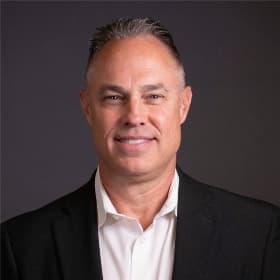
To talk about the possibilities, I have the perfect guest: Gary Campbell, who is the CEO of Johnson Health Center, which is an FQHC, a Federally Qualified Health Center, in Lynchburg, Virginia. Why is the CEO of an FQHC a great person to talk about cutting out administrative waste with? Well, first of all, the patient population is what many would consider challenging at an FQHC. Second, they really have to cut out as much waste as possible because there is zero potential to cost shift. They do not have the option to charge their commercial lives 4x Medicare or whatever and effectively cost shift the impact of inefficiencies. There basically are no commercial lives. You either figure out how to be efficient, or the patient population does not get care.
As Gary and I were talking, however, it became clear that when you cut out administrative waste, you wind up actually with the potential to become a great place to work. One reason for this just has to do with the process of cutting out waste, which requires culture and process. And a by-product of a great culture and a great process means a great place to work.
You might be thinking, as I was thinking, that this show, which is supposed to be about cutting administrative waste, is going to be all about how to do lean and Six Sigma and pretty much go peak MBA. Spoiler alert: It’s not. When I asked Gary how to be operationally efficient, it all ladders up to organizational leadership: leaders who commit to putting patients first, to have core values with the expectation to actually achieve them (for reals—not just in the marketing). Because without effective, accountable, committed leadership, patient first, lowering the cost of care, removing administrative waste … it ain’t gonna happen. Leaders should be visible, have a vision, a strategic plan, project plans, and be inspirational. They also need to not be afraid to “move along,” as they say, people who are pulling the team down and holding it back—maybe even if a short-term revenue hit will transpire.
Before we get started here, let’s talk about FQHCs for a sec just in case you’re unfamiliar. Besides the acronym giving me fits of dyslexia—my brain always wants to invert the letters, so I have a Post-it Note here and I’m staring at it so, hopefully, I’ll be able to keep this straight—FQHCs (Federally Qualified Health Centers) are usually nonprofits that are oriented to take care of the underserved. Today they serve upwards of 30 million people in the United States, and that’s a growing number. There’s something like 1500 of them across all 50 states. They’re federally funded. They are a safety net really for individuals out there who may not be able to access care anywhere else. There’s generally bipartisan support for FQHCs and often a real purpose and passion to really care for people regardless of their ability to pay. They also tend to offer a lot of resources under one roof (eg, medical care, dental care, other things, mental health care), which can add substantially to the operational complexity.
Gary Campbell, my guest in this healthcare podcast as I said, is the CEO of an FQHC. Gary has a procurement and operations background, and this background informs how he approaches leadership and care delivery in ways that I find inspirational—and I hope that you do, too.
Some of the conversation that we had in this episode reminded me of the interview with Tony DiGioia, MD, in EP332; so if you want to dig further into this topic, go back and listen to that episode. That interview is very specifically about how to create a patient-centric value system, which Dr. DiGioia says should be the new OS for healthcare delivery. During this show, I also mention my conversation with Jerry Durham (EP297), where we talk about streamlining the front desk.
I didn’t mention this in the show, but another episode that would be great to go back and listen to if this topic intrigues you is the one with Matt Anderson, MD, MBA, talking about how things get better when the scrubs and the suits collaborate (EP266).
You can learn more at impact2lead.com.
Gary Campbell is the founder and owner of Impact2Lead, LLC, and the CEO of Johnson Health Center (JHC), where he has enjoyed a career centered on leading for-profit/not-for-profit organizations and helping to unleash potential in others along the way.
In 2011, he left Bayer and came to JHC; and in 2013, he launched Impact2Lead to provide transformation-consulting services to other firms across the United States.
Since joining JHC, the center has enjoyed unprecedented success and growth by transforming the culture using his Impact Leadership model and becoming the first Federally Qualified Health Center to be recognized as an Employer of Choice by Employer of Choice International, Inc. The health center has achieved multiple workplace and community awards since that time and has enjoyed exponential growth during his seven years as the CEO.
Gary currently speaks and consults nationally on leadership, workplace strategies, and motivational topics.
05:15 Why is there no opportunity to cost shift in an FQHC?
05:46 What happens when an FQHC is operating inefficiently?
06:12 “Have you workflowed it out? … You can overstaff yourself in a way that your cost per patient goes way up.”
06:37 Why is taking a lean approach not an excuse to cut staff?
08:05 “The nurses are linchpins to everything.”
09:05 How does standardizing care lead to personalization of care?
10:28 “Our clinical teams see that we care.”
10:48 “If you don’t have a vision for where you want to be two and three years down the road, you’re struggling.”
11:03 “I want everybody to understand, What is their why?”
20:10 “They don’t teach leadership in most medical schools.”—Dr. Robert Pearl
21:19 “Get to know these clinicians … sincerely.”
23:11 “From a core values perspective, you can make every single decision … on core values.”
23:35 “We always start with those values. … They’re embedded in everything we do.”
24:16 “You have to project plan things out that you want.”
25:09 How does an FQHC or private practices that are patient-oriented attract talent?
30:45 “First and foremost, be visible.”