
In most other industries, it’s the customer who consumes the services and engages with the purveyor of services. In health care, not so much. Legacy health care has evolved to honor the insurance carrier as the customer or, in some cases, the fancy surgeon or other driver of revenue as the customer. Listen to the podcast with Marshall Allen for more on that front, but yeah. And here we are.
Health care should be designed so that patients get the best outcomes at a financially not-toxic price point. Otherwise, what are we doing here besides putting profit over patients?
In this health care podcast, the conversation is about PCVS, otherwise known as creating a “patient-centered value system,” otherwise known as building a new OS, or operating system, for health care—one that is built around the patient and their experience. The general idea here is to rationalize the patient journey from start to finish: to create a longitudinal flow that guides a patient from here to where they need to be with a minimum of being told you need a follow-up appointment but having no idea with whom or how that’s supposed to happen and when, or getting discharged with no instructions, etc.
So, PCVS … let’s talk about this, how this works, real quick before we dive in with Dr. DiGioia. In a nutshell, the first step is to really, really carefully trace the patient journey from beginning—really the very, very beginning of the experience, which might start in the parking lot or with the first digital interaction or at the PCP referral—to the very last interaction, which might be after discharge from the SNF (skilled nursing facility) after their last follow-up appointment. It’s figuring out what matters to the patient at each step in that journey and then documenting that flow map.
Then the next step is to compare the current patient journey, the current state, to what the team decides is the ideal patient journey.
Then the last task, which may be obvious, is to implement—for implementation teams to devise and implement action plans to get from here to there.
Here’s an interesting point to ponder: We often talk about fragmentation and interoperability, and when I said these words, your brain immediately snapped to technology fragmentation and interoperability. But bear this in mind: The patient is the only commonality between all the settings of care that are using all those varied technologies. When you rationalize the patient journey, you also, to some extent, create the foundation to integrate technology.
Why a PCVS process, you might ask, if you’re in charge of the P&L and regard patient centeredness as a nice to have if there’s extra cash lying around? Here’s why: If you’re going to successfully roll out a prospective bundle, for example, to employers, you better have gone through a PCVS process. Other things, too, but being intimately aware of the patient journey and where patients fall through the cracks or get disgruntled can easily spell the difference between bundle success and failure.
This is probably also true for really almost any sort of risk-based/capitation arrangement. It’s probably also true for great customer satisfaction scores. It’s probably also going to become increasingly true when competing against some of these virtual-first operations that may have been built from the ground up to be sticky and engaging for patients, as well as guide them through a longitudinal journey.
For more on the WIIFM (the “what’s in it for me?”) if you are a provider organization and are thinking about patient-centered care, listen to one of our most popular episodes over here at Relentless Health Value—the one with Joe Selby, MD, from PCORI—on this topic.
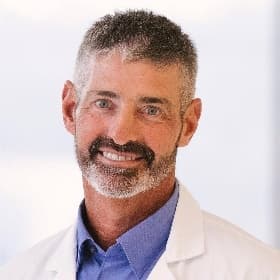
In this health care podcast, I’m talking with Tony DiGioia, MD, about PCVS (patient-centered value systems). Dr. DiGioia is a practicing orthopedic surgeon at the Bone and Joint Center over at UPMC Magee-Womens Hospital and also the medical director of the UPMC Innovation Center. Dr. DiGioia wrote a book aptly titled The Patient Centered Value System.
One thing I thought of as I listened to this conversation again in preparation for releasing the episode: Dr. Shantanu Nundy has written that on the front lines of health care, clinicians and other frontline workers know what to do for their patients. They know what’s the matter and what matters to the patient and, really, what they need.
Dr. Nundy talks about how, to efficiently transform health care, one thing that we need to do is “decentralize” control or shift power in terms of decision-making authority and resources back to the front lines and to patients.
The point that I’m making is that the PCVS might be the OS that health care needs for “decentralization” to happen at a system level and in a way that everyone works together toward a common, aligned goal—as opposed to clinicians and patients all doing their own thing, making their own assessments about what is needed at any given moment at potentially cross-purposes to one another, re-creating all kinds of wheels that are going all kinds of different directions.
You can learn more at discoverdrd.com and goshadow.org.
Anthony (Tony) DiGioia, MD, is an entrepreneur, engineer, and practicing orthopedic surgeon, and a pioneer in care delivery transformation. “Dr. D” developed the Patient Centered Value System (PCVS), a personalized, replicable approach to care that improves clinical outcomes and experiences while reducing costs.
His book, The Patient Centered Value System: Transforming Healthcare Through Co-Design, helps you understand what matters most to patients, map the current state of care in your organization, identify what can be improved, and build teams that co-design sustainable change. Using “What Matters to You?” surveys and shadowing to keep patients and families at the core of care, the PCVS serves as the care delivery model for Dr. D’s current award-winning practice at the Bone and Joint Center at UPMC Magee-Womens Hospital.
Dr. D most recently used the PCVS to develop the Center for Bone and Joint Health, flipping the script of routine health care visits by putting patients in the driver’s seat. In this relationship-based program, patients team up with providers to engage in their own care and personalize a plan based on their needs and priorities. But the PCVS is not just for orthopedics. It is increasingly being adopted nationally and internationally and has been applied to over 65 clinical conditions.
Dr. D is medical director of the Magee Bone and Joint Center as well as the UPMC Innovation Center and a Fellow of the American Academy of Orthopaedic Surgeons and the American College of Surgeons. He is a faculty member for the Institute of Healthcare Improvement and an adjunct faculty member in the Department of Biomedical Engineering and the Robotics Institute at Carnegie Mellon University. Dr. D founded the not-for-profit AMD3 Foundation, which leads the Operation Walk Pittsburgh medical mission effort.
06:19 What is the Patient-Centered Value System, and why should it be the operating system for all health systems moving forward?
07:47 “It’s the infrastructure to allow us to redesign care delivery.”
09:00 “These artificial silos that we have in health care have to be crossed and broken down.”
10:03 “The patient is the common denominator. We have to follow the patient.”
10:33 Why does the disjointed patient experience affect a patient’s trust in their care delivery?
12:00 What are the steps to creating a patient-centric system?
12:30 “The challenge is to view all care through the eyes of patients and families.”
13:19 “Our end users are patients and families. Period.”
16:36 What’s the difference between asking patients, “What is the matter with you?” and “What matters to you?”
19:56 How are nonclinician staff included in a patient-centric value system?
25:40 “We can give them the tools, wherever they’re coming from.”
29:33 “The bottom line is, these are engagement tools and technologies that we do need to start looking at to help redesign care delivery.”