
If you listen to this show on the regular, you probably have a pretty good bead on a couple of things I’ve been really into lately. One of them is high-value care versus low-value care. These are terms that are really easy to throw around. You also can get pretty much everybody to agree with a plan to deliver only high-value care and quit it with the low-value care … in theory. But the wheels fall right off the bus when it comes to actually doing this.
IRL (in real life), what constitutes high-value care and what is low-value care exactly and specifically? This answer is the crucible for value-based care of almost any flavor. How are you supposed to do value-based care successfully when it remains an open question, “What is care that is of value?”
Here’s the good news, though. There is a bounty of unmistakably, inarguably low-value things. We can start there. Now, these low-value things may be situational in some respects, so you’ll need to listen to my interview with Dr. Mark Fendrick (EP308) for the scoop on that nuance. But there are definitely some things which are incontrovertibly low value.
Here’s some more good news. There’s a few ways to ferret out low-value things, and one of them is to look at data on practice patterns across a specialty. You can index the data nationally or regionally or even within the same practice. Here’s an example: Let’s just say, on average, a dermatologist does 1.74 cuts or surgical slices for Mohs surgery, where they often get paid by the cut, by the way. However, you can find some physicians who are outliers—derms who have two standard deviations above that average. The good news is that a lot of the times, all you have to do is show the doctors the data. Show them that they’re an outlier and they’ll alter their practice patterns.
So, one way to figure out what the standard of care should be is by looking at physicians’ actual experience and practices. That seems very fair. Marty Makary, Will Bruhn, and others from the team at Hopkins get a lot of credit for their pioneering work in this area. Other ways include assessing pubs and the guidelines that societies put out. I’m also sure that, more and more, it will also involve combing through real-world evidence.
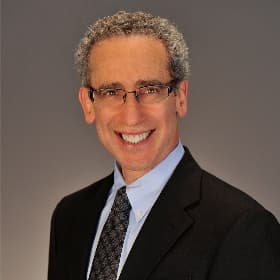
In this health care podcast, I speak with Rich Klasco, MD, who is chief medical officer at Motive Medical Intelligence; and we talk about the challenges and opportunities and solutions when it comes to identifying high- versus low-value care. Dr. Klasco has an interesting construct for this. We also talk about how patients, providers, and payers might have different points of view, incentives, and capacities really to distinguish the high from the low.
You can learn more at motivemi.com. For more information and the case study, please visit motivepw.com/resources.
Rich Klasco, MD, FACEP, has focused throughout his career on rendering evidence-based medicine operational—that is, making the right thing the easy thing to do. He has pursued this goal in academia, in industry, in policy, and in the press.
In addition to publishing extensively in both peer-reviewed journals such as JAMA and lay publications such as The New York Times, Dr. Klasco has taught at leading academic medical centers, including Harvard, Stanford, Mayo, and the University of California, San Francisco; served on the executive committee of Brigham and Women’s Hospital Center for Patient Safety Research and Practice; testified before the United States Congress on evidence-based practices; and won CMS approval for an officially designated compendium of evidence-based oncologic drug information. Dr. Klasco previously served as chief medical officer and editor-in-chief for the Thomson Reuters group of health care companies, where he had editorial responsibility for companies including Micromedex, the Physicians’ Desk Reference (PDR), and the United States Pharmacopoeia (USP) Drug Information.
For the past 15 years, Dr. Klasco has served as chief medical officer for Motive Medical Intelligence, where he provides clinical leadership for the development and deployment of solutions that quantitative assess physician performance for payers, providers, and patients, and integrate scientific knowledge into workflow systems where it can be accessed and applied in real-time.
Dr. Klasco received his medical degree from Harvard Medical School. He completed his internship and residency in internal medicine at Brigham and Women’s Hospital, and he completed his residency in emergency medicine at the Denver Health Residency in Emergency Medicine, where he served as chief resident.
03:31 How do you define high-value care?
04:40 How do we define what isn’t appropriate care?
05:26 Why aren’t patients good at recognizing high-value care?
07:02 “He was in the ‘more is more’ school of medicine, which is always wrong.”
11:54 Are payers good at identifying high-value care?
13:41 Why are payers so adept at understanding what high-value care really is?
15:53 “It’s not just cost cutting; it’s utilization, optimization of resources.”
16:02 “This is, again, an innovation of appropriateness.”
18:38 “We have to deal with the world that we have in front of us now.”
19:55 How do we get everyone on the same page about high-value and appropriate care?
24:16 How does a team recognize the path forward for appropriate care?