
Here’s the cold hard truth: The whole specialty pharmacy operational model is not built to serve patients, a fact that becomes crystal clear when you’re a patient. Instead, the specialty pharmacy model is, rather, pretty blatantly dedicated to the power struggle for revenue and captive patient populations.
It’s war between providers and the whole PBM/insurer/specialty pharmacy vertical consolidations. Employers and pharma manufacturers are, of course, on the battlefield as well.
The patient, meanwhile, gets to be more the product than the customer if you think about. It’s probably more similar than anyone would like to admit to the way that Facebook or Twitter users are the product, not the customer. This analog is not entirely parallel, but there’s unsettling similarities if you think about it.
What is a drug that qualifies to be a specialty pharmacy drug? Usually, these drugs are complicated to store, dispense, to use, and/or they’re expensive—generally, really expensive. Lots of zeros, completely unaffordable to pay cash for them as an individual. No one is using a GoodRx card and not using their insurance to pay for these puppies. They can cost as much as a house.
Biologics, for example, usually considered specialty drugs—lots of cancer and immunology therapies, injectable medications, IV/infused medications—all these are usually considered specialty drugs. There’s no one definition of a specialty drug. It’s more that someone somewhere decided to not run the drug through your traditional retail pharmacy for any number of reasons.
The problem with the current status quo, wherein the patient gets tossed around while everybody fights over them, is that some basic needs are not being met—like if a patient asks the person administering the drug maybe even a pretty simple question about the drug or its side effects. It’s way more likely than it should be that the nurse or whomever doesn’t know the answer.
Not knocking nurses here at all but definitely knocking a system that allows that to happen. I mean, really now. We’re injecting a six-figure therapy in someone’s arm that will impact their body in a myriad of maybe frightening ways, some of which are a problem and some of which are not. Said another way, there’s a really good financial and clinical use case for making sure that we’re patient-centric at a specialty pharmacy point of service—if you care about the patient and cost efficiency, that is. But I guess therein lies the root cause of the trouble.
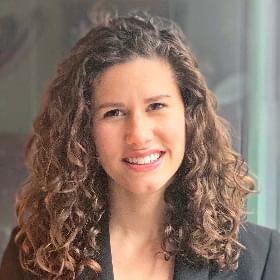
In this healthcare podcast, I’m talking with Olivia Webb about what it would take and be like to create a “patient-first specialty pharmacy,” as she has coined the term—a specialty pharmacy dedicated to patients not only having a half-decent experience but also one that might actually create better patient outcomes. Olivia Webb is author of the Acute Condition newsletter. I would certainly recommend subscribing.
Coming up, we’re doing a few more shows on this topic wherein we cover the whole brown bagging, white bagging, clear bagging extravaganza. Also, hospitals opening up their own PBMs, which is a fascinating wrinkle.
One last thing: If you’re following the whole PBM/insurer/specialty pharmacy vertical integration skullduggery, keep an eye on a bunch of lawsuits against these combined entities (three examples here, here, and here) alleging that they are doing some not super upright and honest things with their massive market power. (Say it isn’t so!)
You can learn more at acutecondition.com.
Olivia Webb, PharmD, is a healthcare strategist and writer. She publishes the weekly healthcare newsletter Acute Condition, in addition to writing freelance pieces. She also works as a senior communications manager at the specialty care start-up Thirty Madison. In the past, Olivia has worked on healthcare policy and hospital consulting at Economic Liberties, Massachusetts General Hospital, and Advisory Board Company.
04:11 Why did Olivia start thinking about a patient-centric specialty pharmacy?
05:33 “There’s really no layer on top of it to make it look nice.”
06:23 “You’re kind of dealing with this vertical stack that doesn’t really deal with patients frequently.”
06:35 Is the specialty model more patient friendly or less?
07:08 What would a patient-centric specialty pharmacy look like?
07:58 “There’s a lot of fragmentation; there’s a lot of friction.”
08:11 What’s unique to specialty pharmacy prescriptions?
10:38 Why can infusion centers be a high-drama place?
12:15 What’s “the question” around specialty pharmacy?
12:42 Who has the vested interest in ensuring patients take their medications correctly in specialty pharmacy?
14:39 “It’s really just a unique area of healthcare where the people that I think of as the good guys and the bad guys completely flips.”
16:05 Why might the time be ripe for disruption in the specialty pharmacy area?
19:56 “There’s no one with a clear incentive to cap the prices.”
20:09 What are the barriers in specialty pharmacy?
20:31 “The patient just isn’t at the center, the financial incentive, in any direction.”
29:22 “I think people who are designing these things need to see how patients are actually doing it.”
29:50 “I think there’s a lot of money here; I think this market is going to only increase in size.”
30:10 “I think you need scale.”
30:20 AEE15 with David Carmouche, MD, of Ochsner.