
Sometimes when I overhear a conversation/argument about telehealth, it occurs to me that there’s a lot of fighting words about some things and very, very little about other things which I’d regard as equally, or maybe even more, important. Some of the sparring tends to jump immediately to tactics and UX (user experience), absent of strategy and CX (customer experience). In my experience, you can’t talk about a user interface until you talk about the overall customer experience and journey and what your goal is.
So, here’s what I mean: Let’s take urgent care as an analog. Say a patient goes to urgent care with symptoms consistent of allergic asthma. The NP (nurse practitioner) gives the patient strict instructions to take an antihistamine and Flonase and Flovent. She tells the patient to be sure to make a follow-up with their PCP (primary care provider) to evaluate how it’s going.
If the patient doesn’t make a follow-up visit, do we suggest it’s because the live in-person visit should have been telehealth? Or if the patient is nonadherent and winds up in the hospital with a full-blown asthma attack, do we suggest that live in-person visits diminish adherence? Let me respectfully suggest that it’d be a solid no on that.
This is exactly why, whenever I listen to a diatribe about how telehealth did not work out for a patient, I find it interesting to ask a couple of questions. The question that I tend to ask when someone starts talking about some telehealth fail is “How did it fail?” How did it not work out? And the answer to this question tends to be similar to the above allergic asthma example: that the patient needed lab work or imaging or a follow-up visit, and that couldn’t be done via telehealth. There was no resolution to the patient concern, in other words.
Okay … so, first of all, most practices don’t have immediate on-premises lab work or imaging, so the patient would have had to have gone somewhere else to get it anyway. But even if they did, as far as I know, you can’t have a follow-up visit at the same time that you have the first visit. Not to be cheeky, but that’s why they call it a follow-up visit.
Then the next logical question is, if the patient doesn’t show up for a follow-up, if the patient were in person, what’s the greater likelihood that they would have gone for the lab test and/or come back for the follow-up? This is when you start to realize that the setting of care (ie, virtual or in person) may be a little bit less important than the agency of the provider involved. And it may be a little less important than the structure of the organization sitting around that patient encounter. Said another way, strategically, what are we doing here? What are we trying to accomplish? What’s our road map to get the patient from where they are now to wherever that goal is?
A patient visit is a tactic. It’s one point in time. And that’s true regardless of whether it’s a remote visit or an in-person one, synchronous or asynchronous. A patient visit or interaction is not a care pathway. It is rarely, if ever, a magic bullet one and done. But that doesn’t stop us from thinking about patient encounters, one encounter at a time, which may be exactly why we wound up with a fragmented health care system that doesn’t work very well. But I digress.
So, from what I can see, some of the flaws that some people attribute to telehealth might be more properly construed as flaws to the ecosystem in which the telehealth is being deployed. For example, how much agency or data or infrastructure does the provider behind the camera have to see where the patient is in their treatment journey and make sure that they get to that next milestone? Because in cases where the doctor behind the camera or the telephone or the text message has agency and the telehealth visit is part of a defined patient journey, telehealth results are strikingly comparable to not telehealth results, if not better. If we’re contemplating a patient journey or a treatment journey, writ large, the site of care at any moment in time is a secondary or tertiary factor—certainly not a primary one.
Here’s what I want to know about telehealth. How do you best use it, not as a point solution but as part of a larger whole? How do you optimize a telehealth encounter so it pulls its weight in helping patients get a resolution to their chief complaint or manage their chronic conditions? Christian Milaster has written about this in his Telehealth Tuesday newsletter, which is great, by the way. Christian wrote that the delivery of care, when viewed through the eyes of a systems engineer (which he is), becomes a quite simple four-step process. These are the four steps that Christian says. He says, the first step is assessment, which leads to a diagnosis, which is step two. Step three is the development of a treatment plan. And then step four is the implementation of that treatment plan.
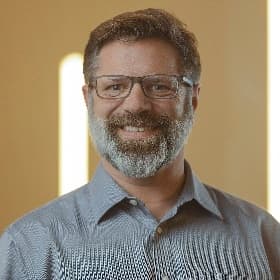
Amongst other sidebars, I talk about these four steps in this health care podcast with Blake McKinney, MD. Dr. McKinney is an ER doc as well as the cofounder and CMO over at CirrusMD. In our conversation, Dr. McKinney actually comes up with one more step to add to the four-step process. It’s kind of a pre-step, where the patient decides that he or she needs care to begin with.
You can learn more at cirrusmd.com.
Blake McKinney, MD, cofounder of CirrusMD, had a vision: to enable every person to have a better experience accessing health care services. Blake observed the barriers his patients were up against in seeking care and, at the same time, saw that his friends and family were able to reach out to him directly for guidance, most often via text. CirrusMD was created so everyone seeking care could immediately connect and communicate with a real doctor in this way.
Partnering with Andy Altorfer in 2012, Blake and the CirrusMD team have built a platform to achieve this vision of an improved health care experience. Through the years, this path has been guided by Blake’s clinical insight and ongoing, practice-based understanding of the needs of both patients and doctors.
Dr. McKinney completed his internship and residency at the University of California Davis after graduating from the University of Texas Medical School in Houston. Prior to medical school, he served 4 years as a communications intelligence officer in the United States Marine Corps.
06:53 “Regardless of the availability of convenient options, there is one force more powerful than convenience, and that is familiarity.”
09:01 “Telemedicine that is continuity based is going to be better medicine fundamentally.”
13:21 “The fundamentals of medicine are the same, and the standard of care is the same, whether the care is in person or in clinic.”
15:16 What’s the underlying determinant of patient success?
16:08 “When it comes to the ‘What’s next,’ doctors love resources.”
16:52 How is telemedicine lacking in resources?
18:42 “Implementation to me is, first and foremost, about follow-up.”
23:10 “There’s a place for automations. My prime directive … is to build trust.”
25:13 “The best adaptive interview that you can create is human to human.”