
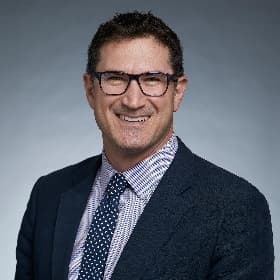
EP299: FFS (Fee for Service) Is a Whole Business Model—It’s Not Just a Way to Get Paid, With Alan Kaplan, MD, MBA, Assistant Professor of Urology at Georgetown University and a Practicing Urologist
November 05, 2020
299
31:39

EP299: FFS (Fee for Service) Is a Whole Business Model—It’s Not Just a Way to Get Paid, With Alan Kaplan, MD, MBA, Assistant Professor of Urology at Georgetown University and a Practicing Urologist

If you are a forward-thinking specialist right now, alarm bells may be going off, given COVID and/or the prospect of another COVID-style pandemic. Also, all of the capitated and advanced PCP (primary care provider) practices popping up. Also, virtual care models.

FFS is a cushy status quo revenue model until it isn’t. One underappreciated point might be that FFS is not only a revenue/payment model. It’s also a business model. And as a business model, FFS very much drives how practices structure themselves to realize that FFS revenue.

Consider that to earn a fee for a service, someone (a human person) has to physically do the service. So, all FFS-style businesses have an inherent incentive to add labor and not use technology in any way that actually reduces the amount of billable human hours involved in providing care to patients. But if that top-line revenue line goes down—wow!—you’ll find yourself as many did with way too many employees.

An FFS business model has zero flexibility when it comes to revenue that isn’t consistently going up or, at a minimum, a flat line. If revenue plummets and payroll is big—big so as to power a way higher revenue number than is possible for whatever reason—you have a major financial problem on the quick.

That is what I talk about in this health care podcast with Alan Kaplan, MD, MBA. Dr. Kaplan is assistant professor of urology at Georgetown University, and he is a practicing urologist. He recently cowrote a paper with Dan O’Neill in the publication NEJM Catalyst Innovations in Care Delivery. The article discusses COVID-19 and health care’s “productivity shock,” as they call it. Dan O’Neill, by the way, was on the show. Also, he was on EP287 and part of EP292. But in the article that Dr. Kaplan and Dan O’Neill wrote, they give some advice to specialists and hospitals who are looking to evolve with the changing marketplace. Spoiler alert: Conceptually, it’s a shock to move from a place where, every year, you can count on your billings going up and up and move to a model instead that assumes that this is not the case.

So, yeah, there’s a little talk for sure about the joys and challenges of transitioning to value or a value-based payment model. But that’s only the very first consideration. It’s also about reconsidering the operating model and the strategic use of digital technologies.

We talk about all of the above in this health care podcast. Quick sidebar: My interview with Dr. Steve Schutzer (EP294) might be a good follow-on for a very actionable work plan for specialists to implement some of the advice that Dr. Kaplan gives in this podcast.  

You can learn more by contacting Dr. Kaplan via LinkedIn.

Alan L. Kaplan, MD, MBA, is a practicing surgeon, innovator, and health services researcher. After finishing his urology residency, a health care administration fellowship, and an MBA, all at UCLA, Alan helped build a multispecialty medical group in a highly underserved area of South Los Angeles. Alan is currently an assistant professor of urology at Georgetown University; an attending physician at the Washington, DC, VA Medical Center; and a physician advisor at IDEO, a human-centered design firm. Alan’s work over the past 10 years has centered on value-based care redesign, aiming to transition to a more just, equitable, and sustainable health care system for all Americans.


03:51 Who are we actually discussing when we use the term specialist?
05:58 How does the PCP taking on more risk affect the specialists’ path to value-based care (VBC)?
09:42 “Technology leads to … a reduction in labor burden … but in health care, that really hasn’t been the case.”
11:36 “Technology … in health care … has never really been about making the bottom line more efficient. It’s been about expanding the top line.”
13:39 What do specialists need to be considering if they want to stay relevant in the next 5 years?
14:27 EP292 with Brian Klepper, PhD.
16:53 Is there a future where specialists can transition from FFS to VBC while skipping the messy middle of a transition?
18:37 “The way we always did things is not the way that we have to always do things in the future.”
25:20 “When all is said and done, the relationship between [PCPs] and the specialists that they refer … those relationships are really, really important.”
26:14 EP219 with Arshad Rahim, MD, MBA, FACP.
28:13 What’s going to be a big driver for providers to become more independent in the next 5 to 10 years?

healthcare,fee for service,value-based care,georgetown university,
|

Episode Support Provided By

Special Thanks to Our 2026 Sustaining Monthly Donors

Kimberly CarlesonDylan YahnBenjamin LightMatt McQuideAnn KempskiSpencer AllenScott TromanhauserMarilyn BartlettSteven ElkinsMatthew Bunte.

Recent Episodes

EP505: The Death of the "What Is Value" Guessing Game for Clinical and Plan Decision-Makers Ready to Move On, With Ahilan Sivaganesan, MD
Relentless Health ValueApril 02, 2026
505
44:0240.31 MB

EP505: The Death of the "What Is Value" Guessing Game for Clinical and Plan Decision-Makers Ready to Move On, With Ahilan Sivaganesan, MD

Listen On Your Favorite App Hello, Relentless Tribe. Thank you so much for showing up today. All right … to start, let me lay out the goal of the episode today. This episode is for you if you are a self-funded employer looking to ensure your members are steered and tiered to real high-value care and...

EP504: A Back-to-Basics Roadmap Through the Perverse Incentives to Advanced Primary Care, With Ryan Jacobs
Relentless Health ValueMarch 26, 2026
504
33:3630.76 MB

EP504: A Back-to-Basics Roadmap Through the Perverse Incentives to Advanced Primary Care, With Ryan Jacobs

Listen On Your Favorite App It's been a while since we started from the beginning, so let's just take stock of the basics in this show, refresh ourselves if you're a longtime listener, or welcome if you're new around here. Today we are digging on and about what I would call the poster child for prov...

INBW46: Relentless Tribe Goings-On With Insights to Outwit the Hot Mess of the Non-Healthcare Market
Relentless Health ValueMarch 19, 202619:3717.96 MB

INBW46: Relentless Tribe Goings-On With Insights to Outwit the Hot Mess of the Non-Healthcare Market

Listen On Your Favorite App This inbetweenisode I wanna try something new for two reasons. One of them is that I need to check this episode off my to-do list because I am crushed for time. I'm going to be headed to Arizona tomorrow for the Collective Health Conference , which will have occurred thre...

EP503: Let's Go From Lazy PPO Networks to Smart Collaboration With Direct-to-Employer Specialty Care, With Ryan Wells; Leo Spector, MD, MBA; and Adam Stavisky
Relentless Health ValueMarch 12, 2026
503
46:1642.35 MB

EP503: Let's Go From Lazy PPO Networks to Smart Collaboration With Direct-to-Employer Specialty Care, With Ryan Wells; Leo Spector, MD, MBA; and Adam Stavisky

Listen On Your Favorite App Today we are digging into something I've said probably way too often: Collaboration is the next breakthrough innovation. And I'm doubling down on this because in the current healthcare landscape, two parties that actually should be talking—like burning up the phone wires ...

EP502: How Some Pretty Wild Medicare Fraud Sabotages ACOs and Also Independent Practices and Could Cost Plan Sponsors Such as Self-insured Employers a Lot of Zeros Downstream, With Brian Machut
Relentless Health ValueMarch 05, 2026
502
38:5835.67 MB

EP502: How Some Pretty Wild Medicare Fraud Sabotages ACOs and Also Independent Practices and Could Cost Plan Sponsors Such as Self-insured Employers a Lot of Zeros Downstream, With Brian Machut

You know, I always kind of wondered what the hackers were doing with all of the medical data that they've managed to get their mitts on over the past, I don't know, however many years. Now, I know at least one thing. If you're a hacker, you can use your stolen medical data to not actually send wildl...

EP501: Speaking of Infusions, Do You Want to Pay $135 or Do You Want to Pay $13,560 for the Exact Same Drug? With Ivana Krajcinovic, PhD
Relentless Health ValueFebruary 26, 2026
501
39:5736.57 MB

EP501: Speaking of Infusions, Do You Want to Pay $135 or Do You Want to Pay $13,560 for the Exact Same Drug? With Ivana Krajcinovic, PhD

Let us chat about today the inches all around us and also about how there is no market in healthcare all at once in this show. Today I am talking with Ivana Krajcinovic. And let me give you some examples of the inches. Two members of a plan get infusions at a hospital. And if these two members had g...

Take Two: EP398: Why Are Commercial Carrier Marketplaces Completely Boring? Maybe Because There Isn't a Marketplace, With Jacob Asher, MD
Relentless Health ValueFebruary 19, 202634:5231.91 MB

Take Two: EP398: Why Are Commercial Carrier Marketplaces Completely Boring? Maybe Because There Isn't a Marketplace, With Jacob Asher, MD

We have been doing a little series called "The Inches Are All Around Us," digging out waste in the $5.6 trillion healthcare sector where half an inch of waste can equal billions of dollars. I'm going to right now introduce another series that is complementary but has a slightly different focus. And ...

Listen and Follow

Sponsored by Aventria Health Group
©2026 BD Bridges LLC. All Rights Reserved.