
EP273: COVID-19—At What Level Will Telehealth Survive After the End of the Pandemic? With Jonathan Thierman, MD, PhD, From LifeBridge Health System
April 30, 2020
273
29:05

EP273: COVID-19—At What Level Will Telehealth Survive After the End of the Pandemic? With Jonathan Thierman, MD, PhD, From LifeBridge Health System

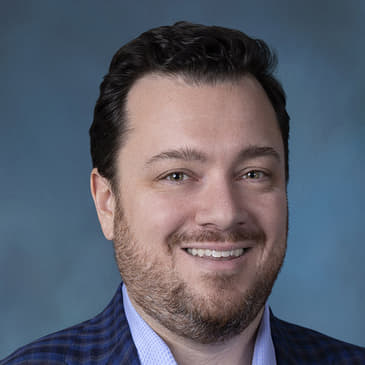
Everybody’s been talking about the surge in telehealth usage—how it would have taken, like, ten years to get as far as we’ve gotten in the past ten days. I wanted to talk to somebody who has been ramping up their telehealth capabilities for a while to get a sense of what it takes to do it well. As has been said by many, doing telehealth isn’t just about technology. It’s about training—clinicians and patients and accounts receivable and other staff. It’s about rearranging workflows and processes. So, super pleased to have had the opportunity to talk with Jonathan Thierman, MD, PhD. Dr. Thierman is an ER doc. He’s also the chief medical information officer for LifeBridge Health systems and the medical director of the LifeBridge virtual hospital.

So, this show has two parts: episode 273 that you’re listening to; but the second part, episode 274, is where we’re going to get into some of the operational aspects of telehealth, like what EHR integration actually means and what it looks like. In this health care podcast (episode 273), however, Dr. Thierman and I discuss what telehealth can accomplish, maybe better than a face-to-face patient encounter, and what it’s not so good at. One thing that dawned on me as we were talking is that the technology isn’t just, you know, a video system. There’s apps, there’s AI, there’s minivans full of lab equipment … there are other innovations that expand the capability of a remote patient visit.

Here’s another point to ponder that Dr. Thierman and I explore a little bit. What is the impact of telehealth in a value-based care environment but also in an FFS (fee-for-service) reimbursement model? It’s likely, if you think about it, there will be more patient visits because the barrier to getting care has diminished. And that might be a good thing if we’re talking about chronic care, if we’re talking about ensuring follow-up after a surgical procedure. There’s any number of examples where patients getting help prior to some sort of acute event would be considered a good thing by most. But does improving access to care increase a patient’s chances of getting inappropriate care? You know, 25+% of care is some variation of waste, fraud, and abuse; and additional services rendered always have the risk of negative consequences. Or do we figure that bad actors are doing a pretty good job behaving badly anyway, so the net positive for the rest of us is worth it?

You can learn more at lifebridgehealth.org. You can also follow Dr. Thierman on Twitter at @techie_doc or connect with him on LinkedIn

Jonathan Thierman, MD, PhD, is physician executive in the LifeBridge Health system and president of the medical staff at Northwest Hospital. He started his career as an engineer and inventor, earning his PhD at MIT and then training in emergency medicine at Harvard Medical School and Johns Hopkins Hospital. In the past, he has worked to bring real-world clinical experience to the engineering and design of medical devices.

Currently, he is the chief medical information officer for the LifeBridge Health system in Baltimore, where he leads a team of physician informaticists to interface between the 180+-person IT department and the 3000+ affiliated physicians across five hospitals and in community practices on matters of the EMR, CPOE, and other health IT systems.

Dr. Thierman is passionate about applying technology to improve health and outcomes. To this end, he helped to establish the LifeBridge Health Virtual Hospital, with affiliated clinical call centers in Jerusalem and the Philippines, to provide telemedicine services across the continuum. He also created the LifeBridge Techbar to offer in-person IS assistance to LifeBridge providers. In addition, he developed a patient “Digital Front Door” to help direct patients to the right care center with the least wait time, improving patient experience and load-balancing the emergency departments and urgent care centers in the LifeBridge Health system.


03:26 What was happening with telehealth pre-COVID-19.
04:50 What’s happened to telehealth and primary care practices post-COVID-19.
06:28 How quickly telehealth medicine appointments are growing.
07:30 What percentage of patients are doctors able to see via telemedicine?
08:24 Are patients getting adequately cared for?
10:20 “The vast majority of medicine, except for surgical services, really is a mental game.”
14:15 “If you have a window into the home, you probably have a better view of the social determinants of health.”
14:25 How AI plays into telemedicine right now.
16:52 Where telehealth visits will land after the pandemic.
18:40 “When you improve access, you also improve demand.”
19:22 Is telehealth consumer driven?
20:48 “For the most part, patients are most connected to their actual physician.”
21:37 Why more frequent touch points via telehealth will benefit health care quality and costs in the future.
28:20 “It’s about the patient, and it’s about really keeping them well.”

healthcare,telehealth,telemedicine,healthtech,lifebridge health,digitalhealth,COVID19,coronavirus,pandemic,
|

Episode Support Provided By

Special Thanks to Our 2026 Sustaining Monthly Donors

Kimberly CarlesonDylan YahnBenjamin LightMatt McQuideAnn KempskiSpencer AllenScott TromanhauserMarilyn BartlettSteven ElkinsMatthew Bunte.

Recent Episodes

EP505: The Death of the "What Is Value" Guessing Game for Clinical and Plan Decision-Makers Ready to Move On, With Ahilan Sivaganesan, MD
Relentless Health ValueApril 02, 2026
505
44:0240.31 MB

EP505: The Death of the "What Is Value" Guessing Game for Clinical and Plan Decision-Makers Ready to Move On, With Ahilan Sivaganesan, MD

Listen On Your Favorite App Hello, Relentless Tribe. Thank you so much for showing up today. All right … to start, let me lay out the goal of the episode today. This episode is for you if you are a self-funded employer looking to ensure your members are steered and tiered to real high-value care and...

EP504: A Back-to-Basics Roadmap Through the Perverse Incentives to Advanced Primary Care, With Ryan Jacobs
Relentless Health ValueMarch 26, 2026
504
33:3630.76 MB

EP504: A Back-to-Basics Roadmap Through the Perverse Incentives to Advanced Primary Care, With Ryan Jacobs

Listen On Your Favorite App It's been a while since we started from the beginning, so let's just take stock of the basics in this show, refresh ourselves if you're a longtime listener, or welcome if you're new around here. Today we are digging on and about what I would call the poster child for prov...

INBW46: Relentless Tribe Goings-On With Insights to Outwit the Hot Mess of the Non-Healthcare Market
Relentless Health ValueMarch 19, 202619:3717.96 MB

INBW46: Relentless Tribe Goings-On With Insights to Outwit the Hot Mess of the Non-Healthcare Market

Listen On Your Favorite App This inbetweenisode I wanna try something new for two reasons. One of them is that I need to check this episode off my to-do list because I am crushed for time. I'm going to be headed to Arizona tomorrow for the Collective Health Conference , which will have occurred thre...

EP503: Let's Go From Lazy PPO Networks to Smart Collaboration With Direct-to-Employer Specialty Care, With Ryan Wells; Leo Spector, MD, MBA; and Adam Stavisky
Relentless Health ValueMarch 12, 2026
503
46:1642.35 MB

EP503: Let's Go From Lazy PPO Networks to Smart Collaboration With Direct-to-Employer Specialty Care, With Ryan Wells; Leo Spector, MD, MBA; and Adam Stavisky

Listen On Your Favorite App Today we are digging into something I've said probably way too often: Collaboration is the next breakthrough innovation. And I'm doubling down on this because in the current healthcare landscape, two parties that actually should be talking—like burning up the phone wires ...

EP502: How Some Pretty Wild Medicare Fraud Sabotages ACOs and Also Independent Practices and Could Cost Plan Sponsors Such as Self-insured Employers a Lot of Zeros Downstream, With Brian Machut
Relentless Health ValueMarch 05, 2026
502
38:5835.67 MB

EP502: How Some Pretty Wild Medicare Fraud Sabotages ACOs and Also Independent Practices and Could Cost Plan Sponsors Such as Self-insured Employers a Lot of Zeros Downstream, With Brian Machut

You know, I always kind of wondered what the hackers were doing with all of the medical data that they've managed to get their mitts on over the past, I don't know, however many years. Now, I know at least one thing. If you're a hacker, you can use your stolen medical data to not actually send wildl...

EP501: Speaking of Infusions, Do You Want to Pay $135 or Do You Want to Pay $13,560 for the Exact Same Drug? With Ivana Krajcinovic, PhD
Relentless Health ValueFebruary 26, 2026
501
39:5736.57 MB

EP501: Speaking of Infusions, Do You Want to Pay $135 or Do You Want to Pay $13,560 for the Exact Same Drug? With Ivana Krajcinovic, PhD

Let us chat about today the inches all around us and also about how there is no market in healthcare all at once in this show. Today I am talking with Ivana Krajcinovic. And let me give you some examples of the inches. Two members of a plan get infusions at a hospital. And if these two members had g...

Take Two: EP398: Why Are Commercial Carrier Marketplaces Completely Boring? Maybe Because There Isn't a Marketplace, With Jacob Asher, MD
Relentless Health ValueFebruary 19, 202634:5231.91 MB

Take Two: EP398: Why Are Commercial Carrier Marketplaces Completely Boring? Maybe Because There Isn't a Marketplace, With Jacob Asher, MD

We have been doing a little series called "The Inches Are All Around Us," digging out waste in the $5.6 trillion healthcare sector where half an inch of waste can equal billions of dollars. I'm going to right now introduce another series that is complementary but has a slightly different focus. And ...

Listen and Follow

Sponsored by Aventria Health Group
©2026 BD Bridges LLC. All Rights Reserved.