

In this health care podcast, I’m talking to Al Lewis from Quizzify. This episode also guest stars Rachel Miner from Thrive Benefits, David Contorno from E Powered Benefits, and Doug Aldeen, a health care attorney in Texas.
This episode started out being about surprise billing in the emergency room (ER) and a potential defense strategy that patients and employees can use to protect themselves from egregious billing practices. Surprise bills are when a patient gets “balance billed” for a sum above what their insurance carrier will pay. Usually this transpires when an out-of-network provider somehow or another gets involved in their care. Usually the patient has no idea this happens until after the bill comes—the big bill, in many cases, thus the surprise.
But here’s where surprise billing and COVID-19 connect. You might not have thought of this because you might know that patients who present in the ER with COVID-19 and then test positive are protected from surprise bills, for the most part, by the CARES Act. But there’s a couple of wrinkles. What if the patient does not actually have COVID-19? Then whatever treatment they wind up getting in the notoriously expensive ER is business as usual.
Here’s another wrinkle: The cost of treatment for COVID-19 is not like it’s capped. So even if an employee doesn’t get a surprise bill, the self-insured employer or health plan might. And the CARES Act explicitly states that the employer or plan is on the hook to pay for it.
And one last wrinkle: Dealing with this pandemic among other things leaves about 0.0 chance that the national surprise billing legislation is gonna happen this year. But it’s not like kids have stopped running into the side of the pull-out couch and needing stitches, or drug overdoses or heart attacks have suddenly vanished. There was a news article just the other day about a private equity–run ER in the Midwest continuing to dish out nasty surprise bills to their community of taxpayers at the exact same time that they were lobbying to get a piece of the federal bailout paid by taxpayers.
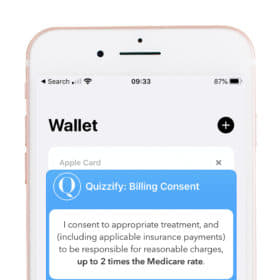
Al Lewis and his team over at Quizzify created this handy wallet card that patients or employees can use when they have the unfortunate experience of going to the ER themselves or with a loved one. It protects them from egregious surprise bills, thus its moniker, the surprise billing defense strategy. But nothing for nothing, this wallet card, this surprise billing defense strategy, also protects employers and health plans from these large bills in the age of COVID-19.
Al Lewis and I start our conversation talking about a New York Times article (also available here for those who don’t subscribe to the New York Times) that came out recently featuring Al as well as myself and chronicles my visit to an emergency room wherein I deployed the surprise billing defense strategy/wallet card.
You can learn more at quizzify.com or connect with Al on LinkedIn. You can also connect with Al on Twitter at @quizzify and @whynobodybeliev.
You can also connect with Rachel and David on LinkedIn and with Doug on Twitter at @AldeenDoug and on LinkedIn.
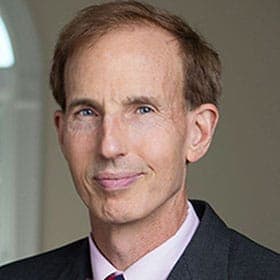
Al Lewis wears multiple hats, both professionally and also to cover his bald spot.
Hat #1: Employee Health Literacy. He is the founder and “quizmeister-in-chief” of Quizzify, whose mission is to help companies teach their employees to utilize health care services appropriately, using a format best described as “Jeopardy meets health benefit education meets Comedy Central.” Quizzify is the only vendor authorized to display the Harvard Medical School “Veritas” shield and has received excellent reviews from users.
Quizzify is best known today for its employee coronaquizzes (now exceeding 100,000 plays!) and its surprise billing “Prevent Consent” solution, which was recently featured in the New York Times. It can be taped to an insurance card, used as a stand-alone card, or downloaded into your Apple Wallet.
His quiz-specific background includes authorship of the best-selling Newsweek Presents the Ultimate Trivia Game, which Games magazine lauded as having the best questions of any trivia game; hosting two quiz shows on Boston network affiliates; and appearing on Jeopardy.
Hat #2: Outcomes Measurement. As an author, his critically acclaimed category best-selling book on outcomes measurement, Why Nobody Believes the Numbers, chronicling and exposing the innumeracy of the health management field, was named digital health book of the year in Forbes. Cracking Health Costs, written in conjunction with Walmart alum Tom Emerick, was also a trade best seller. Surviving Workplace Wellness has also received great accolades, and excerpts appeared in Harvard Business Review and elsewhere.
He was the cofounder of the World Health Care Congress’s Validation Institute.
His expertise in outcomes measurement got him named one of the unsung heroes changing health care forever.
He graduated Phi Beta Kappa with honors from Harvard, where he taught economics as well. He also graduated from Harvard Law School, albeit with no honors that time—other than winning their annual trivia contest, of course.
 David Contorno is founder of E Powered Benefits. As a native of New York, David began his career in the insurance industry at the age of 14 and has since become a leading expert in the realm of employee benefits over the last 22 years.
Most recently, David was Benefits Selling magazine’s 2015 Broker of the Year; and in March 2016, Forbes deemed him “One of America’s Most Innovative Benefits Leaders.”
David is a member of the board of directors for both the Charlotte Association of Health Underwriters and HealthReach Community Clinic. He served on the NC Insurance Commissioners Life and Health Agent Advisory Committee, as well as participated in the Technical Advisory Group that helped with the market reforms required under the Affordable Care Act in North Carolina. He is a longtime member of the Lake Norman and South Iredell Chambers of Commerce as well as the National, North Carolina, New York, and Long Island Associations of Health Underwriters. David contributes to numerous publications, including Forbes, Benefits Selling magazine, Business Leader magazine, and Insurance Thought Leadership.
David is committed to giving back to his community and actively participates in the membership drive for the United Way, assisting the local chapter of Habitat for Humanity, and supporting The Dove House Child Advocacy Center. When he is not working, he enjoys boating, traveling, and being with his wife, Heather, and their two children, Hannah and Ethan.
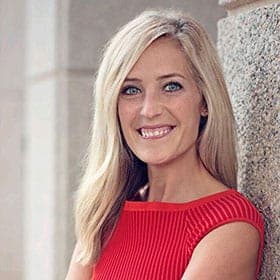 Rachel Miner became engaged with the health care system seven years ago as her son, Jackson, was consistently ill. Her frustration with the complexity of the health care system and expensive bills made her think about how helpless employees must feel. So, she set out to find a benefits firm that helped employees understand how to be educated consumers of health care year-round—and she didn’t find one. Thus, Thrive Benefits was born. Her mission is twofold: to help employers and employees.
Rachel understands that companies need to have good benefits to attract and retain employees and makes it her mission to help employers save money so they can offer good benefits year over year. In addition, she helps employees to navigate the health care system so that they can have the highest quality of care at the lowest possible cost.
Rachel says that her true passion is helping people and her purpose is to challenge the mindset of others so that they can overcome adversity, take risks, and achieve their goals.
Health care is confusing, but it doesn’t have to be. For organizations to thrive, employees must thrive, too.
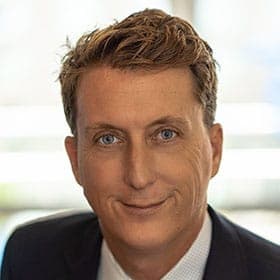 Doug Aldeen is an Austin, Texas–based health care and Employee Retirement Income Security Act (ERISA) attorney who recently served as ERISA counsel on behalf of the Berkeley Research Group in New York City to the $7.7 billion May 2016 acquisition of Multiplan and its medical bill repricing product Data iSight by the private equity firm Hellman and Friedman. Since 1997, he has represented reference base pricing organizations, a bundled payment software platform, PPO networks, medium to small self-funded plans, third-party administrators, and provider-sponsored health maintenance organizations in various capacities, including Herdrich v. Pegram, which was argued before the US Supreme Court in 2001. Moreover, he serves as a resource to national news organizations regarding issues on health care and as a consultant with the Governmental Relations Committee at the Self-Insurance Institute of America in Washington, DC, and as an adviser to RIP Medical Debt, which has abolished over $1.2 billion in medical debt. Doug received his JD from the University of Illinois.
04:26 What is the likelihood of a surprise bill in the time of coronavirus?
07:41 What the surprise billing wallet card looks like and what it does when you use it.
09:55 Rachel Miner’s experience with the Quizzify surprise billing wallet card.
14:42 EP249 with Dale Folwell.
15:33 Should employers be advocating for the use of the Quizzify wallet card?
16:22 How an employer should get the wallet card out to their employees.
17:29 David Contorno explains the inspiration behind the Quizzify wallet card.
19:29 “Because of that federal law, you do not need to sign that financial consent.”—David
19:42 “Don’t obligate yourself financially to some unknown amount.”—David
19:56 The legal standard: a battlefield consent.
21:18 Negotiating vs not negotiating.
22:38 Why employers should care about surprise billing.
22:58 Best practices for employers educating employees on why this wallet card is important.
24:19 “This is not something your employer is doing to you; this is something your employer is doing for you.”—David
24:25 EP186 with David Contorno.
27:19 Doug Aldeen on what happens after using the wallet card and then gets the balance bill.
30:47 What happens after you sign the financial contract after editing.
32:01 Asking for the director of revenue cycle management after getting your surprise bill.
36:36 “It’s not as daunting as people think.”—Doug
36:56 “The general rule … is that the more you do in advance, the better.”—Al
37:49 Why 2x Medicare is the sweet spot for reasonable price.
38:38 What employers should be doing right now to distribute these Quizzify wallet cards.