
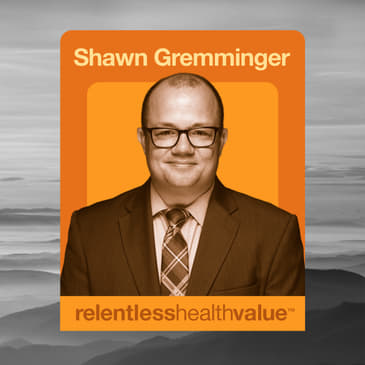
Today we are going to answer one question on the pod: If I am a plan sponsor or a purchaser, why do I care about 340B? So, that's coming up in T-minus, I'm gonna say, four minutes. If you wanna cut to the chase, skip ahead. Before we get to that, however, for those of you who are looking for a little bit more robust version of the story, I did wanna take a step back and just kind of sum up the goings-on.
For a full transcript of this episode, click here.
If you enjoy this podcast, be sure to subscribe to the free weekly newsletter to be a member of the Relentless Tribe.
The 340B charity program, what it does in a nutshell is it allows hospitals and their contract pharmacies to buy medications from pharma manufacturers at deep discounts and then sell these drugs at the normal (meaning high) prices.
If you have been running in the same circles that I run in for the past year or so, you probably have seen conservatively 4000 to 7000 articles about 340B coming at you from all manner of directions and from stakeholders and interested parties and industry groups—and it's no wonder.
The rate of 340B expansion has been insane. Today 340B is the second-biggest drug buying program in the country after Medicare Part D, to the tune of something like $68 billion running through it.
If I was gonna categorize now the type and nature of the various dustups that these articles are talking about … okay, here we go. Let's see how I do.
On one hand, we have pharma manufacturers and hospitals who are busy suing each other over data requirements. Read Brian Reid's newsletter for a whole lot on that.
And also, they are discussing (I'm putting that charitably) the question of whether hospitals buy based on a discounted price or whether the hospitals buy at list and then later on get a rebate.
Again, there is billions of dollars at stake, and that is evident by the velocity and the rapacious level of the attacks and counterattacks here.

On the other hand, another basket topic of articles. You have a whole lot of talk about how 340B was originally intended to provide the ability for safety net hospitals to arbitrage these dollars. They get to keep the profits when they are able to buy drugs low and then sell them to patients and carriers high.
So, they collect the spread—and they're supposed to use that spread, otherwise known as profit—to put towards charity care and underserved communities. And there's a lot of articles about how that is not really happening as intended.
And look, there's no statutory requirement for hospitals to reinvest 340B proceeds into charity care or community services. So, again, the 340B program is supposed to allow hospitals to arbitrage dollars to put those arbitrage dollars into charity care.
But yeah … again, there's no mechanism to, I don't know, force them to do this or to even track what they're doing with the money, resulting in a lack of transparency and accountability regarding the financial benefits gained from the program. Peter Hayes wrote a post on this.
Another article is the one by Anthony DiGiorgio, DO, MHA, entitled "Reforming 340B to Serve the Interests of Patients, Not Institutions."
So that's, I'm gonna call, our second category of dustups relative to 340B.
Here's a third one. There's lawsuits that are going on between the hospitals themselves and the contract pharmacies that they hire and allegations that the contract pharmacies are taking a sometimes-unknown portion of the spread.
In a similar way, honestly, it reminded me about how PBMs are sometimes accused of taking an unknown portion of the spread from employers. Same kind of playbook.
And here's a fourth thing I've seen articles about. Did you see the story about Apexus in the New York Times last year? It was entitled "How a Company Makes Millions Off a Hospital Program Meant to Help the Poor." Again, the company is Apexus, which is a division of Vizient.
Here's a quote from the desk of Senator Peter Welch, who's on the finance committee. He wrote, "Congress created the 340B program to allow Disproportionate Share Hospitals [DSH hospitals and] community health centers and other safety net health providers to purchase prescription drugs from manufacturers at a discounted price. In 2023, 340B providers (covered entities) purchased $66.3 billion in outpatient drugs through the 340B program. … Apexus's revenues have grown as the 340B program has expanded—doubling in just five years … with profit margins [about] 80%."
According to that New York Times article, a number of former Apexus employees have filed complaints alleging that Apexus works behind the scenes with hospitals to boost drug sales through the 340B program to generate more revenue for itself.
Yeah … okay. So, most of the articles, I'm gonna say, are about one or more of those four things. And yeah … again, billions of dollars at stake. I hope that was a good rollup.
If you're listening to this and thinking, "Wait, what? I wish I could go back to the beginning and dig into this methodically," well, today is your lucky day.
Do listen to the episode 448—there is a part 1; there is a part 2—where we take it from the top with Shawn Gremminger, who is also my guest today.
And I would say in a little over an hour, you'll probably know more than probably 95% of people who work in healthcare about 340B. Today, however, I'm gonna play this clip of Shawn Gremminger—a very, very specific clip here.
Shawn is the CEO of the National Alliance of Healthcare Purchaser Coalitions, and he's gonna answer one question and one question only. And that question is: If I am a plan sponsor, why do I care about any of this?
I mean, I could see if I'm a taxpayer, right? But, like, as a plan sponsor in my plan sponsor capacity as a self-insured employer or other private insurance sponsor, why do I care about some charity program?
Sure. Again, it sounds like a whole lot of money, and as a taxpayer, I obviously should be concerned. As a member of society, maybe I should be concerned. But if I need to prioritize here in my day job in this whole topic, I don't know. I don't understand why I'd put it on my short list.
So, that is what I asked Shawn Gremminger: Why should any plan sponsor put this on their short list of things to be thinking about? So, let's get to Shawn Gremminger, who can set us straight on this point.
This podcast's founding sponsor is Aventria Health Group.
Also, very much want to thank Payerset, who is our series underwriter in 2026. They do some very interesting things around data transparency.
I also very much want to thank Patient Rights Advocate, who gave us an extremely nice donation. Thank you so much for helping keep this podcast on the air.
I also very much wanna thank everybody who's left a tip in our tip jar recently.
Lastly, I wanna thank the two of you who left a review on Apple Podcast and Spotify. I know it is such a PIA to leave a review these days, but it does help other listeners find the show. So, yeah … thanks if you can find a couple of minutes to navigate the harrowing experience of dropping some stars next to our name on Spotify or Apple Podcasts.
And with that, here is my conversation with Shawn Gremminger.
Also mentioned in this episode are National Alliance of Healthcare Purchaser Coalitions; Brian Reid; Peter Hayes; Anthony DiGiorgio, DO, MHA; Aventria Health Group; Payerset; Patient Rights Advocate; Zack Cooper, PhD; and Tom Nash.
For a list of healthcare industry acronyms and terms that may be unfamiliar to you, click here.
You can learn more at nationalalliancehealth.org and by connecting with Shawn on LinkedIn.
Shawn Gremminger, president and CEO of the National Alliance of Healthcare Purchaser Coalitions, is known for his wide-ranging policy expertise and government relations experience. He brings to the National Alliance a successful record of working with coalitions, employers, and other healthcare purchasers, policymakers, and industry stakeholders toward the mission of achieving high-quality, affordable, equitable healthcare.
Shawn was most recently senior vice president at Reservoir Communications Group, where he led communications and public affairs strategy and execution on a range of relevant issues, including 340B and the drug supply chain, employer-sponsored insurance regulations, and Medicare payment. He has a strong history of healthcare advocacy and public affairs with employers, plans, hospitals, and consumer organizations.
Shawn was previously director of health policy for the Purchaser Business Group on Health, a member of the National Alliance, where he ran efforts to improve quality and affordability for consumers and healthcare purchasers through federal policy. He has held senior leadership roles at Families USA and America's Essential Hospitals.
Shawn began his career as a lobbyist for the Children's Hospital Association. He achieved a Master of Public Policy from George Washington University in Washington and a bachelor of arts degree from the University of Mary Washington in Fredericksburg, Virginia.
00:00 Introduction to this episode.
01:02 What the 340B charity program does in a nutshell.
02:01 A summary of what's happening right now around the 340B charity program.
02:22 Brian Reid's newsletter on drug pricing and policy.
03:54 LinkedIn post by Peter Hayes.
03:58 Article by Anthony DiGiorgio, DO, MHA.
04:48 New York Times article about Apexus.
06:22 EP448 (Part 1 and Part 2) with Shawn Gremminger.
08:39 The conversation with Shawn Gremminger.
09:28 Why should you care from a patient and consumer advocate perspective?
11:50 Study by Zack Cooper, PhD, on rising healthcare prices driving unemployment and job losses.
12:09 Why we're seeing distorted pricing at 340B hospitals.
13:26 What happens when a drug is purchased through a 340B channel rather than a traditional channel.
14:50 A recap of the distortions caused by 340B.
16:19 A clarification on the IRA.
19:07 Why you shouldn't take a side in the "blame game."
21:47 LinkedIn post by Shawn Gremminger on 340B.
Recent past interviews:
Click a guest's name for their latest RHV episode!
Mark Cuban and Cora Opsahl, Dr Cristin Dickerson, John Quinn, Dr Suhas Gondi, Ge Bai, Andrew Tsang, Stacey Richter (EP520), Dr Lisa Rosenbaum
NOTE This file was generated by Descript
00:00:00 --> 00:00:02 Episode 527.
00:00:02 --> 00:00:09 Why should a plan sponsor care about the 340B charity program?
00:00:09 --> 00:00:12 Today I am speaking with Shawn Gremminger.
00:00:20 --> 00:00:24 American Healthcare Entrepreneurs and Executives You Want To Know, Talking.
00:00:27 --> 00:00:30 Relentlessly Seeking Value.
00:00:31 --> 00:00:35 Today we are going to answer one question on the pod.
00:00:36 --> 00:00:42 If I am a plan sponsor or a purchaser, why do I care about 340B?
00:00:42 --> 00:00:47 So that's coming up in T minus, I'm gonna say four minutes If you
00:00:47 --> 00:00:49 wanna cut to the chase, skip ahead.
00:00:50 --> 00:00:53 Before we get to that, however, for those of you who are looking for a
00:00:53 --> 00:00:58 little bit more robust version of the story, I did wanna take a step back
00:00:58 --> 00:01:01 and just kind of sum up the goings on.
00:01:02 --> 00:01:06 The 340B charity program.
00:01:07 --> 00:01:12 What it does in a nutshell is it allows hospitals and their contract pharmacies to
00:01:12 --> 00:01:19 buy medications from pharma manufacturers at deep discounts, and then sell these
00:01:19 --> 00:01:23 drugs at the normal, meaning high prices.
00:01:23 --> 00:01:29 If you have been running in the same circles that I run in for the past year or
00:01:29 --> 00:01:38 so, you probably have seen conservatively four to 7 articles about 340B coming
00:01:38 --> 00:01:42 at you from all manner of directions and from stakeholders and interested parties
00:01:42 --> 00:01:45 and industry groups, and it's no wonder.
00:01:45 --> 00:01:50 The rate of 340B expansion has been insane today.
00:01:50 --> 00:01:55 340B is the second biggest drug buying program in the country after Medicare
00:01:55 --> 00:02:00 Part D, to the tune of something like $68 billion running through it.
00:02:01 --> 00:02:08 If I was gonna categorize now the type and nature of the various dust ups
00:02:09 --> 00:02:11 that these articles are talking about.
00:02:11 --> 00:02:12 Okay, here we go.
00:02:12 --> 00:02:13 Let's see how I do.
00:02:14 --> 00:02:20 On one hand, we have pharma manufacturers and hospitals who are busy suing
00:02:20 --> 00:02:22 each other over data requirements.
00:02:22 --> 00:02:25 Read Brian Reid's newsletter for a whole lot on that.
00:02:26 --> 00:02:32 And also they are discussing, I'm putting that charitably, the question of whether
00:02:32 --> 00:02:37 hospitals buy based on a discounted price or whether the hospitals buy at
00:02:37 --> 00:02:38 list and then later on get a rebate.
00:02:39 --> 00:02:43 Again, there is billions of dollars at stake and that is evident by the
00:02:44 --> 00:02:49 velocity and the rapacious level of the attacks and counter attacks here.
00:02:51 --> 00:02:56 On the other hand, another basket topic of articles.
00:02:57 --> 00:03:01 You have a whole lot of talk about how 340B was originally intended to
00:03:01 --> 00:03:06 provide the ability for safety net hospitals to arbitrage these dollars.
00:03:06 --> 00:03:10 They get to keep the profits when they are able to buy drugs low and then sell
00:03:10 --> 00:03:12 them to patients and carriers high.
00:03:13 --> 00:03:17 So they collect the spread and they're supposed to use that spread, otherwise
00:03:17 --> 00:03:21 known as profit to put towards charity care and underserved communities.
00:03:22 --> 00:03:26 And there's a lot of articles about how that is not really happening as intended.
00:03:26 --> 00:03:32 And look, there's no statutory requirement for hospitals to reinvest 340B proceeds
00:03:32 --> 00:03:34 into charity care or community services.
00:03:34 --> 00:03:38 So again, the 340B program is supposed to allow hospitals to
00:03:38 --> 00:03:41 arbitrage dollars to put those arbitrage dollars into charity care.
00:03:41 --> 00:03:45 But yeah, again, there's no mechanism to, I don't know, force them to do this or
00:03:45 --> 00:03:50 to even track what they're doing with the money, resulting in a lack of transparency
00:03:50 --> 00:03:54 and accountability regarding the financial benefits gamed from the program.
00:03:54 --> 00:03:56 Peter Hayes wrote a post on this.
00:03:56 --> 00:03:58 We'll link in the show notes.
00:03:58 --> 00:04:01 Another article I will link to is the one by Dr. Anthony DiGiorgio,
00:04:02 --> 00:04:09 entitled "Reforming 340B to Serve the Interests of Patients Not Institutions".
00:04:10 --> 00:04:16 So that's, I'm gonna call our second category of dust ups relative to 340B.
00:04:16 --> 00:04:18 Here's a third one.
00:04:18 --> 00:04:23 There's lawsuits that are going on between the hospitals themselves and the contract
00:04:23 --> 00:04:29 pharmacies that they hire, and allegations that the contract pharmacies are taking a
00:04:29 --> 00:04:32 sometimes unknown portion of the spread.
00:04:32 --> 00:04:37 In a similar way, honestly, it reminded me about how PBMs are
00:04:37 --> 00:04:42 sometimes accused of taking an unknown portion of the spread from employers.
00:04:43 --> 00:04:44 Same kind of playbook.
00:04:45 --> 00:04:48 And here's a fourth thing I've seen articles about.
00:04:48 --> 00:04:53 Did you see the story about Apexus in the New York Times last year?
00:04:53 --> 00:04:58 It was entitled "How a Company Makes Millions Off a Hospital
00:04:58 --> 00:05:00 Program Meant to help the Poor."
00:05:01 --> 00:05:04 Again, the company is Apexus, which is a division of Vizient.
00:05:04 --> 00:05:08 Here's a quote from the desk of Senator Peter Welsh, who's
00:05:08 --> 00:05:09 on the finance committee.
00:05:09 --> 00:05:14 He wrote, "Congress created the 340B program to allow disproportionate
00:05:14 --> 00:05:19 share hospitals, (DSH hospitals), and community health centers and other
00:05:19 --> 00:05:23 safety net health providers to purchase prescription drugs from manufacturers at a
00:05:23 --> 00:05:27 discounted price in 2023, 340B providers.
00:05:27 --> 00:05:32 Covered entities purchased $66.3 billion in outpatient
00:05:32 --> 00:05:34 drugs through the 340B program.
00:05:34 --> 00:05:41 Apexus’s revenues have grown as the 340B program, has expanded — doubling in just
00:05:41 --> 00:05:43 five years with profit margins about 80%."
00:05:45 --> 00:05:49 According to that New York Times article, a number of former Apexus employees have
00:05:49 --> 00:05:54 filed complaints alleging that Apexus works behind the scenes with hospitals to
00:05:54 --> 00:05:58 boost drug sales through the 340B program to generate more revenue for itself.
00:05:59 --> 00:05:59 Yeah.
00:06:00 --> 00:06:00 Okay.
00:06:00 --> 00:06:05 So most of the articles I'm gonna say are about one or more of those four things.
00:06:05 --> 00:06:09 And yeah, again, billions of dollars at stake.
00:06:09 --> 00:06:11 I hope that was a good roll up.
00:06:12 --> 00:06:15 If you're listening to this and thinking, wait, what?
00:06:16 --> 00:06:20 I wish I could go back to the beginning and dig into this methodically.
00:06:20 --> 00:06:21 Well, today is your lucky day.
00:06:22 --> 00:06:25 Do listen to the episode 448.
00:06:25 --> 00:06:29 There is a part one, there is a part two where we take it from the top with Shawn
00:06:29 --> 00:06:31 Gremminger, who is also my guest today.
00:06:31 --> 00:06:36 And I would say in a little over an hour, you'll probably know more
00:06:36 --> 00:06:40 than probably 95% of people who work in healthcare about 340B.
00:06:41 --> 00:06:44 Today, however, I'm gonna play this clip of Shawn Gremminger,
00:06:45 --> 00:06:47 a very, very specific clip here.
00:06:47 --> 00:06:51 Shawn is the CEO of the National Alliance of Healthcare Purchasers, and
00:06:51 --> 00:06:56 he's gonna answer one question and one question only, and that question is.
00:06:56 --> 00:07:00 If I am a plan sponsor, why do I care about any of this?
00:07:01 --> 00:07:04 I mean, I could see if I'm a taxpayer, right?
00:07:04 --> 00:07:08 But like as a plan sponsor in my plan sponsor capacity as a
00:07:08 --> 00:07:13 self-insured employer or other private insurance sponsor, why do
00:07:13 --> 00:07:15 I care about some charity program?
00:07:16 --> 00:07:17 Sure.
00:07:17 --> 00:07:21 Again, it sounds like a whole lot of money, and as a taxpayer, I obviously
00:07:21 --> 00:07:26 should be concerned as a member of society, maybe I should be concerned, but
00:07:26 --> 00:07:29 if I need to prioritize here in my day job in this whole topic, I don't know.
00:07:29 --> 00:07:32 I don't understand why I'd put it on my short list.
00:07:32 --> 00:07:35 So that is what I asked Shawn Gremminger, why should any plan
00:07:35 --> 00:07:39 sponsor put this on their short list of things to be thinking about?
00:07:39 --> 00:07:43 So let's get to Shawn Gremminger, who can set us straight on this point.
00:07:44 --> 00:07:45 My name is Stacey Richter.
00:07:45 --> 00:07:49 This podcast's founding sponsor is Aventria Health Group.
00:07:50 --> 00:07:57 Also, very much want to thank Payerset, who is our Series Underwriter in 2026.
00:07:58 --> 00:08:02 They do some very interesting things around data transparency.
00:08:02 --> 00:08:06 I also very much want to thank Patient Rights Advocate who gave
00:08:06 --> 00:08:08 us an extremely nice donation.
00:08:08 --> 00:08:10 Thank you so much for helping keep this podcast on the air.
00:08:11 --> 00:08:15 I also very much wanna thank everybody who's left a tip in our tip jar recently.
00:08:16 --> 00:08:21 Lastly, I wanna thank the two of you who left a review on
00:08:21 --> 00:08:23 Apple Podcast and Spotify.
00:08:23 --> 00:08:27 I know it is such a PIA to leave a review these days, but it does
00:08:27 --> 00:08:29 help other listeners find the show.
00:08:29 --> 00:08:30 So yeah, thanks.
00:08:30 --> 00:08:34 If you can find a couple of minutes to navigate the harrowing experience
00:08:34 --> 00:08:39 of dropping some stars next to our name on Spotify or Apple Podcasts.
00:08:39 --> 00:08:42 And with that here is my conversation with Shawn Gremminger.
00:08:43 --> 00:08:48 Unless I'm pharma, maybe a pharma manufacturer who's funding all
00:08:48 --> 00:08:50 of this, why do we even care?
00:08:50 --> 00:08:56 I mean, patients largely are paying the same if they would, if there was no 340B
00:08:56 --> 00:09:00 discount, and the dollars are coming out of pharma's piggy bank, and arguably the
00:09:00 --> 00:09:02 hospitals are local businesses, right?
00:09:02 --> 00:09:05 So like do I care if the dollars are being taken out of pharma's
00:09:05 --> 00:09:09 pocketbook and put into a business in my local community, i.e. the hospital,
00:09:09 --> 00:09:10 which employs a lot of people.
00:09:11 --> 00:09:14 I mean, like, is this third party transaction that has nothing to do with
00:09:14 --> 00:09:17 anybody else of really any concern?
00:09:17 --> 00:09:21 I mean, I could consider it a wealth transfer between titans of the
00:09:21 --> 00:09:24 industry and my local community.
00:09:25 --> 00:09:26 It's a great question.
00:09:26 --> 00:09:28 So I think two perspectives.
00:09:28 --> 00:09:28 One.
00:09:29 --> 00:09:33 If you're a patient and consumer advocate, you should care from the
00:09:33 --> 00:09:36 perspective of the fact that this is a, as you said, it's a wealth transfer from
00:09:36 --> 00:09:42 pharma to hospitals, but if low income patients, uninsured patients, underserved
00:09:42 --> 00:09:45 communities aren't actually benefiting, you should care for that reason alone.
00:09:45 --> 00:09:45 Right?
00:09:46 --> 00:09:50 And that's where the focus, I think is for a lot of folks in the kind of patient and
00:09:50 --> 00:09:53 consumer community, which is like, wait a minute, why are we getting nothing out
00:09:53 --> 00:09:55 of this that we can discerningly find.
00:09:56 --> 00:10:00 I think from the employer purchaser perspective, which is where I sit at the
00:10:00 --> 00:10:05 National Alliance, the reason we care is the significantly growing set of, data
00:10:05 --> 00:10:11 and information that shows that we are uniquely paying higher prices for drugs
00:10:11 --> 00:10:14 and medical services because of 340B.
00:10:14 --> 00:10:17 If this didn't cost us anything and it was just sort of a misaligned
00:10:17 --> 00:10:20 program that didn't help patients, but it, it sort of left us harmless.
00:10:20 --> 00:10:23 I probably wouldn't be focusing on this, but what we're finding is that in
00:10:23 --> 00:10:27 fact there are a couple of downstream effects that are significantly
00:10:27 --> 00:10:32 impacting us as people purchasing drugs and medical services that are
00:10:32 --> 00:10:35 caused by the distortions in 340B.
00:10:35 --> 00:10:39 So the first one is kind of the supercharged consolidation, as I put it.
00:10:40 --> 00:10:42 There already would be a lot of consolidation in the healthcare
00:10:42 --> 00:10:44 system for all kinds of reasons.
00:10:44 --> 00:10:46 A big one being, you know, the lack of site neutral payments.
00:10:46 --> 00:10:49 And Medicare, as we know, is a significant driver of consolidation.
00:10:50 --> 00:10:54 But when you look at these, these substantial benefits that can be accrued
00:10:54 --> 00:10:59 to a 340B hospital by buying up physician practices and then engaging in price
00:10:59 --> 00:11:03 arbitration on their drugs, we know that's a substantial driver of consolidation.
00:11:03 --> 00:11:06 And that consolidation doesn't just increase the prices that we're paying
00:11:06 --> 00:11:10 for pharmaceuticals in those clinics increases the prices we're paying, period.
00:11:10 --> 00:11:10 Right?
00:11:10 --> 00:11:13 Because as hospital systems get bigger, they have substantially
00:11:13 --> 00:11:14 more leverage in their market.
00:11:14 --> 00:11:18 They're able to demand higher prices, and obviously there's literal mountains
00:11:18 --> 00:11:21 of data that shows that hospital consolidation drives up prices.
00:11:22 --> 00:11:25 So that's distortion number one.
00:11:25 --> 00:11:30 And yeah, there is mountains of data that hospital consolidation
00:11:30 --> 00:11:35 drives up prices with no appreciable discernible increase in quality.
00:11:35 --> 00:11:40 And this matters to employers because usually the majority of spend on any
00:11:40 --> 00:11:43 employers, self-insured employers health plan goes to hospitals.
00:11:43 --> 00:11:48 It's usually like 55 or 58% of total employer healthcare
00:11:48 --> 00:11:50 spend is hospital spend.
00:11:50 --> 00:11:54 There was also a study that just came out by Zack Cooper.
00:11:54 --> 00:11:57 We'll link to it in the show notes that for every point increase in hospital
00:11:57 --> 00:12:03 prices, non-healthcare employers respond by reducing their payroll and
00:12:03 --> 00:12:06 cutting jobs of middle class workers.
00:12:07 --> 00:12:12 Number two, interestingly, is we are seeing distorted prescribing and
00:12:12 --> 00:12:15 pricing patterns at 340B hospitals.
00:12:15 --> 00:12:18 It isn't just that hospitals are able to purchase at a discount
00:12:18 --> 00:12:20 and then sell at the market rate.
00:12:20 --> 00:12:21 That's the arbatrage.
00:12:22 --> 00:12:25 But that we're finding that actually 340B hospitals tend to mark up their
00:12:25 --> 00:12:29 prices even more than non 340B hospitals.
00:12:29 --> 00:12:33 So there's a certain level of kind of greed here, right when you could
00:12:33 --> 00:12:36 be marking up to X, but you're actually marking up to X times 1.5,
00:12:37 --> 00:12:40 even though you're already getting a larger discount than anybody else.
00:12:40 --> 00:12:45 The other thing we're finding is that 340B clinics are more likely to prescribe
00:12:45 --> 00:12:48 higher priced drugs than non 340B clinics.
00:12:48 --> 00:12:52 Which, again, makes a lot of sense if you kind of look at what the
00:12:52 --> 00:12:56 profit motivation is, is if the, the money is made on the spread.
00:12:56 --> 00:13:00 So, you know, if given the option of prescribing a $200 drug or a
00:13:00 --> 00:13:04 $500 drug, what we're finding is that 340B clinics tend to prescribe
00:13:04 --> 00:13:08 the $500 drug disproportionately compared to a non-340B clinic.
00:13:08 --> 00:13:13 Whether that's a independent practice that isn't in 340B or is a non 340B
00:13:13 --> 00:13:17 hospital clinic, we're seeing, uh, a different prescribing pattern.
00:13:17 --> 00:13:21 And then the last one is kind of interestingly, and I, I find myself in
00:13:21 --> 00:13:23 an interesting place on this because the National Alliance has been one of the
00:13:23 --> 00:13:25 more vocal critics of the PBM industry.
00:13:26 --> 00:13:31 When a drug is purchased through the 340B channel, rather than the more
00:13:31 --> 00:13:37 traditional channel, the employer loses the discounts or the, the rebates
00:13:37 --> 00:13:40 typically negotiated by PBMs, right?
00:13:40 --> 00:13:44 So, we could do a whole other podcast on our concerns around PBMs and the
00:13:44 --> 00:13:47 way that they operate and the fact that they're not meeting the needs of employers
00:13:47 --> 00:13:50 and purchasers, and they're finding ways to make a lot of money off of us.
00:13:50 --> 00:13:55 But it is true that PBMs negotiate rebates.
00:13:55 --> 00:13:59 A substantial portion of those rebates are passed on to employers and purchasers.
00:13:59 --> 00:14:06 And so our net price for a particular drug, a particular unit is lowered
00:14:06 --> 00:14:07 at least through that rebate.
00:14:07 --> 00:14:10 Again, lots of other games being played here, but we know kind of
00:14:10 --> 00:14:11 what that negotiated price is.
00:14:12 --> 00:14:15 In 340B, there are no PBM rebates, right?
00:14:15 --> 00:14:17 There's no PBM in the middle other than actually kind of
00:14:17 --> 00:14:19 one PBM that is contracted.
00:14:19 --> 00:14:24 It's called the Prime Vendor, but the rebate is, it's one big rebate
00:14:24 --> 00:14:25 that's passed on to the hospital.
00:14:25 --> 00:14:27 That's where the 340B price comes in.
00:14:27 --> 00:14:33 So when we are purchasing the drug through the 340B channel, we
00:14:33 --> 00:14:35 lose access to all of our rebates.
00:14:35 --> 00:14:38 So inherently, all the drugs that we're buying are without a rebate.
00:14:38 --> 00:14:40 The rebate has been passed onto the hospital.
00:14:40 --> 00:14:42 We are paying more every time.
00:14:42 --> 00:14:46 So as more and more drugs flow through the 340B channel, all of those
00:14:46 --> 00:14:49 rebates disappear from the perspective of the employer and purchaser.
00:14:49 --> 00:14:54 So let me recap the distortions that you just illuminated here.
00:14:54 --> 00:15:00 The first one is 340B, in and of itself is a driver of consolidation because
00:15:00 --> 00:15:05 hospitals want that additional spread on the buy and bill on the medical side.
00:15:05 --> 00:15:08 They can get pharmacies and they can get dollars from the pharmacy.
00:15:08 --> 00:15:12 But additionally, consolidation drives up prices because, hey,
00:15:12 --> 00:15:13 you can charge a facility fee.
00:15:13 --> 00:15:15 So like if you're thinking about this from the patient or the
00:15:15 --> 00:15:18 employer, or the ultimate purchaser standpoint, prices just went up.
00:15:18 --> 00:15:22 I mean, I've heard studies ranging from when there's consolidation in a
00:15:22 --> 00:15:25 marketplace, prices go up 5% to 23%.
00:15:25 --> 00:15:29 So like, this is meaningful if you're thinking about it
00:15:29 --> 00:15:31 from a commercial standpoint.
00:15:31 --> 00:15:32 That's the first thing.
00:15:32 --> 00:15:35 The first distortion, just this consolidation.
00:15:35 --> 00:15:41 The second distortion is these hospital systems are actually marking up the drugs
00:15:41 --> 00:15:44 more for patients, which is question mark.
00:15:44 --> 00:15:47 You know, who thought that was a good idea if you're thinking about it from a
00:15:47 --> 00:15:51 patient standpoint and you're claiming that you're a nonprofit serving patients.
00:15:52 --> 00:15:56 Number three, they're more likely to write high price drugs.
00:15:56 --> 00:16:00 And you see that like said out loud, I mean, say in quiet part out loud, like
00:16:00 --> 00:16:06 there was a summer summit, a 340B entities where it was pretty flat out said like,
00:16:06 --> 00:16:10 we're not gonna prescribe drugs that are in the IRA that have the IRA price, right?
00:16:10 --> 00:16:13 Because we don't make as much margin on those.
00:16:13 --> 00:16:14 We don't make, make as much spread.
00:16:14 --> 00:16:18 So we're gonna buy 340B drugs that are not covered by the IRA.
00:16:19 --> 00:16:25 Just to clarify the IRA being the Inflation reduction Act, that capped
00:16:25 --> 00:16:27 the list price of certain drugs.
00:16:28 --> 00:16:31 Thus reducing the amount that any given hospital or their contract
00:16:31 --> 00:16:33 pharmacy can earn in spread.
00:16:34 --> 00:16:39 I.e., If the list price is really high, then they're charging the
00:16:39 --> 00:16:43 patient, the hospital or pharmacy is charging the patient and the commercial
00:16:43 --> 00:16:44 plan, that really high list price.
00:16:45 --> 00:16:45 More cha-ching.
00:16:46 --> 00:16:49 If the list price is lower, then the opportunity to make
00:16:49 --> 00:16:51 the most money is also lower.
00:16:52 --> 00:16:57 Therefore, if there are other drugs in the same therapeutic category and you
00:16:57 --> 00:17:02 can do some non-medical switching, and those other drugs are more expensive,
00:17:02 --> 00:17:04 have a more expensive list price.
00:17:05 --> 00:17:08 And if what we're assuming here is that any given 340B hospital or entity is
00:17:08 --> 00:17:15 after the most money, then what they would logically and rationally try to do is
00:17:15 --> 00:17:20 to make sure that the most prescriptions were for the most expensive medications.
00:17:20 --> 00:17:26 I.e., you non-medically switch patients from IRA, from medications
00:17:26 --> 00:17:30 that are on the inflation Reduction Act, that that list of medications,
00:17:31 --> 00:17:36 you non-medically switch patients from those meds to more expensive ones.
00:17:36 --> 00:17:39 Is this a conspiracy theory, a suspicion?
00:17:40 --> 00:17:40 No.
00:17:40 --> 00:17:45 It was a strategy that was actually said out loud at a conference.
00:17:46 --> 00:17:50 We're gonna, you know, move patients over to the non IRA drugs
00:17:50 --> 00:17:52 so that we can make more money.
00:17:52 --> 00:17:55 I mean, like, nowhere in there is it, like, what's best for the patient?
00:17:56 --> 00:18:00 I, I don't know, I hesitate to make any speculation, but
00:18:00 --> 00:18:02 it's unpalatable on its face.
00:18:02 --> 00:18:06 And then number four is just this whole other thing.
00:18:06 --> 00:18:09 If we're thinking about this from an employer standpoint or a
00:18:09 --> 00:18:12 commercial standpoint, the fact that list prices are super high.
00:18:13 --> 00:18:16 The claim is the gross to net bubble.
00:18:16 --> 00:18:17 You know, what's the gross to net.
00:18:17 --> 00:18:19 Employers are only paying the net price.
00:18:19 --> 00:18:25 Well, if the drug is purchased by a hospital system or dispensed by hospital
00:18:25 --> 00:18:29 pharmacy, you know, a contracted pharmacy, the employer's paying the list price and
00:18:29 --> 00:18:33 they do not get that rebate because the rebate then goes to the hospital system.
00:18:33 --> 00:18:35 So there's a lot going on here.
00:18:35 --> 00:18:40 Some of the studies that show this are in fact funded by the pharmaceutical
00:18:40 --> 00:18:43 industry, so you certainly can take them with a grain of salt.
00:18:43 --> 00:18:45 I really like how Brian Reid put it.
00:18:45 --> 00:18:45 He's got a newsletter.
00:18:46 --> 00:18:49 What he says is, given all of the circumstantial evidence here, it
00:18:49 --> 00:18:52 sure seems like there's a problem even without a smoking gun.
00:18:53 --> 00:18:57 Generally speaking in the pharmaceutical market, there have been just fingers
00:18:57 --> 00:19:00 pointing between PBMs and pharma.
00:19:00 --> 00:19:03 You have pointed out to stop thinking about it that way.
00:19:03 --> 00:19:04 What do you mean by that?
00:19:04 --> 00:19:07 Well, what I mean is it's both, as you know, as you said, you know,
00:19:07 --> 00:19:09 often when we talk about drug pricing, there is this sort of blame game.
00:19:09 --> 00:19:13 It's pharma versus PBMs, and everybody is expected to pick a side, which of
00:19:13 --> 00:19:15 course, I've recommended to all of our employers, like, don't pick a side.
00:19:15 --> 00:19:17 There's, there's plenty of blame to go around.
00:19:17 --> 00:19:20 And in this case it's often, you know, it's, it's pharma versus hospitals
00:19:20 --> 00:19:24 and you know, you don't need to take a side in that case either, right.
00:19:24 --> 00:19:28 The thing about 340B that I've noticed again in spending a lot of time talking
00:19:28 --> 00:19:34 to policy experts, to advocates to people on The Hill, is they tend
00:19:34 --> 00:19:36 to think of it in these black and white scenarios, and they tend to
00:19:36 --> 00:19:39 carve out 340B as a separate thing.
00:19:39 --> 00:19:42 So they'll spend a lot of time saying, okay, we've gotta work on drug pricing.
00:19:42 --> 00:19:44 We gotta work on the, the reasons why drug companies price their drugs so
00:19:44 --> 00:19:46 high, and the patent gaming, et cetera.
00:19:46 --> 00:19:49 Or we've gotta focus on, you know, what PBMs are doing and how they're
00:19:49 --> 00:19:50 driving up the price of drugs.
00:19:50 --> 00:19:53 And then almost nobody thinks about 340B, right?
00:19:53 --> 00:19:55 There's a set of 340B people that this is all they think about.
00:19:55 --> 00:19:56 They think about it all the time.
00:19:57 --> 00:20:00 But it's, it's always this sort of carved out space where even other
00:20:00 --> 00:20:04 people who know drug pricing, well, I, I think because 340B is so different
00:20:04 --> 00:20:07 and so complex, they just sort of mentally or maybe very intentionally
00:20:07 --> 00:20:10 kind of carve it out and say, I, I don't know how to deal with that.
00:20:10 --> 00:20:15 And my, my plea to employers, purchasers, policy experts, you name
00:20:15 --> 00:20:19 it, is you gotta stop thinking about 340B as being a different thing.
00:20:19 --> 00:20:19 Right?
00:20:19 --> 00:20:23 Like when, when, when it was a five or $10 billion a year program, you could be like,
00:20:23 --> 00:20:24 yeah, it's this little thing over there.
00:20:24 --> 00:20:25 It probably has some effects.
00:20:25 --> 00:20:26 It's not a big deal.
00:20:26 --> 00:20:27 And that really would've been fine.
00:20:28 --> 00:20:31 But now that it's the second largest purchasing program in the country, it
00:20:31 --> 00:20:38 is clearly driving business decisions by manufacturers who are probably, I would
00:20:38 --> 00:20:42 expect pricing their drugs at a higher price than they otherwise might because
00:20:42 --> 00:20:44 they know it's gonna have a 340B discount.
00:20:44 --> 00:20:45 They've gotta account for that.
00:20:45 --> 00:20:49 It's affecting decisions by PBMs and the way that they interact
00:20:49 --> 00:20:55 with 340B, including the PBM, that is the prime vendor of 340B.
00:20:55 --> 00:20:57 Basically, they're sort of the middleman that you can use if you're a, if you're
00:20:57 --> 00:21:01 a hospital, it's affecting behavior by pharmacies and all the chain
00:21:01 --> 00:21:05 pharmacies that are now in the middle of this program as contract pharmacies.
00:21:06 --> 00:21:08 It's affecting mail order pharmacies.
00:21:08 --> 00:21:11 It's affecting the way that employers and purchasers engage in
00:21:11 --> 00:21:12 the way that they purchase drugs.
00:21:12 --> 00:21:17 So we need to think about 340B as sort of sitting at the center of the drug
00:21:17 --> 00:21:21 pricing debate and not think of it as some other special thing that we can't quite
00:21:21 --> 00:21:23 touch because we don't understand it.
00:21:23 --> 00:21:25 And this is part of kind of the mission that I'm trying to be on, is
00:21:25 --> 00:21:29 to say like, all right guys, let's get educated on this program because you
00:21:29 --> 00:21:33 can't really understand what's going on in drug pricing world if you don't
00:21:33 --> 00:21:36 understand what's going on in 340B and you don't understand interlinkage
00:21:37 --> 00:21:38 between this program and everything else.
00:21:39 --> 00:21:45 Thank you so much to Shawn Gremminger for going through the why i.e., why a
00:21:45 --> 00:21:47 plan sponsor should care about 340B.
00:21:47 --> 00:21:51 We'll also put a link in the show notes to a post recently
00:21:51 --> 00:21:54 that Shawn wrote about 340B.
00:21:55 --> 00:21:59 Again, all these links mentioned today, we will put in the show notes.
00:21:59 --> 00:22:00 I hope that was helpful.
00:22:00 --> 00:22:05 Thank you so much for listening to Relentless Health Value.
00:22:05 --> 00:22:06 Thank you so much for being here.
00:22:06 --> 00:22:09 Thank you so much for being in the Relentless Health Tribe.
00:22:10 --> 00:22:14 Hi, this is Tom Nash, editor and producer of the RHV Podcast.
00:22:14 --> 00:22:17 You've probably heard me say this podcast is sponsored by Aventria
00:22:17 --> 00:22:20 Health Group, and that's true, but there's more to the story.
00:22:20 --> 00:22:24 Aventria is our day job, and the people that make this show happen are Aventria
00:22:24 --> 00:22:28 employees generously donating their time and talent on top of everything else
00:22:28 --> 00:22:30 they do to get each episode out the door.
00:22:30 --> 00:22:34 So yes, Aventria underwrites the production, but in many ways, Relentless
00:22:34 --> 00:22:38 Health runs like an unofficial nonprofit, a very, very nonprofit.
00:22:38 --> 00:22:41 Aside from the occasional and deeply appreciated episode sponsor and our
00:22:41 --> 00:22:46 wonderful listeners who donate to the Tip Jar, this show is scrappy and self-funded.
00:22:46 --> 00:22:50 If you wanna keep this podcast independent and laser focused on educating,
00:22:50 --> 00:22:53 informing, and driving real change in our healthcare system, we invite
00:22:53 --> 00:22:57 you to become a monthly sustaining member of Relentless Health Value.
00:22:57 --> 00:23:00 We have a few of you who have already taken it upon themselves to do this
00:23:00 --> 00:23:02 already, and we are deeply grateful.
00:23:02 --> 00:23:07 So if you find value in what we do each week, head over to relentlesshealthvalue.
00:23:07 --> 00:23:09 com/donate and donate to the Tip Jar.
00:23:09 --> 00:23:11 Maybe become a sustaining member.
00:23:11 --> 00:23:14 Or if you or your organization wants to sponsor an episode
00:23:14 --> 00:23:16 or two, we'd love to chat.
00:23:16 --> 00:23:19 Thank you so much for listening and being a part of the movement.