
I’ve been in a couple of meetings lately. In one case, a healthcare company came up with a strategy and deployed it; and the strategy didn’t go as planned. The other one, it did go as planned—it worked great. Of course, I’m coming in on the back end like a Monday morning quarterback here; but the plan that failed, I have to say, I wasn’t surprised. Had they asked me ahead of time, I would have told them to save their money because the plan was never gonna work, even though the strategy looked like kind of a straight line from here to there.
For a full transcript of this episode, click here.
Love the show? Please consider signing up for our weekly newsletter. We'll send you an article covering the latest episode with show notes, mentioned links and a transcribed intro. Join the RHV Tribe.
Nor was I shocked by the success of the other plan, even though this one that triumphed had what looked like five extra steps and was slightly counterintuitive if you looked at it cold, without understanding the way the healthcare industry actually works.
Here’s my point: It might feel like the healthcare industry is chaos monkey central and impossible to predict actions and reactions—and, for sure, there’s always unknowns and intersecting variables—but it’s not a complete black box. The trick is, as you know and I know, you gotta understand what other stakeholders are up to. You gotta get a bead on what they’re doing and what their incentives are because then you can better predict actions and potentially reactions.
So, let me state the obvious (that’s why listeners tune in to this show as I just said, and it’s what we aim to shine a light on here at Relentless Health Value): the pushes and the pulls and the forces. What’s going on outside of the organizations or the silos that we work within day-to-day. Because if you’re looking to sell to, partner with, not be obstructed by [insert some stakeholder here], then it’s very vital to be keyed in on what they’re doing or what their customers are doing or what their customers’ vendors are doing. This show should feel like it gives you a measure of control (or at least that’s my hope) or a method to find the measure of control. And I hope you succeed. That’s why I continue to put out these shows. The RHV tribe members want the same thing I want—to fix the healthcare industry for patients and for members—so, thanks for being here and for making actionable the insights that you might find here.
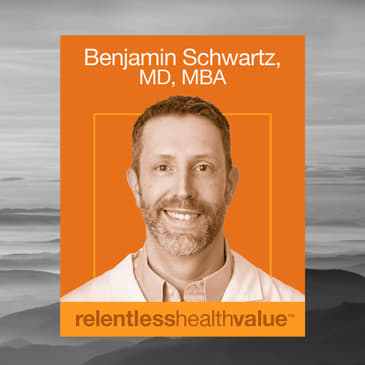
I have been so looking forward to doing a show with Ben Schwartz, MD, MBA, orthopedic surgeon and prolific writer of deeply thoughtful and insightful posts on LinkedIn. In this healthcare podcast, we are talking about bundled payments. And today’s your lucky day if you think you know a lot about bundles, because most people who listen to this show at least know enough to be dangerous. So, that’s our starting point, which is why I asked Dr. Schwartz to talk to me about what most people find surprising about bundles and bundled payments. There are four surprises that we go through in the show today. Listen to the show or read the transcript to find out exactly what they are. So, no spoiler alert alert.
But relative to these surprises, we get into the four types of bundles that may or may not be available. And those four types of bundles are:
1. CMS bundles such as the BPCI (Bundled Payments for Care Improvement) and the CJR (Comprehensive Care for Joint Replacement) bundles, and we talk about the current state of said BPCI bundles, which are being sunsetted probably because so many efficient clinical teams are being penalized for getting too efficient. They become victims of their own success the way the program is currently designed, wherein the goalposts keep shifting.
2. Commercial bundles—ie, a bundle that is offered by a commercial carrier such as a BUCA (ie, Blue Cross Blue Shield/UnitedHealthcare/Cigna/Aetna/Anthem) carrier
3. Direct bundle—a bundle that is paid for directly by a plan sponsor such as a self-insured employer
4. Condition- or diagnosis-specific bundle. These types of bundles do not spiral around a surgical intervention at their core, which most of the current bundles do. This may describe CMS’s recently announced “Making Care Primary” initiative, but we’ll have to see about that.
Speaking about the #3 kind of bundle, the employer-direct bundles, especially for musculoskeletal (MSK), let me share a post by Moby Parsons, MD, that I thought captured the entrepreneurial spirit of some of these orthopedic surgeons who are seeking employers to direct contract with and cut out the middleman, etc (which, by the way, is the main topic of an entire show upcoming with Elizabeth Mitchell from the Purchaser Business Group on Health). But Dr. Parsons wrote:
“When our bundle business has sufficient growth to ensure the absolute sustainability of our practice against declining reimbursements … in a fee-for-service system, I am getting this tattoo. Don’t tell my wife. [And the tattoo is ‘Free Yourself.’]”
My guest today, aforementioned, is Dr. Ben Schwartz. He’s an orthopedic surgeon in the Boston area still in full-time clinical practice. He’s grown very interested in healthcare innovation, healthcare technology, and does some advising and investing. Dr. Schwartz also writes a great Substack called Dem Dry Bones.
After you listen to this show, please go back and listen to the one with Steve Schutzer, MD (EP294) talking about how to create a Center of Excellence and also the one with Rob Andrews (EP415) about how and why if you are a plan sponsor you might want to consider direct contracting with quantifiably amazing provider groups.
Also, if you are an ortho or involved in MSK care, I might suggest following Karen Simonton on LinkedIn, as well as Moby Parsons, MD, and, for sure, of course, my guest today, Dr. Ben Schwartz.
Also mentioned in this episode are Moby Parsons, MD; Elizabeth Mitchell; Steve Schutzer, MD; Robert Andrews; Karen Simonton; Peter Hayes; Al Lewis; and Cora Opsahl.
You can follow Dr. Schwartz on LinkedIn and read his blog on Substack.
Benjamin J. Schwartz, MD, MBA, is a fellowship-trained orthopedic surgeon with over 15 years of experience. He has served numerous healthcare leadership roles on both a local and national level with a focus on developing and implementing evidence-based, high-quality musculoskeletal care delivery pathways. Dr. Schwartz is vice chair of the Practice Management Committee for the American Association of Hip and Knee Surgeons and helps advance knowledge of musculoskeletal conditions as a member of the Hip and Knee Content Committee for the American Academy of Orthopaedic Surgeons and editorial board member/elite reviewer for The Journal of Arthroplasty.
Dr. Schwartz has extensive experience in value-based care, having personally achieved over $400,000 in savings during his first year in the CMS BPCI-A program. He has received awards for clinical care and professionalism and was named a Castle Connolly Top Doctor in 2022 and 2023.
In addition to his clinical work, Dr. Schwartz maintains a strong presence in healthcare technology and innovation as advisor and investor to early-stage digital health companies. He is frequently sought after by clinicians, founders, and venture capitalists for his ability to bridge the gap between real-world medicine and start-ups/entrepreneurship.
Dr. Schwartz’s passion is thoughtful implementation of technology and innovation to improve healthcare quality, accessibility, costs, and outcomes.
06:07 Where are we in the development of the bundled payments space?
08:09 What are the four types of bundled payments?
09:52 How can bundled payments create perverse incentives?
11:04 What are the positives in bundled payments, and how can they help push us toward value-based care?
13:02 What is surprising about bundled payments?
27:03 How do Centers of Excellence connect back to bundled payments?
30:29 EP294 with Steve Schutzer, MD.
33:43 EP372 and EP373 with Cora Opsahl.
37:13 What does Dr. Schwartz think the future is for bundled payments?
Recent past interviews:
Click a guest’s name for their latest RHV episode!
Justin Leader, Dr Scott Conard (Encore! EP391), Jerry Durham (Encore! EP297), Kate Wolin, Dr Kenny Cole, Barbara Wachsman, Luke Slindee, Julie Selesnick, Rik Renard, AJ Loiacono (Encore! EP379)
[00:00:00] Episode 434, Five Surprises About Bundled Payments.
[00:00:07] Today I speak with Dr. Ben Schwartz.
[00:00:18] American health care entrepreneurs and executives you want to know talking.
[00:00:24] Relentlessly seeking value.
[00:00:26] I've been in a couple of meetings lately. In one case, a health care company came up with
[00:00:31] a strategy and deployed it, and the strategy didn't go as planned. The other one, it did
[00:00:36] go as planned. It worked great. Of course, I'm coming in on the back end like a Monday morning
[00:00:41] quarterback here, but the plan that failed, I have to say I wasn't surprised. Had they asked
[00:00:46] me ahead of time, I would have told them to save their money because the plan was never
[00:00:49] going to work, even though the strategy looked like kind of a straight line from here to
[00:00:53] there. Nor was I shocked by the success of the other plan, even though this one that triumphed
[00:00:58] had what looked like five extra steps and was slightly counterintuitive if you looked at it
[00:01:03] cold without understanding the way the health care industry actually works. Here's my point.
[00:01:08] It might feel like the health care industry is chaos monkey central and impossible to
[00:01:14] predict actions and reactions. And for sure, there's always unknowns and intersecting
[00:01:19] variables, but it's not a complete black box. The trick is, as you know and I know because
[00:01:25] you're listening to this podcast, you got to understand what other stakeholders are up to.
[00:01:30] You got to get a bead on what they're doing and what their incentives are
[00:01:34] because then you can better predict actions and potentially reactions.
[00:01:38] So let me state the obvious. That's why listeners tuned into the show, as I just said,
[00:01:42] and it's what we aim to shine a light on here at Relentless Health Value, the pushes
[00:01:46] and the pulls and the forces. What's going on outside of the organizations or the silos that
[00:01:51] we work within day to day? Because if you're looking to sell to partner with, not be abstracted by,
[00:01:57] insert some stakeholder here, then it's very vital to be keyed in on what they're doing or
[00:02:02] what their customers are doing or what their customers' vendors are doing. This show should
[00:02:06] feel like it gives you a measure of control or at least that's my hope or method to find
[00:02:12] the measure of control. And I hope you succeed. That's why I continue to put out these shows.
[00:02:17] The RHV Tribe members want the same thing I want, to fix the healthcare industry for patients and
[00:02:23] for members. So thanks for being here and for making actionable the insights that you might
[00:02:28] find here. I have been looking so forward to doing a show with Dr. Ben Schwartz, orthopedic
[00:02:33] surgeon and prolific writer of deeply thoughtful and insightful posts on LinkedIn. Today we are
[00:02:38] talking about bundled payments. And today's your lucky day if you think you know a lot about bundles
[00:02:45] because most people who listen to the show at least know enough to be dangerous. So that's our
[00:02:49] starting point, which is why I asked Dr. Schwartz to talk to me about what most people find
[00:02:55] surprising about bundles and bundled payments. There are four surprises that we go through in
[00:03:00] the show today and listen to the show or read the transcript to find out exactly what they
[00:03:05] are. So no spoiler alert alert. But relative to these surprises, we get into the four types of
[00:03:11] bundles that may or may not be available. And those four types of bundles are number one, CMS bundles
[00:03:18] such as the BPCI and the CJR bundles. And we talk about the current state of said
[00:03:25] BPCI bundles which are being sunsetted probably because so many efficient clinical
[00:03:30] teams are being penalized for getting too efficient. They become victims of their own
[00:03:34] success the way the program is currently designed wherein the goalposts just keep
[00:03:38] shifting. The second type of bundle that we talk about are commercial bundles i.e. a bundle that
[00:03:43] is offered by a commercial carrier such as a Buka i.e. Blue Cross Blue Shield United Healthcare
[00:03:49] Cigna Aetna Anthem carrier. Number three kind of bundle is a direct bundle. This is a bundle
[00:03:55] that is paid for directly by a plan sponsor such as a self-insured employer. And then number
[00:04:01] four type of bundle we talk about is a condition or diagnosis specific bundle. These types of bundles
[00:04:07] do not spiral around a surgical intervention at their core which most of the current bundles do.
[00:04:14] So this last type, this fourth bundle type may describe CMS's recently announced making care
[00:04:20] primary initiative but we'll have to see about that. Speaking about the number three kind of
[00:04:25] bundle the employer direct bundles especially for musculoskeletal MSK. Let me read a post by
[00:04:32] Moby Parsons MD that I thought captured the entrepreneurial spirit of some of these orthopedic
[00:04:37] surgeons who are seeking employers to direct contract with and cut out the middleman etc.
[00:04:42] Which by the way is the main topic of an entire show upcoming with Elizabeth
[00:04:46] Mitchell from the purchaser's business group on health but Dr. Parsons wrote,
[00:04:50] When our bundle business has sufficient growth to ensure the absolute sustainability of our
[00:04:56] practice against declining reimbursements in a fee-for-service system, I'm going to get this
[00:05:00] tattoo don't tell my wife and the tattoo is free yourself. My guest today aforementioned is
[00:05:06] Dr. Ben Schwartz he's an orthopedic surgeon in the Boston area still in full-time clinical
[00:05:12] practice. He's grown very interested in healthcare innovation, healthcare technology, and does some
[00:05:17] advising and investing. Dr. Schwartz also writes a great sub stack called Dem Dry Bones. All the
[00:05:24] links to everything I just said in the show notes. After you listen to this show please go
[00:05:28] back and listen to the one with Dr. Steve Schutzer talking about how to create a center of
[00:05:33] excellence and also the one with Rob Andrews about how and why if you are a plan sponsor
[00:05:38] you might want to consider direct contracting with quantifiably amazing provider groups.
[00:05:43] Also if you are an ortho or involved in MSK care I might suggest following Karen Simonon on LinkedIn
[00:05:51] as well as Moby Parsons MD and for sure of course my guest today Dr. Ben Schwartz.
[00:05:58] My name is Stacey Richter this podcast is sponsored by Aventria Health Group.
[00:06:02] Dr. Ben Schwartz welcome to Relentless Health Value. Thank you thanks for having me this
[00:06:06] is quite an honor. Let me ask you one question before we also get into the heart
[00:06:10] of our conversation today. Where are we in the bundle time space continuum? Sure so the main
[00:06:16] bundles that people know about are through CMS to the government and that's the bundled
[00:06:20] payment for care improvement program or BPCI it's a mouthful. That started several years ago
[00:06:25] it's been through an iteration to the advanced model but the general idea is you get paid a lump
[00:06:30] sum for that HIPAA year placement and any care that happens in the 90 days after the
[00:06:36] procedure comes out of the bundle and so there's been some good lessons learned there's been some
[00:06:41] care improvement. The problem is that the target price in the bundle tends to shift lower you
[00:06:46] become a victim of your own success and then it becomes difficult to see upside reward you
[00:06:52] experience downside risk and then you have to drop out of the bundle and that's where most
[00:06:57] surgeons in the BPCI program end up and the thinking is that's going to be sunset by CMS
[00:07:03] probably after 2025 and replaced by something else we don't know what yet
[00:07:08] probably some form of specialist in primary care working together being incentivized together.
[00:07:14] There are commercial bundles and that's through obviously a commercial insurer where
[00:07:19] you approach them similar sort of concept of it's a lump sum payment attached usually to
[00:07:24] a surgical episode those are harder to get and we can talk about why that might be later on
[00:07:29] there is this third arm that's arising I think it's going to become more commonplace and that
[00:07:35] is some form of bundle agreement with a self-insured employer that's looking for high value cost
[00:07:41] effective care and so you can negotiate with them directly that's the center of excellence
[00:07:46] model or there's care navigators so there's more this direct bundled program. The final
[00:07:52] thought is eventually we expect bundles to shift away from surgical episodes of care and
[00:07:57] maybe more towards condition specific whether that's attached to back pain or knee arthritis
[00:08:03] or hip arthritis to really capture more of the care process outside of the surgical episode.
[00:08:08] Okay so you listed four types of bundles there one is the BPCI bundle which is a CMS thing
[00:08:19] paid a lump sum after a surgical episode as you said people become a victim of their own
[00:08:24] success because you get paid for efficiency so like how efficient you are becomes the
[00:08:28] benchmark and then you have to be more efficient than your efficient self. You have to get down
[00:08:33] with your more efficient self at a certain point you can't become more efficient so
[00:08:38] then yeah you start losing money and as you mentioned Sunset 2025 then you also have your
[00:08:43] commercial bundles you also mentioned number three there's some self-insured employers
[00:08:48] are contracting for bundles and a lot of times this happens in the context of a center of excellence
[00:08:55] or a COE program and then lastly there's a lot of talk I've seen around can we do condition
[00:09:02] specific bundles or diagnostic based bundles and you mentioned back pain and then the
[00:09:08] clinical group gets paid a certain amount some capitated number to take care of that
[00:09:13] patient for some duration of time. I think the latter one obviously you know surgical episode
[00:09:19] a surgical bundle just says I did a good job of doing that surgery the patient didn't have
[00:09:23] a complication or readmission at 90 days it doesn't really say a whole lot about well
[00:09:28] did I manage that appropriately up to that surgery was that surgery indicated so I think
[00:09:33] the hope for these condition specific bundles is it's going to incentivize that whole episode
[00:09:38] of care attached to that diagnosis and not just a surgery but non-surgical management if that's
[00:09:43] appropriate that surgical episode might be so called nested into that bigger bundle but it's
[00:09:48] not going to be the only focus of the bundle itself. Well what you're bringing up it's been
[00:09:54] discussed as a potential perverse incentive with these bundles a surgeon also gets paid
[00:09:59] a bundle if the surgeon does an inappropriate surgery so one of the things that is a promise
[00:10:04] of value-based care is care is appropriate and we don't have an incentive to do too much care
[00:10:10] bundles don't do anything to address that correct the hope of these condition specific bundles is
[00:10:15] that they kind of incentivize more appropriate care throughout the care journey again whether
[00:10:21] that's non-surgical treatment physical therapy and injection medications not just around a
[00:10:26] surgical episode bundles do nothing really to disincentivize inappropriate care what else
[00:10:32] might be an issue they also can potentially lead to cherry picking and lemon dropping so
[00:10:38] you operate on the healthier patients that you know are more likely to do well or less likely
[00:10:42] to have a complication so they're less likely to be a downside risk in the bundle and then
[00:10:48] you don't operate on the more complicated patient because the bundles don't do a great
[00:10:53] job of risk stratification so that higher risk patient that maybe is more likely to have a
[00:10:58] complication or more likely to use post-acute services maybe you're less likely to offer surgery
[00:11:03] too so it definitely sounds like the bundles do have disadvantages but if we're thinking about
[00:11:08] the promise of a bundle as maybe a first step into value-based care we talked about a bunch
[00:11:14] of negatives let's talk about some positives now what's the good news yeah the good news
[00:11:18] is we have learned a lot of lessons from the bundles we learned patients tend to do better
[00:11:23] if we treat them more holistically so if we take an active role in optimizing patients for surgery
[00:11:30] making sure their diabetes is well controlled making sure any anxiety or depression is taken
[00:11:35] care of because we know that affects outcomes from surgery we've learned that one of the
[00:11:39] biggest cost drivers is post-acute care so if the patient is discharged somewhere other
[00:11:44] than home after the surgery that's very expensive and guess what they also have a higher
[00:11:50] readmission rate they also tend to have a higher complication rate if they end up in a nursing
[00:11:55] facility or rehab so we've learned that it's safe for patients to go home it's cost effective
[00:12:00] for them to go home it's better for them to go home so there are lessons we've learned about
[00:12:04] how to take better care of patients how is orthopedic surgeons to see and treat the
[00:12:08] patients more holistically how to optimize their health for surgery so they have better
[00:12:13] outcomes and that's an enduring lesson from the bundles in an enduring way we have orthopedic
[00:12:19] surgeons who are thinking about a whole person here as you just said if their diabetes is
[00:12:25] uncontrolled so just the outcome is not going to be as good and now everybody is on the same team
[00:12:31] making sure that the patient is prepared for the surgery and then gets the right after care
[00:12:37] one of the most interesting things we've learned is that patients who stop smoking
[00:12:41] specifically to get their hip or knee replaced a lot of them don't go back to
[00:12:46] the procedures and so these are the ripple sustainable effects that we've learned what I
[00:12:50] would like to do is to go through a few things that people might find surprising about bundles
[00:12:57] things that they may not realize or or may be a little bit counterintuitive so if we're
[00:13:02] thinking about what is surprising about bundles you mention it and people are like what one of
[00:13:09] the things that comes as a surprise to a lot of people in that 90-day window and this is for the
[00:13:14] cms bpci bundles anything that happens to that patient medically that medicare has to pay for in
[00:13:21] that 90-day window after surgery comes out of the bundle two of my examples of quote-unquote
[00:13:27] losers meaning that we experienced downside risk one patient within 90 days of their procedure
[00:13:32] was diagnosed with a head and neck cancer that obviously needed to be treated that came out of
[00:13:36] the bundle so i was on the hook for that even though it had nothing to do with their surgery
[00:13:41] they did well from their knee replacement i had another patient that had inflammatory arthritis
[00:13:47] they were on a biological infusion like humira or enbrel and we typically skip a dose before
[00:13:54] and after surgery for a month to reduce the risk of infection then the patient goes back on
[00:13:59] that medication month two after the surgery so that's two doses in that 90-day window that
[00:14:04] infusion at seven thousand dollars a pop and that comes out of my pocket fourteen thousand
[00:14:08] dollars out of the bundle because it was paid for by medicare in that 90-day window is this how to
[00:14:13] get the orthopedic surgeon to pay for oncology care or infusions for 400 alex yeah unfortunately
[00:14:20] it seems a bit unfair to put people on the hook for things that are unrelated to the surgery
[00:14:25] so the surprising thing number one is these bundles are all in for all downside risk in the
[00:14:32] next 90 days somebody gets hit by a car or something like that if there's medical care
[00:14:37] the orthopedic surgeon is paying for it even if it's quite clear that it's not that had nothing
[00:14:42] to do with the surgery is what i'm understanding correct for the cms bundles that's correct all
[00:14:47] right so that is surprising what's surprising thing too i think that maybe the second surprising
[00:14:52] thing maybe a cynical take but as much as we talk about value-based care commercial payers
[00:14:58] you could argue that maybe they're a little less incentivized for pursuing bundles or agreeing to
[00:15:03] do bundles with orthopedic surgeons because of medical loss ratio and whether or not that's
[00:15:09] really in line with their typical business model but commercial bundles again as much
[00:15:14] as we talk about value-based care can be difficult not impossible but more difficult
[00:15:19] to get involved with if you're an orthopedic practice surprising thing number two despite a
[00:15:23] lot of talk commercial payers are really not overly interested in doing bundles there are
[00:15:30] pockets where people have been successful but it takes a long time it's hard to get in front
[00:15:36] of the right people it's hard to get engagement i think people might think hey they'd be willing
[00:15:40] to do anything that's value-based but it is a challenge to get into these commercial bundles
[00:15:44] it takes a lot of work to get them to come to the table well i will say that take has
[00:15:50] been corroborated from the employer side i did have a conversation with the leader of a very
[00:15:55] well-respected employer coalition and the employer coalition got a bunch of employers together in a
[00:16:02] particular region so the employers worked out a bundle arrangement that they all agreed to then
[00:16:07] they went to local providers in that same region and brought the providers along so now
[00:16:13] you had the employers and the providers themselves who were like okay we have agreed
[00:16:17] on a bundle that we want to do together the two of them those two stakeholders then went to
[00:16:24] the tpas that were serving these self-insured employers and they said hey we need you to
[00:16:30] administer this bundle that we worked out with our providers and those tpas said no
[00:16:37] nah not going to do it can't do it won't do it then that was the end of the story i think
[00:16:43] what we're going to see as a result of that is the self-insured employer is then going to figure
[00:16:47] out a way to do it themselves if it's not the the commercial payers we are going to see other
[00:16:53] people step into that void to help administer that to help make those connections to help
[00:16:58] collect that data to help the self-insured employer make sure they're pointing their
[00:17:02] employees in the right direction of high quality high value providers i think we're going
[00:17:07] to see that become more commonplace because i think the desire is there on the part of the
[00:17:12] surgeons i think the desire is there on the part of the self-insured employers i think it's
[00:17:16] beneficial for those two parties and if the commercial insurer doesn't want to play ball
[00:17:22] i think that you'll find those other two parties figure out how to work together to
[00:17:26] make it happen yeah i mean it does surprise me a little bit honestly that the fully insured
[00:17:30] plans aren't scoping around for bundles from you just because from everything that you said
[00:17:38] with the improved surgical outcomes as well as the you're on the hook for the next 90 days
[00:17:45] it it feels like something a fully insured payer would be interested in a part of it again is
[00:17:50] the cynical take is that you don't want to get too many different arrangements with too many
[00:17:55] different providers so has it become sort of choppy and fragmented and how do you approach
[00:18:00] practices in order to do that and does it look the same from one practice to the next
[00:18:03] what kind of data do you want or need to see to make that worthwhile is it a big enough
[00:18:09] provider that it makes sense to go through that process the point that you're making is
[00:18:14] you've got this big national player who's offering fully insured plans maybe they spy
[00:18:20] some upside relative to this whole bundle thing but from an uh you know i'm going to use the
[00:18:24] efficiency in air quotes it's very inefficient you have to do all these contracts it's really
[00:18:28] hard to administer so the view ain't worth the climb it sounds like or they just can't
[00:18:32] figure even figure out how to do it from the from an administration standpoint yeah i think
[00:18:36] that's that certainly is a big part of it right i mean that's the one thing about fee for service
[00:18:40] as much as as it has downsides it is clean it's very transactional it's a little bit easier
[00:18:46] to wrap your head around than you know a bundle where there's different moving pieces on
[00:18:50] the other hand as rob andrews said in episode 415 this is their day jobs these payers
[00:18:58] slash third party administrators this is what we're paying these entities to do to figure out how
[00:19:04] to get the best health care for plan members and we all know full-on ffs is a bad scene from a
[00:19:13] actually producing health standpoint so yeah i'm gonna chalk myself up as surprised that not
[00:19:20] being able to pull off something as kind of basic as a bundle i mean there's some value
[00:19:26] based care arrangements that are really complicated but a bundle so not being able to pull off a bundle
[00:19:31] efficiently is a conversation that we're actually having in 2024 all right so we've got two
[00:19:36] surprises about bundles that we've already talked about one is the whole 90 day thing
[00:19:39] the orthopedic surgeon has to pay for everything secondly commercial payers are a little bit
[00:19:45] behind the curve maybe not fans some combination of both is there a third surprise yeah i think
[00:19:53] looking into the future part of what we're going to see is the evolution of bundles or specialty
[00:19:58] value-based care medicare kind of tipped its hand announcing the making care primary program
[00:20:04] last year there's going to be a move to number one try to coordinate specialty and primary care
[00:20:10] a bit better incentivize that but it's curious to me i think some of the expectation maybe
[00:20:15] even some of the concern on the part of orthopedic surgeons is that they're incentivizing
[00:20:20] primary care doctors maybe to do more of the specialty care delivery or take on more of
[00:20:26] specialty type stuff and will incentivize them to do that question is what does that look like
[00:20:32] are primary care doctors going to feel comfortable doing that is there going to be maybe a little
[00:20:37] bit of a battle between primary care doctors and specialists if the bundles become more general
[00:20:42] or more open to everybody if you control a condition specific bundle and the surgical episode
[00:20:47] is nested within that that's going to give more power to direct the bundle to the person
[00:20:53] that's really taking ownership of that okay surprising thing here is that in this new
[00:20:58] condition specific or diagnosis specific bundle model you could actually have primary care taking
[00:21:05] ownership for bundles and then bossing around the orthos who might have a surgery nested in
[00:21:11] the middle of said bundle so it's no longer the msk specialists who are the leader of the
[00:21:18] bundle or the owner of the bundle you're going to have somebody else potentially primary care
[00:21:23] who's the owner and that's different i can certainly see if we're trying to figure out
[00:21:29] areas where there are opportunities to save money considering most of the money is being
[00:21:36] spent in the specialty arena i mean one of the reasons is because primary care is just so woefully
[00:21:41] underfunded trying to figure out how to do more coordination could help reduce the spend having
[00:21:49] primary care do more which isn't like a new idea you want to do what's right for the patient
[00:21:54] if it's hey let's manage this in the primary care setting until becomes time for the patient
[00:21:59] to see the specialist i think that's a good thing certainly more care coordination between
[00:22:03] primary care doctors and specialists is a good thing and figuring out a way to incentivize both
[00:22:09] sides of that equation to work together is also a good thing i think the concern comes in
[00:22:14] of just making sure that the patient is getting the appropriate care i think that will create
[00:22:19] potentially an opportunity for somebody some entity to bridge that gap to make sure the
[00:22:25] right decision is being made the the primary care doctor feels comfortable they are making
[00:22:30] the right decision and then the specialist feels comfortable that the patient is coming to them
[00:22:35] at the appropriate time and not too late so i think there's going to be an opportunity to
[00:22:38] bridge that gap between the specialist and the primary care doctors i think we will see some
[00:22:43] companies start to fill that gap so you're talking about some kind of mso type entity yeah
[00:22:50] either an mso or perhaps some type of a care navigator or care coordinator who has
[00:22:56] some experience and can help make that decision to say yes it's time for the specialist and we
[00:23:02] can point you to high value specialists or you know what you know maybe you haven't tried this
[00:23:07] maybe it's not time for imaging yet and so you can continue to manage this in the primary
[00:23:12] care setting will help you to do that so that the patient is still getting good care but it's
[00:23:16] not quite time to see the specialist i'm of a couple of minds as i'm listening to you you
[00:23:22] talk there on the one hand i'm like there are entities right now that are kind of in that space
[00:23:29] for example you've got the virtual consult gang so a primary care doctor can get a hold of a
[00:23:34] specialist and ask that specialist questions as opposed to doing a full-on referral and as you
[00:23:39] were talking about navigators obviously there's a plethora of them there are entities that are
[00:23:44] already in the mix there on the other hand i would hate to see specialists in primary care
[00:23:50] disintermediated from working together when there's just such an opportunity just to work together
[00:23:55] right first of all like we're just talking about knee pain there are some shocking percentage of
[00:24:00] patients who go to their primary care doctor for musculoskeletal pain i was reading a study
[00:24:05] just how little musculoskeletal training primary care doctors tend to get in fact if
[00:24:11] you read dreamland or any of those books about the opioid crisis one of the reasons for the
[00:24:16] opioid crisis according to some is that primary care doctors felt really pretty powerless in the
[00:24:23] face of patient pain so when you know opioids showed up they were like sure and started
[00:24:28] prescribing them because they didn't know anything else to do amongst a whole bunch
[00:24:33] of other factors i totally agree with you i think the disintermediation point is very
[00:24:38] valid and the ideal situation is let's bring specialist and primary care doctors together
[00:24:45] let's not pit them against one another right can we design some type of bundled payment program
[00:24:51] capitation program where we really get primary care doctors and specialists working together
[00:24:57] you're right that at least in my medical school unless you really saw it out musculoskeletal
[00:25:03] education we got like two lectures on musculoskeletal topics in medical school and
[00:25:09] the training isn't necessarily there later on as well in residency so you don't want to put
[00:25:15] primary care doctors in a situation where they're sort of incentivized not to refer
[00:25:19] to the specialist but at the same time they want to feel like they're doing the right
[00:25:22] thing for the patient and that can lead to you know overtreatment under treatment
[00:25:27] over imaging under imaging wrong imaging so i think the ideal is to develop a program that
[00:25:35] coordinates those two things and has them incentivized to do the right thing together
[00:25:40] i think one of the concerns about these navigators or these entities that exist that
[00:25:45] you've mentioned is unfortunately a lot of them their value proposition seems to be hey let's
[00:25:50] keep that patient away from the specialist because that's where the cost really lies and
[00:25:55] that's okay if it's appropriate but making sure that the patient does see the specialist
[00:26:00] when it is necessary is number one and number two making sure that the primary care side of
[00:26:05] the equation has resources that they feel comfortable hey i'm doing the right thing
[00:26:10] for the patient or i have a resource i can go to if i'm not sure that maybe isn't referring
[00:26:16] completely to the specialist but is making sure that i'm on the right track that i'm
[00:26:20] not missing something that i'm not delaying care that i'm not doing the wrong things
[00:26:26] and that's a lovely promise right and i mean that full-throatedly that one of the things
[00:26:33] we've been striving for is to get primary care and specialists working together obviously
[00:26:38] the whole lack of data could be a factor here there was recently a hospitality newsletter about
[00:26:44] this just that primary care doesn't have the data a lot of times to know who the
[00:26:49] specialists are that are performing the best but the promise is very interesting and it seems like
[00:26:55] it could be a way forward for sure all right so that was our third surprising thing about
[00:27:00] bundles dr ben schwarz is there a fourth yeah tangentially related to the bundles is the
[00:27:05] concept of centers of excellence those have become also very commonplace a lot of promise
[00:27:11] there was a pretty landmark hbr article written several years ago about walmart's experience
[00:27:17] the coe program i think if you dig into that and you parse it a little bit the centers of
[00:27:22] excellence don't necessarily save money sort of on the cost of the procedure they can be as
[00:27:29] expensive if not more expensive in some cases for the procedure itself i think the value is
[00:27:34] driven there by surgical avoidance so you get sent to the center of excellence and the physician
[00:27:39] at the center of excellence says i don't agree with the community surgeon you don't need a
[00:27:43] hundred thousand dollar back fusion and then that's your employer obviously saves money in
[00:27:47] an avoided procedure and there is potentially some value to that but unfortunately there's a
[00:27:52] lot of gray areas and one person's opinion may be different than somebody else's opinion
[00:27:57] and how do you decide whose opinion is correct so i think the coe model is interesting but
[00:28:03] it's really kind of more that decision for against surgery is not necessarily that their
[00:28:08] outcomes are any better it's not necessarily the cost is any less it's more that
[00:28:12] you're getting maybe a differing opinion that says hey i don't think this procedure is indicated
[00:28:17] that this person in the community is describing and then that person in the community that
[00:28:21] maybe has had a relationship with that patient for years has to then deal with that patient
[00:28:26] who was sent to the center of excellence by their employer the employer says look the
[00:28:31] center of excellence said you don't need that procedure i think people assume the coe is cost
[00:28:36] controlled for the procedure when oftentimes it's not any cheaper than having the procedure
[00:28:40] done in the community probably less care variation at the center of excellence but i think most
[00:28:45] communities have good high quality high value surgeons if you're willing to take the effort
[00:28:50] to find them okay there's a couple of things i find really interesting about what you just
[00:28:55] said and the first one is and just never really thought about it before honestly but
[00:28:59] just pointing this out we've had peter hayes on the show talking about just the high prices
[00:29:04] of hospital services right hospital prices are very high i just never really thought about that
[00:29:10] if we're talking about a center of excellence which tends to be an academic medical center
[00:29:14] which tends to be a hospital you know hospital system so the prices are very high the reason
[00:29:19] why those programs are cost effective or reduce costs isn't because the cost of the procedure is
[00:29:27] any less it's because there are less surgeries in a lot of cases i think the employer and the
[00:29:34] center of excellence do tend to negotiate for their own bundle price but even then
[00:29:39] it's not necessarily less expensive than if you went to you know community facility to have your
[00:29:44] surgery or let's say a surgery center which is going to be even less expensive than having
[00:29:49] it done at the coe you look at the sage transparency project or you look at any
[00:29:53] of these things it's very clear that commercial rates are quite high and the center of excellence
[00:29:58] model you're still going to those same exact entities that are charging a lot of money
[00:30:03] i mean there's some upsides here one of them is a lot of the center of excellence programs
[00:30:08] do require very meticulous data tracking such a small percentage of provider organizations
[00:30:15] and or clinics measure outcomes of any kind clinical or proms patient reported outcome
[00:30:22] measures i think that's the main question here i mean how do clinicians even know if what they're
[00:30:27] doing is amazing or not amazing dr steve schutzer talked a lot about this in encore
[00:30:32] episode 294 if somebody really wants to dig in but if i'm an employer using a center of
[00:30:37] excellence model the requirements to track a lot of different data elements could really be
[00:30:42] helpful and potentially worth it and valuable in and of themselves so there's definitely some
[00:30:48] upsides here however the cost of the procedures themselves are still as you just said on the
[00:30:53] high side but then the other issue to kind of keep in mind is um it certainly is a second
[00:30:58] opinion right and as anyone would tell you whenever before anybody gets any surgery you
[00:31:04] should definitely go get a second opinion but because that second opinion and the surgery may
[00:31:08] be happening outside of the patient's local community and outside of that patient's local
[00:31:14] ability to go get physical therapy or go get right like they're gonna have to get after
[00:31:18] care within the community there may be a disruption of care continuity and if they need
[00:31:25] care then in the community that is certainly something that anybody with a center of
[00:31:29] excellence network should be keeping in mind there's a lot of things there that you mentioned
[00:31:34] number one is for sure i mean it's not fair to throw shade at coes if you don't come with
[00:31:39] your own data so if you want to keep those patients locally and you say we do just as
[00:31:43] good a job then we can do it maybe more cost effectively you have to bring the data that's
[00:31:47] only fair and you have to prove it so i think that's point number one number two is
[00:31:52] in my mind the best thing for the patient is to whenever possible keep them in the
[00:31:57] community as opposed to something that's that could be very transactional they're meeting that
[00:32:01] person for the first time at the coe maybe they're having their surgery and they're going
[00:32:05] back to the community and now it's up to the community if that patient shows up in the er with
[00:32:09] a complication the coe maybe tries to take care of the complications as much as they can but the
[00:32:14] patient's not going to travel hundreds or thousands of miles away when they have a
[00:32:17] complication right they're going to go to the local er i think some of these programs come
[00:32:21] up with agreements with primary care doctors to do some of the post-operative care which may
[00:32:25] not be the best situation either the patient goes back in the community if they've had a
[00:32:30] procedure to having an issue or if they go back to the community and they've been told to the coe
[00:32:35] look i don't agree with this surgery now what do i as a community provider who maybe has been
[00:32:40] treating that patient for a long time now where do we go from there how do i reconcile
[00:32:44] that now i have this patient that's been turned away from a coe their employer is telling
[00:32:49] them that they're not going to cover the cost of care that that makes for some difficult
[00:32:53] conversations and we don't have as far as i know good data on the outcomes what happens to patients
[00:32:58] that go to a coe and are told that they don't need a certain treatment and end up back in
[00:33:03] the community what's their ultimate outcome do they end up with surgery in the community
[00:33:06] do they do okay do they not do okay they not end up with surgery do they end up with another
[00:33:10] treatment do they eventually get better that data we really don't have like so many things it's
[00:33:15] not like any given idea is good or bad it's a lot of it has to do with devils and details
[00:33:22] and the execution really matters here it would be up to any employer or plan sponsor who's thinking
[00:33:31] about getting a coe model to really think through some of the executional elements here
[00:33:36] as with so many things and listen to the show with al lewis 331 for a deep dive into this
[00:33:43] also the show with kora opsal this comes up it's up to the plan sponsor to take a broad view
[00:33:48] on the actual impact of the program because as you just mentioned if the coe the center of
[00:33:54] excellence program vendor is only measuring the impact and cost savings or roi on the patients
[00:33:59] who got operated on and then the patients who didn't get operated on are tallied up as
[00:34:04] zero dollars and no further costs are considered that's not going to be accurate a lot of things
[00:34:10] about the concept of a center of excellence model makes sense and you're right it's all
[00:34:13] about the execution i don't think you necessarily have to send patients hundreds or thousands of
[00:34:18] miles away from their community that may take some work and again it's incumbent upon us in the
[00:34:22] community to you know come with our data and prove that we're doing good work whether it's
[00:34:26] at our practices a surgery center or local hospital but i think the concept of this coe
[00:34:32] can be local one thing that i have heard more than once also from employers is this whole
[00:34:38] idea of efficiency and it's very inefficient to have lots of regional contracts right so you've
[00:34:45] got a national workforce you've got a couple of patients in all these different markets it's
[00:34:50] a lot easier to set up a coe network where everybody flies to a limited number of centers
[00:34:58] of excellence as opposed to having lots and lots of local relationships
[00:35:03] so you can definitely kind of see why this winds up happening you know you think about
[00:35:07] value-based care you kind of have to understand who the quality provider organizations are within
[00:35:14] any local market you can't just keep flying people around for everything right so as the
[00:35:20] data maybe quality data becomes more ubiquitous it becomes more possible to do some of the
[00:35:26] stuff that we're talking about within the local community i think there is an opportunity
[00:35:30] sort of on a national level for high quality high value providers centers that aren't
[00:35:36] necessarily traditional centers of excellence academic medical centers as we think of them
[00:35:40] two band together and say you know as a group as this network regional nationwide network
[00:35:46] we're going to follow similar protocols we're going to report our outcomes to you
[00:35:51] we're going to have our own vetted providers and vetted centers almost like a franchise
[00:35:58] model or under some umbrella where we've all kind of agreed to adhere to these standards
[00:36:03] and report our data you know we're in our own local markets but we're sort of under the same
[00:36:08] national umbrella that we can approach self-insured employers and you know that if you go to one of
[00:36:13] the providers that's in this self-curated network that you're going to get good quality
[00:36:17] care because you have the data as it's reported to you so surprises that we have discussed here
[00:36:22] is this whole 90 day thing that everything falls on the shoulders of the orthopedic surgeon
[00:36:27] to pay for regardless of whether it's associated with the surgery or not number two commercial
[00:36:33] payers not a huge fan of bundles actually turns out number three this move to coordinate with
[00:36:39] pcps and specialists and we talked through some of the interesting nuances there and then lastly
[00:36:47] here we talked about coes centers of of excellence the center of excellence models
[00:36:52] not a magic bullet not that anyone thought there was but there is some interesting
[00:36:56] implications here especially as it relates to taking the patient out of the community
[00:37:01] dr ben schwarz is there anything i neglected to ask you that you think we should cover here
[00:37:07] i think look there's opportunity here we've learned some important lessons i think we'll
[00:37:11] continue to learn and evolve i think in the future it's going to be mandatory and
[00:37:16] not voluntary as we've seen before the bundle so i think it's incumbent upon those
[00:37:20] of us particularly at msk particularly hyponere arthritis and back pain where a lot of the spend
[00:37:25] is to understand this to try to get a seat at the table to try to be proactive in having
[00:37:31] these conversations hopefully on the other side of the equation the government cms cmmi
[00:37:37] self-insured employers commercial insurance plans are willing to come to the table with
[00:37:42] us and work with us to collaborate on these programs because i think that's really where
[00:37:47] we're going to see the most sustainability there's been some fits and starts we haven't
[00:37:52] yet hit on the right formula for sustained success i think really the only way we're
[00:37:56] going to do that is is to have everybody coming together and making sure that everybody
[00:38:00] is pulling in the right direction that's a great inspirational message there's
[00:38:05] a collaborative opportunity here so patients can get better care at an affordable price
[00:38:10] and everybody's knowledge is required to make that happen orthopedic surgeons i think are known
[00:38:15] for being entrepreneurial and seeking out their own solutions and i think we are seeing pockets
[00:38:21] of that where you know if you can't get traditional people to come to the table then
[00:38:26] you'll figure out ways yourself to try to make it work and so there's a lot of i think exciting
[00:38:30] work being done to that end by people who really understand this and understand where
[00:38:35] things are going and are really trying to help create that future for sure and it's
[00:38:39] going to take people who really understand the nuances here and really understand what's
[00:38:42] going on in order to actually create a future that's going to work dr ben schwartz where can
[00:38:46] people find your blog yeah so the blog is them dry bones on sub stack there's a link to it
[00:38:52] on my linkedin page benjamin schwartz md i'm happy to connect with anyone dr ben schwartz
[00:38:59] thank you so much for being on relentless health value today yeah thank you stacy my
[00:39:03] pleasure so let's talk about going over to our website and typing your email address in
[00:39:07] the box to get the weekly email about the show that has come out sometimes people don't do that
[00:39:13] because they have subscribed on itunes or spotify and or we're friends on linkedin what you get
[00:39:20] in that email is the introduction of the show transcribed there's also show notes with
[00:39:25] timestamps just apprising you of the options that are available thanks so much for listening