
My overarching thought throughout a lot of this interview was that improving rural health will take everyone remembering to not let perfect be the enemy of the good. If I live in rural America, there’s no subspecialists. Forget about even seeing a garden-variety kind of specialist. I might have to drive hours to even get to a PCP. There are NPs (nurse practitioners) in a lot of these remote communities, but everybody’s fighting over whether to let them practice independently, even in places where there’s zero PCPs for hundreds of miles, effectively leaving everyone in the vicinity with basically zero access to any care.
Or here’s another issue: Maternal mortality in this country is not only heartbreaking—a mother dying in what should be a precious moment—it’s also embarrassing as an industrialized nation to be so far in last place. I don’t know this for a fact, really, but women who have to drive literally hours to see a provider during their pregnancy or—God forbid!—they go into labor unexpectedly … is that a factor in our horrific maternal mortality rates? Consider that in Canada, which has, by the way, substantially better maternal mortality rates than the USA, PCPs and NPs deliver babies in low-risk pregnancies even in areas that have access to ob-gyns, unlike a lot of rural America.
When do we start wondering if we’re letting perfect be the enemy of the good? When do we start considering if no access to care is worse than some access, even if the “some” access is not with, perhaps, the ideal type of provider?
These are not questions with easy answers, so we need data. We need to think in shades of gray—not in binary terms where good and bad have static definitions unaltered by wildly different circumstances.
That said, one way to potentially make many parties happy might be to do something like the Nuka system has done for Native Americans in rural Alaska. Listen to EP312 for more info on that. It’s pretty cool.
But let’s just back up a sec with a little situation analysis: The thing with rural hospitals closing—and they are surely running in the red and closing—is the very pernicious cycle that develops. A hospital closing is kind of a bellwether for a community caught in a downward spiral in ways I did not realize until my conversation with Nikki King in this healthcare podcast.
The main industry shuts its doors—maybe coal, or I grew up in a steel town when they were “closing all the factories down.” That was a Billy Joel quote there, and I spent a few years as a kid in the very same Allentown that song is about. Community trauma is no joke. Oh, and also, now there’s no commercial lives.
So, say the hospital in that town isn’t prepared for this new payer mix reality and it closes. Then maybe a few hundred doctors and nurses move away, along with their spending habits, so other jobs go away. Then the more affluent senior citizens don’t move back to their hometown to retire because who wants to live in a town with no hospital? Also, young families who have a choice might choose to go elsewhere. Former population centers start to disperse, and now there’s not even a population big enough to support a hospital even if one would decide to go there. And when that hospital goes, so does its maternity department—and likely, even OB/GYN practices. Forget about a laborist.
You then will have local PCPs leave town because, right, a PCP connected to a hospital can make twice as much as an indie. Reference the huge number of PCPs in this country who are employed by a health system. Most of these employed PCPs will not work in rural communities where their employer health system has no facilities to refer to. There’s no jobs there for an employed physician. Obviously, no specialists can stay in business in this environment either.
Things go from bad to worse: Child abuse rises, and multigenerational diseases of despair start to set in. And there’s no healthcare to treat these diseases or prevent them. Things go from bad to worse to even more worse.
In this healthcare podcast, I am honored and thrilled to talk with Nikki King, DHA, who offers up three community-centric ideas around solving the crisis of access that people in rural communities face. In short, these ideas include:
Freestanding ERs (ERs that have the financial discipline to not take advantage of the communities they claim to serve, that is)
Telehealth that recognizes broadband issues, which is possible
Expanding nurse practitioner rights and maybe even the scope of PCP practices to, for example, include maternity care for low-risk pregnancies in areas that have zero or very minimal access to healthcare otherwise
Here’s the shorter-than-short version: Perfect can’t be the enemy of the good when we’re talking about some of these communities that have no healthcare options.
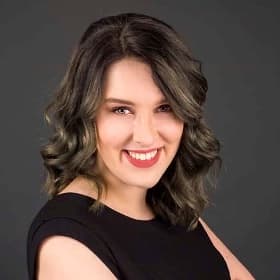
Nikki King grew up in Kentucky in the coalfields of central Appalachia. She managed a behavioral health and addictions unit at a critical access hospital and also worked in biostatistics. She is on the board of directors of the Indiana Rural Health Association and has developed policies as a member of the National Rural Health Association, among a whole list of other achievements.
Nikki is innovative and compassionate, and she understands the culture of those she serves. She talks about a few things that she worked on during the pandemic that are truly inspirational.
You can learn more by emailing Nikki at king.nikki2014@gmail.com.
You can also connect with her on LinkedIn and follow her on Twitter.
Nikki King, MHSA, DHA, was born and raised in the coalfields of Southeastern Kentucky. Prior to working in the healthcare industry, she worked for the Center of Business and Economic Research studying models of sustainability in rural communities with a single economic engine. She has been working at Margaret Mary Health since 2015, occupying roles in clinical statistics, as well as currently managing the behavioral health and addiction services department. In addition to her role at Margaret Mary, Nikki completed her DHA at the Medical University of South Carolina and her MHSA from Xavier University. She currently serves on the Indiana Rural Health Association’s Board of Directors, the American Hospital Association’s Opioid Stewardship Advisory Group, and the National Rural Health Association’s Policy Congress and Government Action Committee, and as the Board Chair of Rural Health Leadership Radio Board of Directors.
05:57 How dire is the rural hospital situation right now?
06:18 How could freestanding ERs be a potential solution for rural hospitals?
08:21 What are other potential rural health access solutions?
09:25 Why is broadband a roadblock to telehealth as a solution for rural health access?
14:06 The “hot potato” of nurse practitioners in the healthcare world.
15:05 “The number of residencies for physicians each year is not increasing, but the population … is increasing.”
19:06 EP312 with Douglas Eby, MD, MPH, CPE, of the Nuka System of Care.
20:41 What’s the issue with maternity care in rural America?
22:53 “As healthcare becomes more and more specialized, [the] ability to treat high-risk cases is better, but access gets worse.”
26:50 How is mental health care affected in rural communities?
27:23 “Rural communities are trying very hard to hang on to what they have.”
28:49 “When you look at the one market plan that’s available in a rural community, you probably can’t afford it.”
30:39 What’s the single biggest challenge to moving to a model that incentivizes keeping people healthy?
31:33 “The easiest low-hanging fruit … is having national Medicaid and have that put under the same hood as Medicare.”