
I was really vexed the other day when I read on Twitter—First rule of thumb: Stay away from Twitter—but I read on Twitter someone bashing telehealth because, for many older Americans, going to the doctor is the only thing on their social calendar. Ummm, OK. So, we celebrate the idea of paying a cardiologist or a nephrologist or an orthopedic surgeon or some other specialist how much in FFS (fee-for-service) payments to be a paid friend for 7 minutes?
So, we’re going to expect these expensive specialists to provide mental and behavioral health support when they have no particular mental health training, and, at the same time, we’re going to weirdly slam telehealth for not enabling this obviously failing and expensive model to continue. And I’ll tell you how I know it’s failing: We have an epidemic of loneliness in this country. So maybe, instead of this serpentine logic, we should instead actually directly address the epidemic of loneliness. Maybe we should directly address mental health and behavioral health.
Another oddity with this whole telehealth bash is how fast telepsychiatry services are taking off with COVID and how much, in general, people like it. Granted. Not sure about the elderly cohort who want to go see their doctor for the outing aspect of it, but if we’re talking in generalities here, telehealth/telepsychiatry has been a boon for patients able to access behavioral health and mental health services.
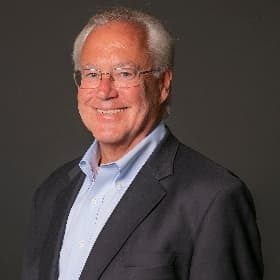
In this health care podcast, I speak with Don Fowls, MD. Dr. Fowls is president of Don Fowls and Associates, based in Scottsdale, Arizona. He’s also past president of the Arizona Psychiatric Society. Dr. Fowls talks to us today about the importance of considering behavioral health when committing to value-based payment models or the management of populations. But we bookend the topic by me taking the opportunity to quiz Dr. Fowls on the impact of telehealth on behavioral and mental health. Two big points of emphasis are integrated data and the vitalness of industry stakeholder collaborations.
Just to clarify some terms before we dive in here: Mental health is a subset of behavioral health. If we’re talking about managing populations of patients, managing both is essential. Mental health typically, people say, has to do with substance abuse and people’s thoughts and feelings. Behavioral health, meanwhile, has more to do with the specific actions people take and how they respond in various scenarios. Obviously, both are impacted by social determinants of health in a big way. And, as more and more evidence comes out, it becomes more important to integrate mental and behavioral health services within almost any site of care—or any site of care looking to improve patient outcomes and possibly succeed in a value-based world.
You can learn more on Dr. Fowls’s LinkedIn page.
Don Fowls, MD, is a nationally known psychiatrist and health care consultant who works with organizations across the country to develop solutions for the many challenges they face today, including integration; value-based reimbursement; managing complex, special populations; and strategic partnerships. Dr. Fowls has helped several national and regional health plans and health systems integrate behavioral and physical health and develop value-based payment models to support this.
Dr. Fowls previously served as chief medical officer and executive vice president of business development for ValueOptions and its parent company FHC Health Systems for 11 years. He also worked at Schaller Anderson Inc. as executive vice president, business development, and president and CEO of its behavioral health subsidiary.
In Arizona, he recently served as chief medical officer for Mercy Maricopa Integrated Care as well as the behavioral health advisor to the Practice Innovation Institute in Phoenix, one of the CMS Transforming Clinical Practice Initiative grant awardees to transform the practices of health care providers. As part of this process, he co-led the Behavioral Health Affinity Group nationally. Dr. Fowls is chairman of the board of Copa Health, an Arizona-based community provider of services for behavioral health and intellectual and developmental disorders.
Dr. Fowls is also past president of the Arizona Psychiatric Society and a fellow in the American Psychiatric Association.
03:27 Is telehealth here to stay?
06:16 “Now there’s coverage in these medical clinics that there never was before.”
07:38 “It’s really trying to align the payment with the outcomes and services provided.”
08:51 What does good look like?
12:06 “It’s getting … plan and provider focused on achieving an outcome.”
16:43 Do you really see outcomes change after implementing value-based payments?
17:40 “What are we really trying to achieve with this population? It’s really four things. And these become … the pillars for outcomes.”
23:29 “Right now, there’s still way too much ‘more is better.’”
24:16 “Well, that’s great, but how did they do when they left? That’s what you really want to know.”
25:43 What are the three major data sets?
27:15 How is the pharmacy going to be impacted in mental and behavioral health moving forward?
28:05 “If you have data and facts behind you, it always helps.”