
In this healthcare podcast, we’re gonna talk about the realities of setting up a clinically integrated network, otherwise known as a CIN. If only the whole process was unicorns and rainbows, but—as you likely suspected—it’s not. Setting up a clinically integrated network is hard work, but the payoff for patients and clinicians alike can be worth fighting for.
First of all, what is a clinically integrated network? It is a kind of ACO (accountable care organization). It is a legal entity that is a form of an ACO. So, every CIN is an ACO. But not all—in fact, most—ACOs are not CINs.
CINs enable coordinated care. Everybody in the network gets together to figure out how to enable clinicians to (for reals) follow their patients through multiple care settings and plan for an entire care journey. It can really help the patients navigate our crazy healthcare industry by giving them a trusted team that plots out a proactive path toward better healthcare outcomes and then make sure the patient stays on that path. It can be a really beautiful thing.
Listen to EP349 with Lisa Trumble for real-world examples of the patient outcomes and experience a CIN can generate. All this for the patient while, at the same time, the total cost of care for Medicare patients goes down, I’ve heard, about 10% on average; but it can be more, as Lisa Trumble also talks about in episode 349 as aforementioned.
Alright … as we all know in healthcare, what’s best for the patient doesn’t, in so many cases, mean higher reimbursements. Sadly. So, what financial advantages does going through the time and trouble to create a CIN bring? There are basically four financial opportunities that can be realized with a CIN. I learned some of this from my guest today, Shawn Rhodes, who called strategically managing these four possible financial incentives “a delicate balance”; and as I get into some of them, you will see why.
CIN Financial Opportunity #1: Similar to an ACO, if you’re a CIN (because you are an ACO), you can participate in the Medicare Shared Savings Program, otherwise known as MSSP. The Medicare Shared Savings Program (MSSP) is the way that ACOs get paid a little something extra if they achieve savings goals for Medicare. The provider shares in the savings. Get it? And CINs are generally well equipped to realize these shared savings goals because to obtain the quality that you have to to pull off the shared savings, being clinically integrated really helps.
CIN Financial Opportunity #2: Getting a gang of providers (doctors) together, you can do collective bargaining. So, back to basics with this one. You get a bunch of docs together in a region, then you all go to the big BUCAH plan—meaning the Blue Cross, the Cigna, the Aetna, Anthem, Humana—you go to them together and make your contracting demands, as opposed to each little doc practice going in all by yourself and trying to negotiate David and Goliath style. Now, what the payer might want from your collective crew there, the payer might insist on some kind of value-based agreement. Even if it’s an FFS (fee-for-service) contract chassis, they’ll attach some kind of quality or outcome component. So again, being organized in a CIN is a bonus either way.
CIN Financial Opportunity #3: Your CIN can try to do direct contracting with local employers. Check out EP350 with Katy Talento for more on direct contracting. Actually, Lisa Trumble also mentions this in EP349.
CIN Financial Opportunity #4: Lastly, you can work with local hospitals’ quality and efficiency programs. From a hospital financial perspective, they might be interested in the care that happens after an inpatient stay. If the outpatient care at an integrated skilled nursing facility, for example, is good, then the hospital could, for example, reduce readmissions.
Now, caveat: I asked (maybe grilled is a better word) our guest in this episode, Shawn Rhodes, about this whole “prevent a readmission” business. Because on one hand, oh wow, you get a couple points back from having lower readmissions—which you can game all day long, by the way. Listen to the show with Dr. Rishi Wadhera (EP326) for more on how to not get dinged for readmissions even if you effectively have readmissions.
So, said another way, the crafty, albeit dubious, power move here if you’re a hospital to maximize revenue is to let patients come back to the hospital after discharge but just don’t call it a readmission. Call it, I don’t know, observational. Then bill fee for service for the whole thing and get the reducing readmission financial incentives. At this point in the time-space continuum, everybody knows this stuff. This is not some kind of secret that I’m spilling here.
Anyway, I bring this up because don’t forget what I just said: The #4 CIN financial opportunity that Shawn Rhodes had mentioned is hooking up with a local hospital as part of their quality and efficiency program and the hospital looking to the CIN to reduce readmissions. Given the open secret on hospitals and readmissions, my Spidey sense just got really curious.
So, when I pressed on this point, Shawn didn’t talk about the CIN sharing any financial gains from the reducing readmission incentive program like I might have expected. Instead, he mentioned that having lower readmissions is a way for hospitals to get some negotiating leverage with payers.
The next time your hospital’s payer contract comes up, you can point to lower readmissions and then demand higher FFS fees. You also might be able to improve throughput of profitable service lines by reducing the number of patients who turn back up after their earlier procedure—which is another way, again, to increase FFS revenues, since the more patients you put through, the more revenue.
This is why I like talking to people with a touchstone to the real world. You find out what the actual deal is.
Now, I say all this to say that if patients get better care and their care journey is non-fragmented, it’s a win-win. And CINs, like most ACOs, have been shown to trim the cost of care with great patient feedback. That’s amazing.
Just a quick spoiler here, but the seven parameters that Shawn Rhodes and I discuss in this episode which are essential for anyone who is looking to stand up a CIN or basically achieve success—and, I would guess, almost any value-based model—you gotta have an infrastructure that takes into account the following seven things:
Patient-first and agile culture
Interoperability
Patient-centered processes
Actionable information (not just data)
Clinical integration
Strategic planning and alignment of all stakeholders in the CIN
Strong leadership
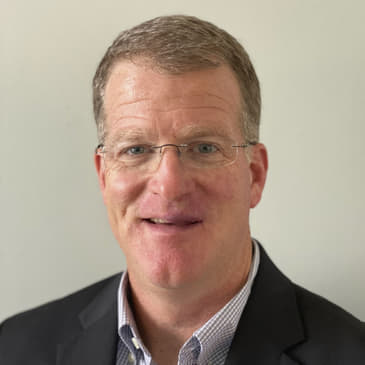
My guest in this episode, Shawn Rhodes, has worked in performance and quality improvement for many years. He has worked at a CIN in Bowling Green, Kentucky; and he has overseen multiple value-based programs. Shawn currently serves as regional VP at Caravan Health.
You can learn more at caravanhealth.com or connect with Shawn on LinkedIn.
Shawn Rhodes serves as regional vice president at Caravan Health, a services and technology company that helps hospitals and physicians who care for underserved population succeed in value-based care. Shawn collaborates with clients to develop tailored population health strategies and support their efforts to deliver the highest-quality, patient-focused care at the lowest cost.
Prior to Caravan Health, Shawn served as the director of clinical integration for a clinically integrated network, Med Center Health Partners, where he oversaw value-based agreements (commercial, Medicare Advantage, Medicaid, BPCI, and employer health plans) with various payers along with ACO activities and quality improvement initiatives within the network.
Before his work in value-based care, Shawn served as director of education and organizational development at Baptist Health Hardin, focusing on leadership development and cultural change through Studer Group initiatives.
The early part of Shawn’s career was spent in industrial equipment design and progressed into the automotive manufacturing industry working with Toyota and Honda on quality and process improvement. He then transitioned to the healthcare industry where he worked for eight years as a consultant specializing in coaching and mentoring hospitals to achieve improved quality, efficiency, and financial performance through process improvement, LEAN techniques, and reengineering.
Shawn has a bachelor’s degree in mechanical engineering and a master’s degree in business administration from Western Kentucky University. He resides in Bowling Green, Kentucky.
08:08 What are the seven parameters to consider when standing up a CIN?
08:25 “Culture trumps strategy.”
09:10 “Communication and education are key components to starting that … process.”
09:26 “How do you get the information to the right person at the right time and the right place?”
09:36 What does interoperability need to look like in a CIN?
10:29 How do organizations communicate with the patient in a CIN?
11:07 Can a clinically integrated network work if it’s not patient-centric?
11:37 EP332 with Tony DiGioia, MD.
11:49 What’s a must-have for a clinically integrated network to be successful?
13:41 “What does that data mean?”
15:34 EP315 with Bob Matthews.
15:52 “You really need a go-to person.”
18:57 “The thing with team-based care is, you also have to have team-based accountability.”
20:54 “You’ve got to build some infrastructure around what you want to do.”
24:37 “Alignment is not an easy task by any means.”
25:15 “There has to be a group decision-making process.”
25:34 EP343 with David Carmouche, MD.
25:41 EP341 with Gary Campbell.
26:18 How do you define leadership?
27:49 “Start small, get some successes, and it will build as you go.”