
EP307: The Surprise Billing Legislation: Its Impact on Providers, Hospitals, Self-insured Employers, and (Most of All) Patients, With Loren Adler
January 28, 2021
307
33:49

EP307: The Surprise Billing Legislation: Its Impact on Providers, Hospitals, Self-insured Employers, and (Most of All) Patients, With Loren Adler

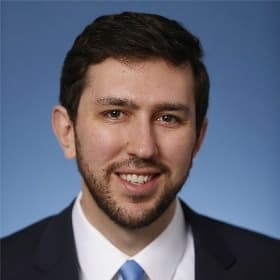
In this health care podcast, I speak with Loren Adler, who is the associate director of USC-Brookings Schaeffer Initiative for Health Policy and has a particular focus on surprise billing. I wanted to talk to Loren about the surprise billing legislation that is going into effect on 1/1/22.

I will let Loren explain, but, in short, this legislation removes the patient from the mix. If a provider decides to send a surprise bill, the patient will just pay the co-pay or coinsurance they normally would have if the provider had been in network. Then, it’s up to the provider who sent the bill and the insurer to duke it out on the back end.

What this back end duking out consists of is the provider sending their big surprise bill to the insurer. The insurer may reply, with regrets, “Hey, we’re only gonna pay you … whatever … a fraction of the big bill.” The provider may at that point say, “Fine … whatever. I’ll take it.” Or the provider may say, “No can do. I’ll see you in arbitration.”

This arbitration that then happens is a style called baseball arbitration, and Loren gets into the “why” there. Also, a provider cannot trigger an arbitration more than once every 90 days for the same service. So, there’s a wrinkle that will slow the roll of any provider with a plan to clog up the system by arbitrating every claim.

I quiz Loren mercilessly about exactly what the provisions of this legislation are and the winners and the losers. But we also talk a lot about potential ramifications. For example, making surprise bills illegal will potentially accelerate bundled payments, if you think about it, because one of the reasons why bundles have stalled is because various parties who enjoy surprise billing refuse to be a part of the bundle—and then the whole thing just flies off the track.

Also, premiums will go down approximately 1%, they say, for self-insured employer plans. And Loren and I get into the “why” of that—or, more accurately, Loren gets into the “why” of that.

In listening to this recording, I realized we do sort of pick on anesthesiologists a bit here. So, apologies to those anesthesiologists who have been billing fairly this whole time, which is definitely the majority.

You can learn more at brookings.edu.

Loren Adler is associate director of the USC-Brookings Schaeffer Initiative for Health Policy. His research focuses on a range of topics in health care economics and policy, including provider payment and consolidation, insurance markets, Medicare, the Affordable Care Act, prescription drugs, and COVID-19 testing. Previously, he served as research director for the Committee for a Responsible Federal Budget and as a senior economic policy analyst for the Bipartisan Policy Center.

Adler holds a bachelor’s degree in mathematical economics from Wesleyan University and a master’s degree in applied economics from Johns Hopkins University.


03:04 What is this surprise billing legislation?
04:27 What happens when a patient is sent a huge bill from the provider?
06:15 What is “the going rate”?
09:44 “If you weren’t leveraging surprise billing beforehand, this law has no effect on you.”
11:14 Will this legislation push the industry toward one hospital bill?
12:20 What will providers have to do if they don’t like what insurance wants to pay them?
15:26 What is benchmark pricing?
17:37 “Fundamentally … it’s really consumer groups and patient groups plus your self-insured employers … on one side and then provider groups on the other.”
18:19 Is this surprise billing legislation a compromise?
19:48 “Arbitration really isn’t meant to adjudicate every single claim.”
20:11 “The idea is really to kind of push the facility … to negotiate and figure this all out.”
20:50 Are hospitals being impacted by this bill?
24:56 What happens to providers who decide to send surprise bills anyway?
26:09 What are the implications of this legislation for self-insured employers?
28:48 Why have ground ambulances been left out of this surprise billing legislation?
32:23 “At the end of the day, I think this is a net positive for consumers and should be considered a win.”

You can learn more at brookings.edu.  

healthcare,surprise billing,digitalhealth,healthcare billing,hospital billing,healthcare outcomes,usc-brookings schaeffer initiative for health policy,
|
|

Episode Support Provided By

Special Thanks to Our 2026 Sustaining Monthly Donors

Marilyn Bartlett, Kimberly Carleson, Dylan Yahn, Benjamin Light, Matt McQuide, Ann Kempski, Spencer Allen, Scott Tromanhauser, Steven Elkins, Matthew Bunte, Lori Smith, Dr. Scott Conard, Vivian Ho and Casey Cormier

Recent Episodes

EP536: Operationalizing the Architecture of Primary Care Patient Experience, With Rebecca Andrews, MD
Relentless Health ValueNovember 04, 2026
536
37:5134.64 MB

EP536: Operationalizing the Architecture of Primary Care Patient Experience, With Rebecca Andrews, MD

Listen On Your Favorite App Stacey: If you are a plan sponsor thinking about, for example, primary care as a way to optimize healthcare spend, do know that any given plan sponsor will really only get maximum possible benefit from an investment in primary care, advanced primary care, when and only wh...

EP535: When Patient Experience Means Parking and Pianos, Plan Sponsors Pay for Hotels, Not Outcomes—What to Measure Instead, With Robyn Leone
Relentless Health ValueOctober 28, 2026
535
37:1834.15 MB

EP535: When Patient Experience Means Parking and Pianos, Plan Sponsors Pay for Hotels, Not Outcomes—What to Measure Instead, With Robyn Leone

LIsten on Your Favorite App On episode 532 a few weeks ago, Chris Klomp from HHS was talking about ER (emergency room) usage as a signal, not just a statistic. If too many folks show up in the ER, consider this a signal that there's something missing. It means a patient who doesn't have access to pr...

EP534: The One Question to Test if a TPA Is Actually Independent, With Kimberly Carleson
Relentless Health ValueOctober 21, 202608:538.13 MB

EP534: The One Question to Test if a TPA Is Actually Independent, With Kimberly Carleson

Listen On Your Favorite App Here's a question I have heard more than once: What is a practical, speedy way to assess whether a TPA (third-party administrator) is truly independent and willing to protect the plan's interests, this plan sponsor's interests, versus being captive to, for example, networ...

EP533: Level Funding Is Self-funding: 5 Avoidable Contract Risks, With Frank Pennachio
Relentless Health ValueOctober 14, 2026
533
37:1334.07 MB

EP533: Level Funding Is Self-funding: 5 Avoidable Contract Risks, With Frank Pennachio

Hello, all you Relentless Tribe members. Thanks for hanging with me today to talk about a bunch of things. One of them being what exactly are level-funded plans, and what are the upsides, and then what are the risks? Because here's the thing. I was talking to an employer the other day, an employer w...

EP532: Why Avoidable ER Visits Aren't the Real Cost Problem: Revisiting Our 2016 Interview With HHS Nominee Chris Klomp
Relentless Health ValueOctober 07, 2026
532
37:2034.17 MB

EP532: Why Avoidable ER Visits Aren't the Real Cost Problem: Revisiting Our 2016 Interview With HHS Nominee Chris Klomp

Listen on Your Favorite App Today we are dipping into the archives for an essential replay from 2016, one decade ago, featuring Chris Klomp back when he served as CEO of a company called Collective Medical. With the nomination of Chris Klomp to serve as deputy secretary of the Department of Health a...

EP531: Slaying the Three-Headed Monster of Health Plan Networks, With Evan Anderson
Relentless Health ValueSeptember 30, 2026
531
38:0634.88 MB

EP531: Slaying the Three-Headed Monster of Health Plan Networks, With Evan Anderson

Listen on Your Favorite App Today, Evan Anderson and I are talking about carrier networks, how they started, how it's going. Because irrespective of whatever the plan was at the very beginning, any given network, especially talking about the big status quo networks, has evolved into what I'll call a...

EP530: A Wildly Underappreciated Point: Overpaying for Infusions Means Overpaying for Stop-Loss Coverage, With Jake Velie and Keith Hartman, RPh
Relentless Health ValueSeptember 23, 2026
530
37:4534.56 MB

EP530: A Wildly Underappreciated Point: Overpaying for Infusions Means Overpaying for Stop-Loss Coverage, With Jake Velie and Keith Hartman, RPh

Listen on Your Favorite App Hello, all you Relentless Tribe members. Thanks for hanging with me this week. When a self-insured plan sponsor sees an infusion claim hit their high-cost case report, and a lot of these infusions are really expensive, so many of them hit the high-cost claim report. For a...

Listen and Follow

Sponsored by Aventria Health Group
©2026 BD Bridges LLC. All Rights Reserved.